


Zihuatanejo and Ixtapa Air Ambulance
Air ambulance from Ixtapa and Zihuatanejo. Resort and resident cases, what the Guerrero coast cannot treat, and ICU transport home.
A Canadian winter town with a Mexican small-town hospital
Zihuatanejo and Ixtapa fill up every winter with Canadians and Americans who stay for months, and empty out again in the spring. The resident foreign population here skews older than almost anywhere else on the Pacific coast, and an older wintering population produces a predictable list: strokes, heart attacks, hip and pelvic fractures, and the complications that follow surgery on somebody in their late seventies.
The local hospitals handle emergencies and stabilise well. They are not a stroke centre with a twenty-four hour interventional team, and that is the gap that turns a Zihuatanejo admission into a flight.
The road is the problem, the airport is the answer
Ixtapa-Zihuatanejo International (ZIH / MMZH) has one asphalt runway, 09/27, 2,500 metres — 8,202 feet — at 26 feet of elevation, and handled around 733,000 passengers in 2025. Mexico City is about an hour away in the air. By road, the alternatives are long drives to Acapulco, Morelia or Mexico City on mountain highway, which is not a road to put a stroke or a fractured pelvis on. On this stretch of Guerrero coast the aircraft is not a luxury; it is the difference between a transfer that takes an hour and one that takes most of a day.
Troncones, La Saladita and the surf cases
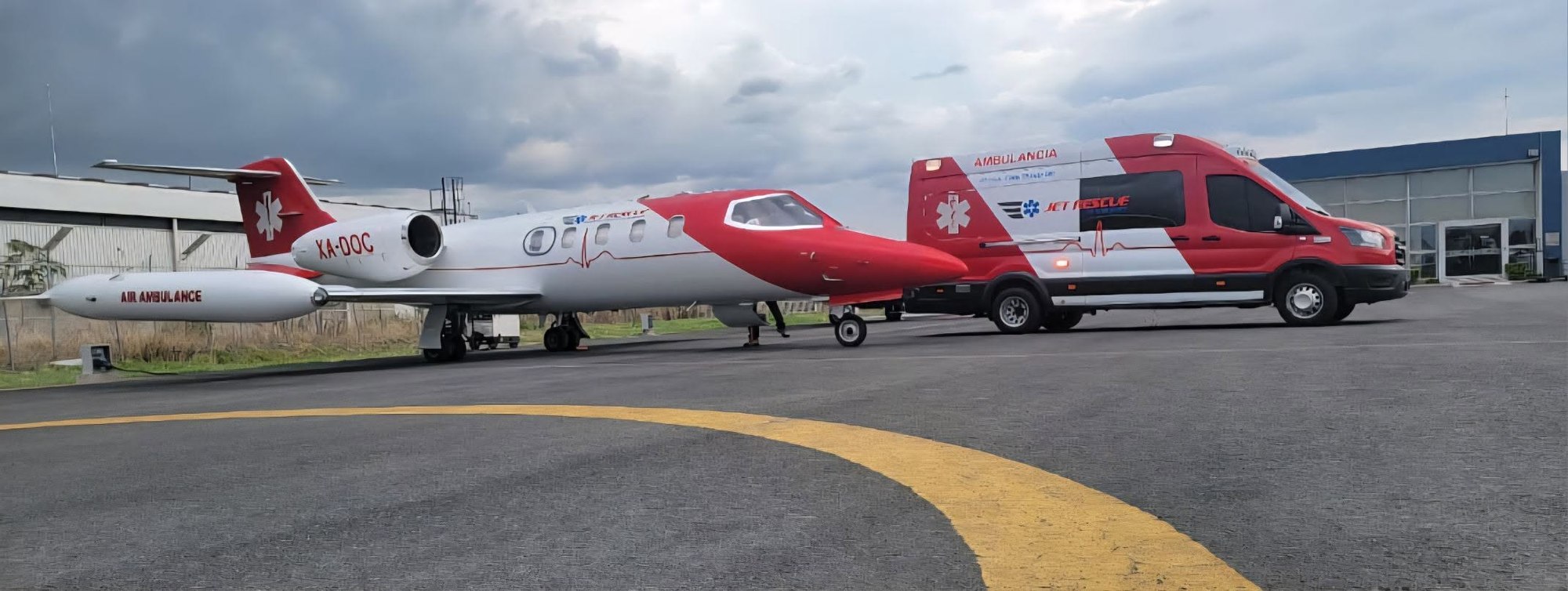
North of town the beach breaks and point breaks bring a different, younger set of injuries — neck and head injuries, shoulder dislocations, lacerations on reef — and they happen forty minutes from the hospital by road. A suspected spinal injury out of Troncones needs immobilisation that survives every transfer between surfaces: the ambulance cot, the hospital trolley, the aircraft stretcher and the receiving bed. That is the plan we build, and it is the part that gets rushed when a transfer is improvised. See spinal cord injury transport.
Where we fly from Zihuatanejo
- Mexico City — about an hour, and the usual first move when the patient needs a specialist centre immediately and is not fit to cross a border.
- Guadalajara and Monterrey, for the same reason.
- Toronto, Montreal, Vancouver, Calgary and Edmonton, back inside the provincial system — see Canada air ambulance.
- Houston, Dallas, Phoenix, Los Angeles and Chicago, and onward to the patient's own hospital.

For the snowbird reader, the one thing worth knowing
Your provincial health plan will pay a small fraction of a Mexican private hospital bill and essentially nothing toward a repatriation flight. The private travel policy decides, and it has to approve the transport in advance. The clause that defeats most claims is the pre-existing condition and stability clause, not the accident itself.
We deal with insurers every day and we will deal with yours directly. If you winter here every year, the alternative is to stop depending on that approval: a membership pays the transport outright, with a discount for CARP and Canadian Snowbird Association members.
What flies with the patient
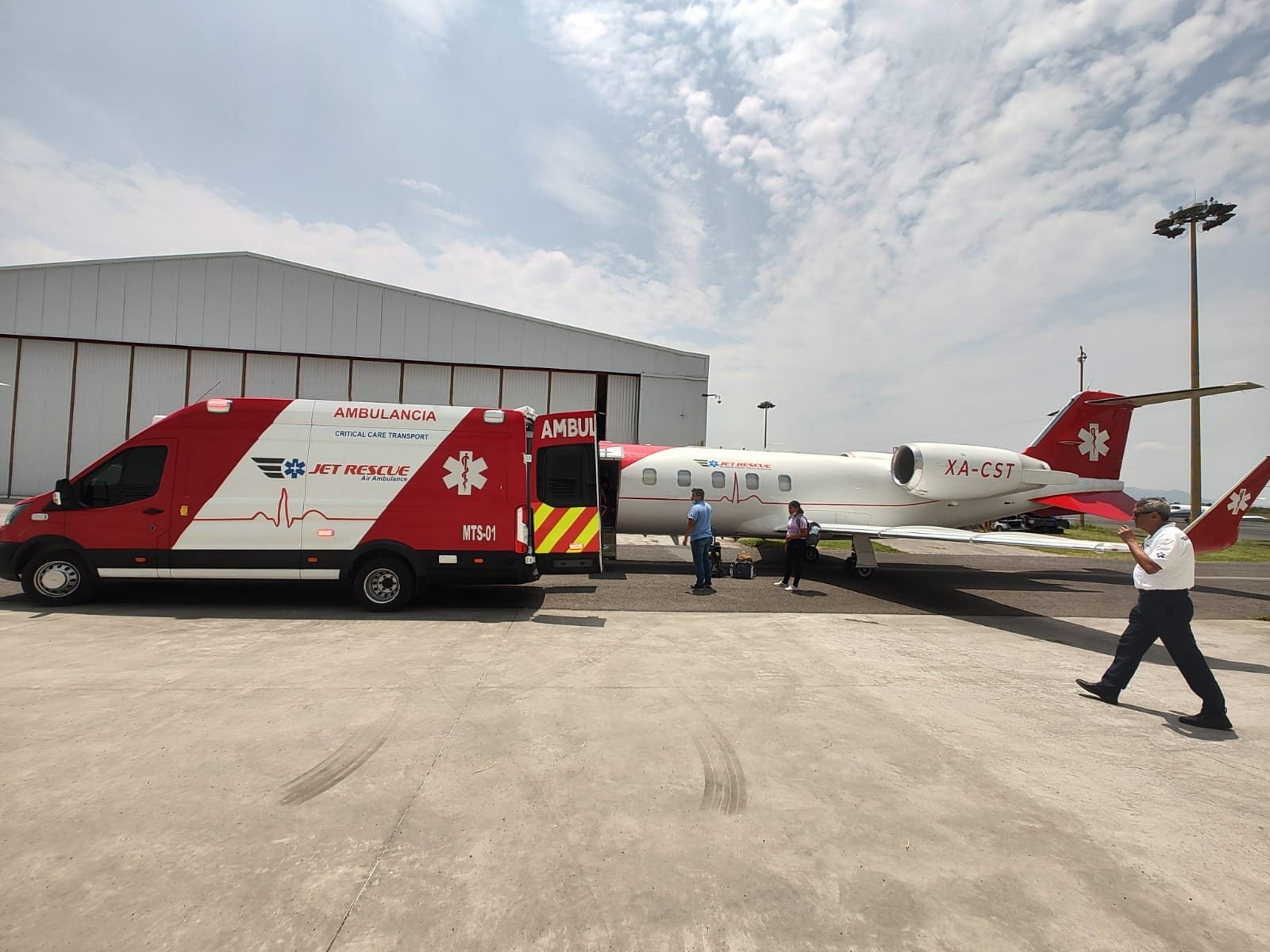
A Learjet with the cabin built out as an intensive care unit, a flight physician and a critical care paramedic, and the monitoring, ventilation and infusion equipment mounted to the stretcher platform rather than carried loose. Ground ambulances at both ends, and the same coordinator on the case from the first call to the signed handover at the receiving bed. If a dedicated aircraft is more than the patient needs, we will tell you so and arrange a medical escort instead.
Common questions
How fast can you reach Zihuatanejo?
Our aircraft are based in Mexico, so the positioning leg is short and most cases go the same day once the receiving bed is confirmed. We start on the acceptance before we start on the aircraft, because that is what actually holds cases up.
Should we go to Mexico City first or straight home?
It depends on what the patient needs and whether they are stable enough for the longer leg. Sometimes the honest answer is two moves: stabilise at a specialist centre in Mexico, then fly home. The flight physician will tell you which, with the treating doctor.
Does Medicare cover this?
No. US Medicare does not pay for care or transport outside the United States. A private travel policy or Medicare Advantage plan with foreign emergency cover might — send us the policy and we will read it.
Can you fly a patient with a hip fracture who has not had surgery yet?
Yes, frequently. Whether they should be fixed here or at home is a clinical decision we take with the treating surgeon, and it turns on how long the delay would be and how stable the patient is.
Can a relative travel with the patient?
Usually one, where weight, fuel and the patient's condition allow.
Call +1.786.619.1268 and ask for a mission coordinator, or send the case details. The clinical review is free and there is no obligation to fly with us.
Tell us about the patient
A mission coordinator answers 24 hours a day. The benefits review is free and carries no obligation.