

ECMO Transport Air Ambulance — Advanced Critical Care Flight Services
Specialized ECMO air ambulance transport with critical-care teams for the most fragile patients. Worldwide coverage. Call +1-786-619-1268.
On August 7 2020 Jet Rescue Successfully Conducted the longest Civilian Adult ECMO Flight in the world.
Jet Rescue was the first civilian air ambulance company in the world to transport an Adult patient with ECMO from Latin America to Asia Flying over 6500 Nautical miles. Similar ultra long-distance ECMO transports have only been done by the US military. Jet Rescue Air Ambulance is one of the few air ambulance carriers in the world that have the ability to transport ECMO patients globally and provide remote cannulation services in select situations.
Our Learjet air ambulances have been modernized to the latest aviation safety standards and are able to fly worldwide.
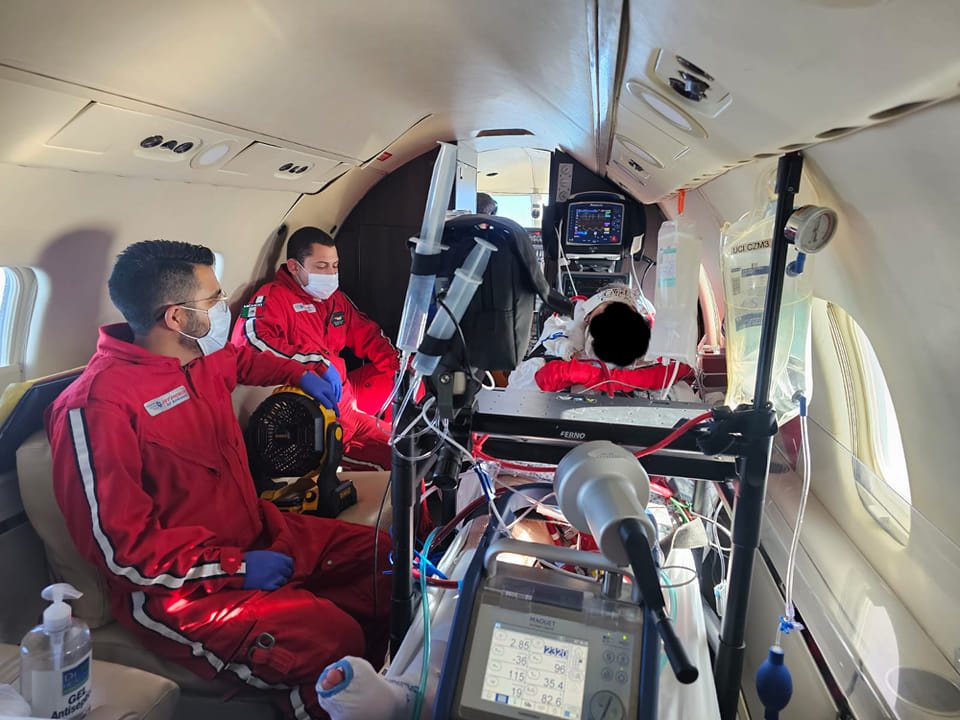
Our Medical Jets are equipped with CARDIOHELP ECMO system. This system is operated by highly trained ICU Doctors and Perfusionists and are experts in ECMO patient management.
Our ECMO Medical Jets are ready to transport adult and pediatric patients that requiere ECMO therapy including patients that undergo Bridge treatment because of a Lung Transplant.
When an ECMO transfer is the right call
ECMO transport is considered when a patient on venovenous or venoarterial support cannot be weaned at the referring hospital and the centre that can offer definitive care is somewhere else. The common referrals are severe ARDS that has failed conventional ventilation, refractory cardiogenic shock, fulminant myocarditis, massive pulmonary embolism, and bridge-to-transplant or bridge-to-decision cases. The decision is never made on distance alone. It is made on whether the patient is stable enough on circuit to tolerate transfer, and whether the receiving unit can accept the patient on arrival.
We review every ECMO referral with the referring intensivist before accepting it. If the answer is that the patient should not fly, we say so.
The ECMO flight team
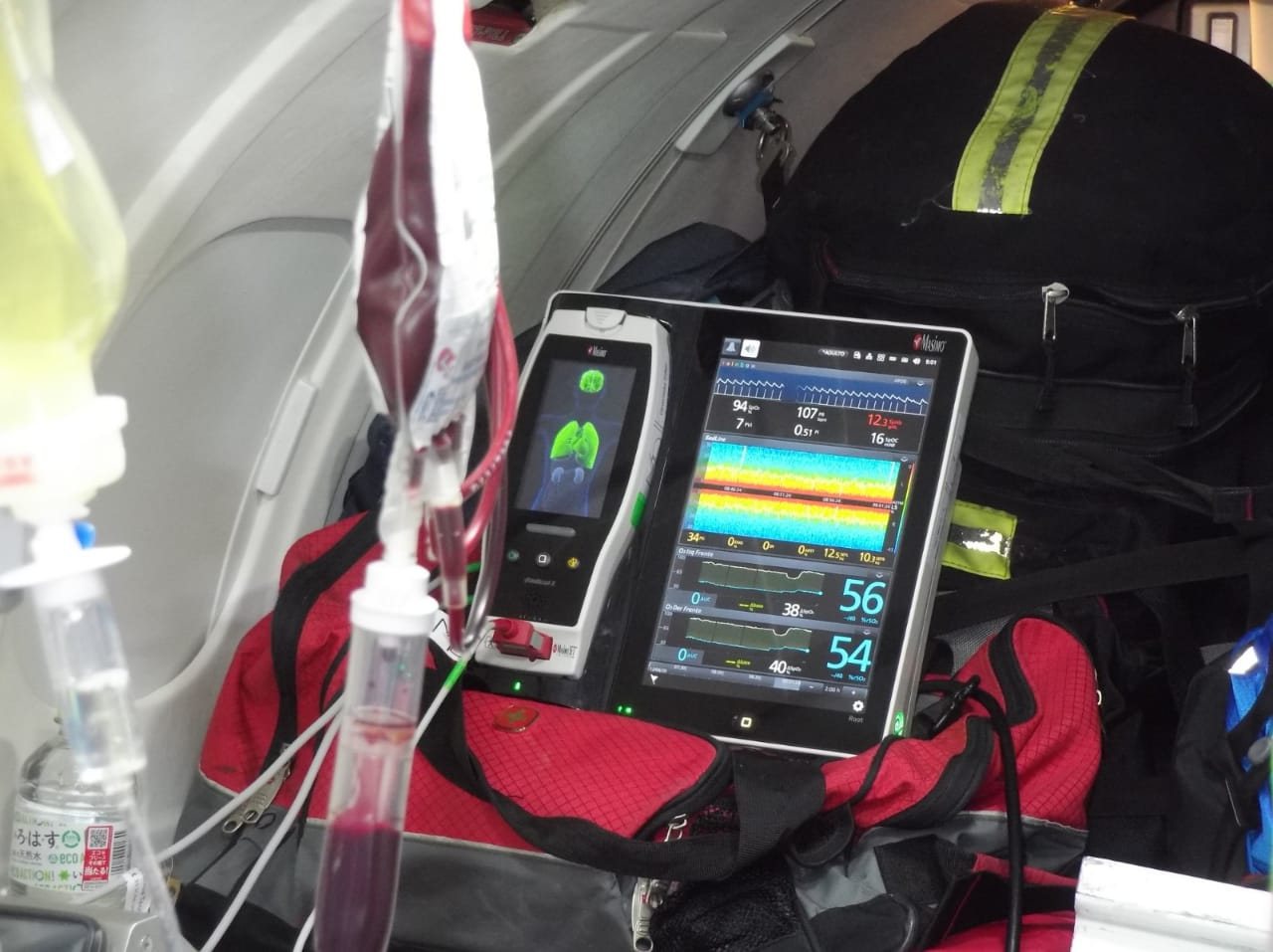
An ECMO mission carries a larger team than a standard critical care flight. A typical configuration is an ICU physician with ECMO experience, a perfusionist, and a flight paramedic or critical care paramedic, with a second perfusionist added on ultra-long-range sectors where crew duty time makes relief necessary. The perfusionist manages the circuit for the whole transfer, from the moment the patient is disconnected from the hospital console to the moment the receiving unit takes over.
Equipment and power management on board
Our medical jets carry the CARDIOHELP system, operated by physicians and perfusionists trained specifically in ECMO patient management. Circuit components, oxygenator, tubing packs and cannulae are carried in duplicate on long sectors, because an in-flight circuit change is the one failure the team cannot resolve by landing early.
Power is planned as carefully as the medicine. The aircraft inverter supply is backed by battery capacity sized for the full sector plus ground time at both ends, and the team runs a power handover protocol at every transition: hospital mains to transport batteries, transport batteries to aircraft supply, and back again at the receiving hospital.
Remote cannulation
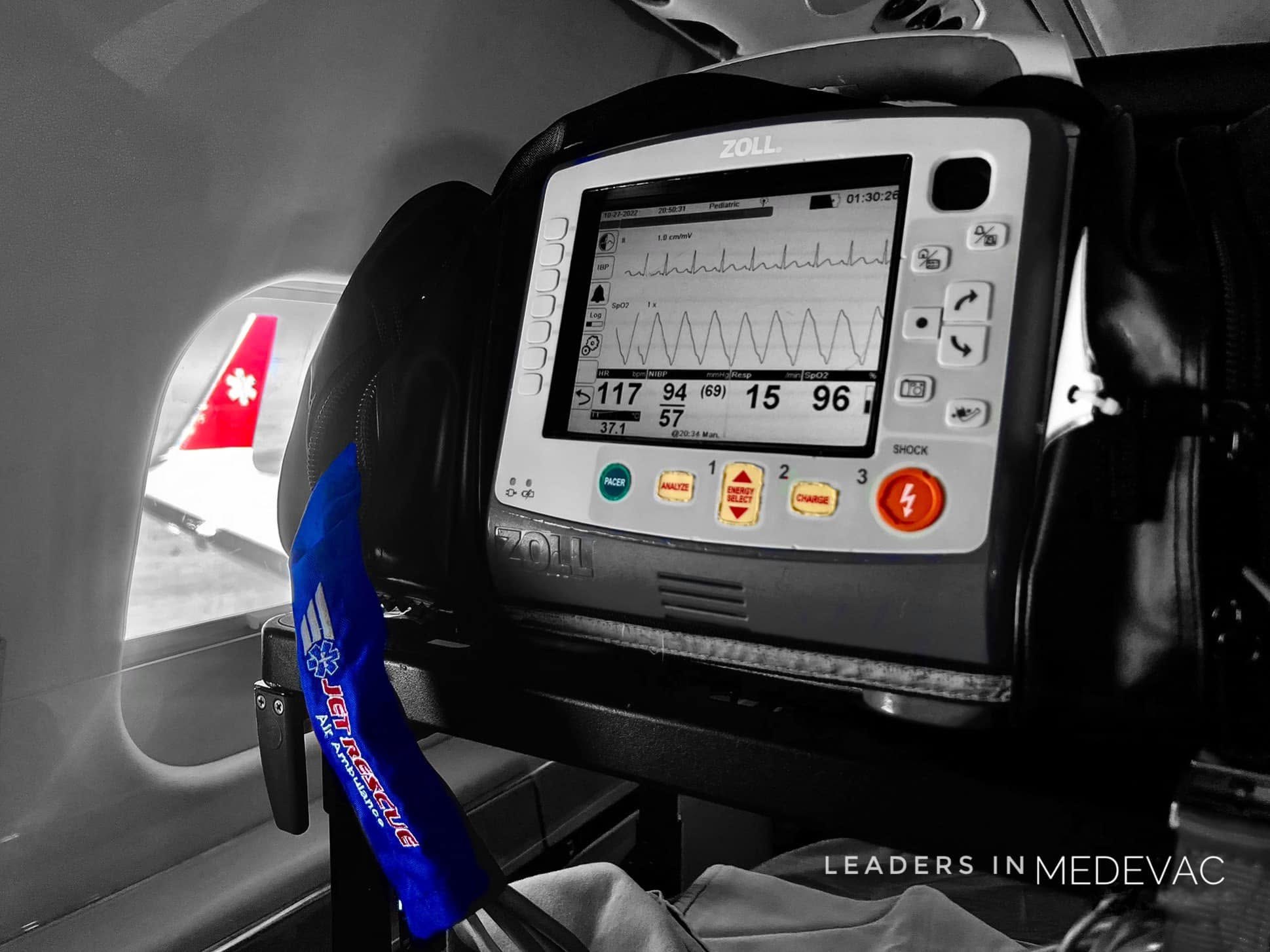
In selected cases we can send a cannulation team to the referring hospital to place the patient on ECMO before the flight, where the referring centre does not run an ECMO programme of its own. This is assessed case by case with the referring physicians, and it depends on the clinical picture, the facilities available at origin, and the time the patient has.
Aircraft requirements for an ECMO sector
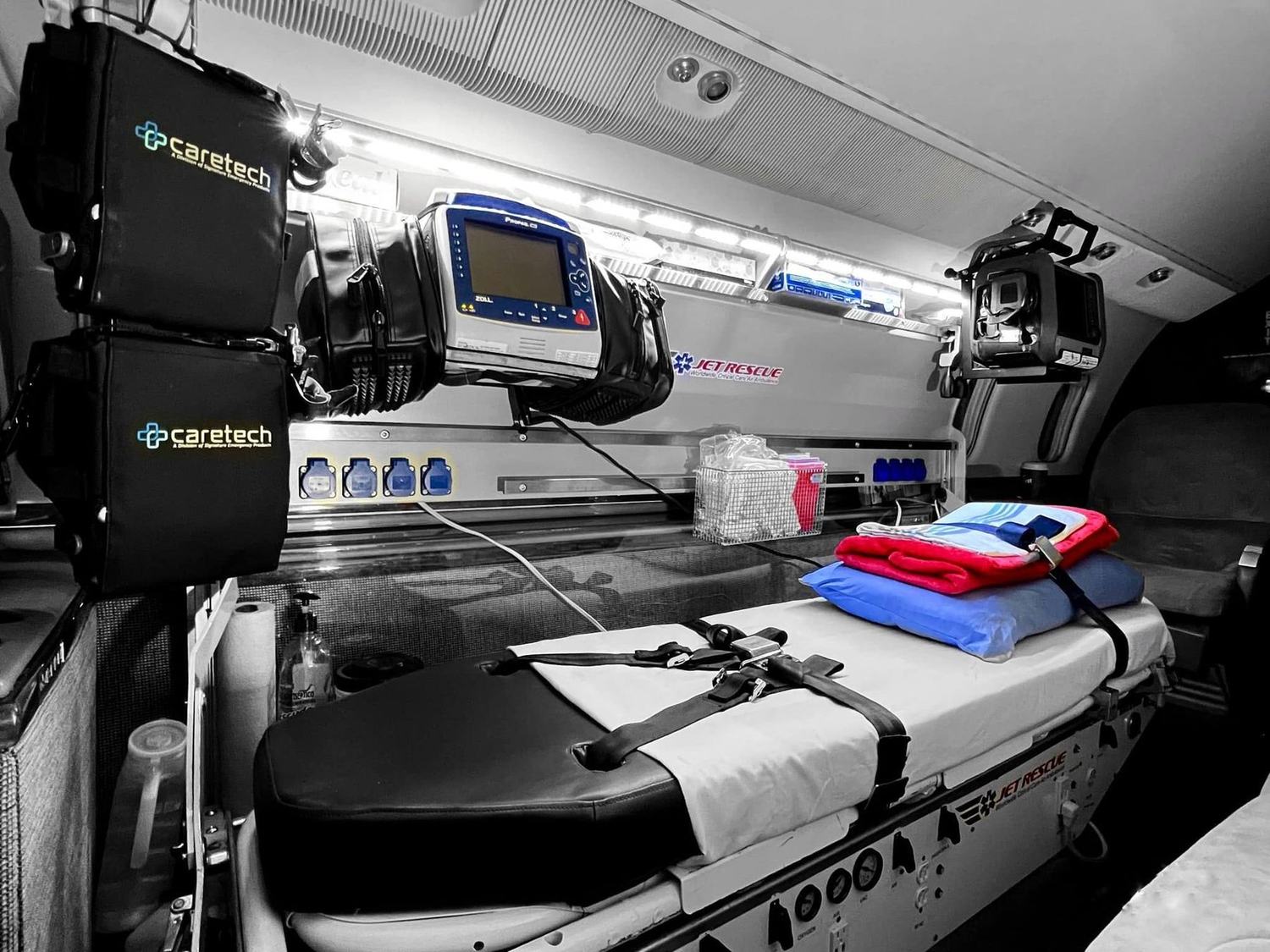
An ECMO patient cannot be moved in a light cabin. The circuit, the console, the ventilator, the infusion pumps and the team all have to fit with enough working space for the perfusionist to reach the cannulae in flight. Our Learjet fleet has been modernised to current aviation safety standards and configured for this, with cabin loading that allows the stretcher, the console and the crew to be positioned for access rather than for convenience.
Ultra-long-range ECMO planning
The August 2020 Mexico to Asia mission covered more than 6,500 nautical miles. Sectors of that length are planned backwards from the circuit, not from the flight plan: fuel stops are chosen for ground handling and medical contingency rather than for price, alternate airports are screened for ECMO-capable receiving hospitals, and customs and overflight clearances are obtained in advance for every state on the route so the aircraft is never held on the ground with a patient on circuit.
Insurance and authorisation
ECMO transfers are high-value cases and insurers want documentation before they authorise. We prepare the clinical justification with the referring team, submit it directly to the carrier, and bill the insurer directly where the policy allows it. We work with commercial health insurers, travel and expatriate policies, and corporate medical plans, and we will tell you honestly before the flight what we expect the carrier to cover and what is likely to fall to the family.
Requesting an ECMO transfer
Call the operations centre and ask for the ECMO desk. Have ready the referring physician, the current circuit configuration and flows, ventilator settings, vasoactive support, the last blood gas, and the name of the receiving unit if one has already accepted. We will give you an initial feasibility answer on the same call and a crewed plan once the referring and receiving intensivists have spoken.
Read the case study: the longest civilian adult ECMO flight in the world, Mexico to South Korea
Related conditions: air ambulance for ventilated patients, air ambulance for cardiac patients.
Tell us about the patient
A mission coordinator answers 24 hours a day. The benefits review is free and carries no obligation.