

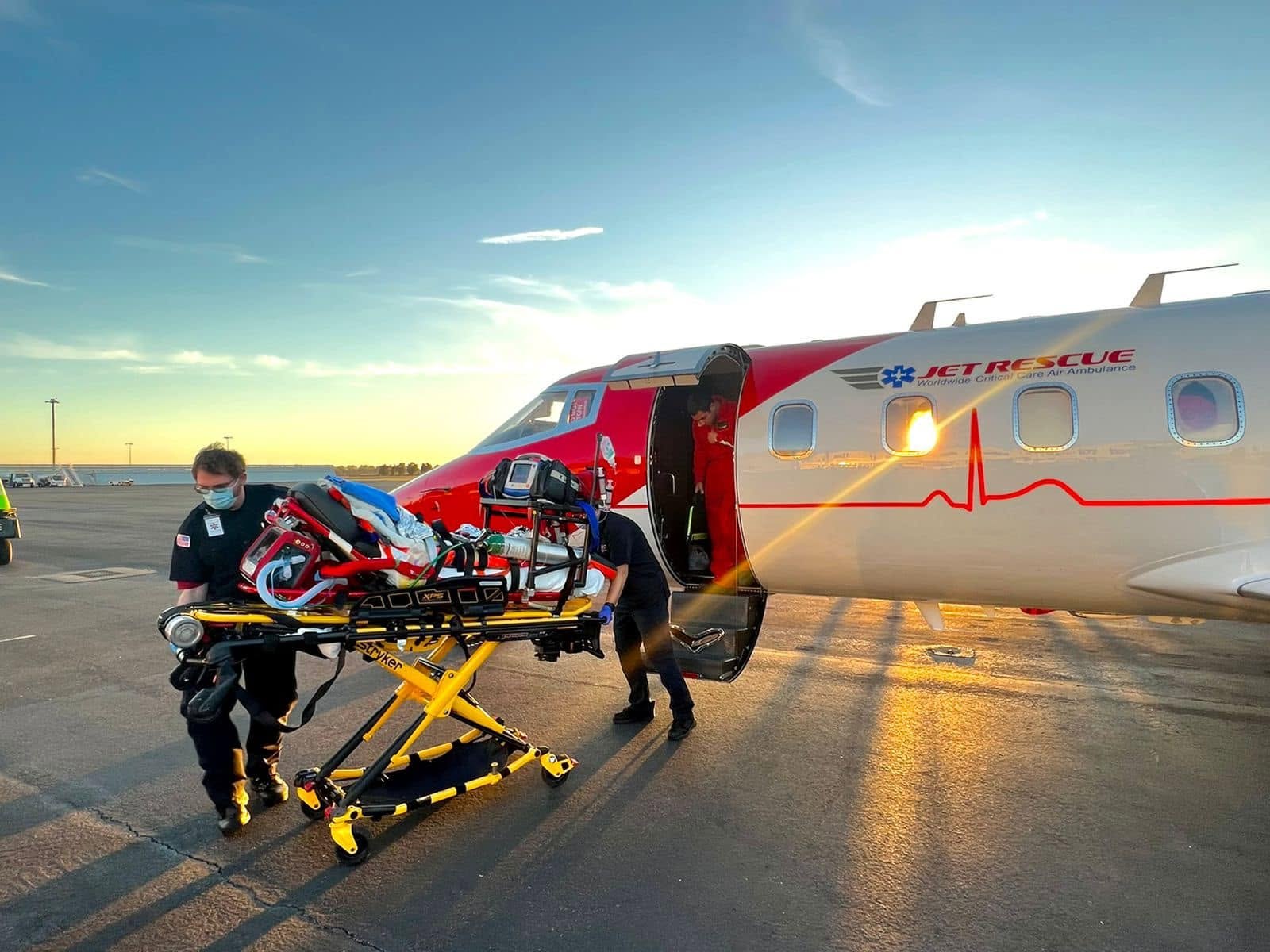
Cancun Air Ambulance to the United States
Air ambulance from Cancun, 460 nm from Miami. Riviera Maya ground legs, dive and chamber cases, and bedside-to-bedside ICU transport.
The busiest medical corridor in Mexico
Cancún International (CUN / MMUN) handled more than 29 million passengers in 2025, close to 19.5 million of them international, on two asphalt runways — 12R/30L at 3,500 metres and 12L/30R at 2,800 metres — at 20 feet of elevation. Terminal 3 is dedicated to international traffic with its own immigration and customs. For a medical flight that combination is as good as it gets in Mexico: a long runway at sea level, customs on site, and handling agents who have seen an air ambulance before.
Volume is also why this is the corridor where most things go wrong. More visitors means more accidents, more hospital admissions, more insurance disputes and more families trying to arrange a transport from a hotel lobby.
The hospitals, and what happens in them
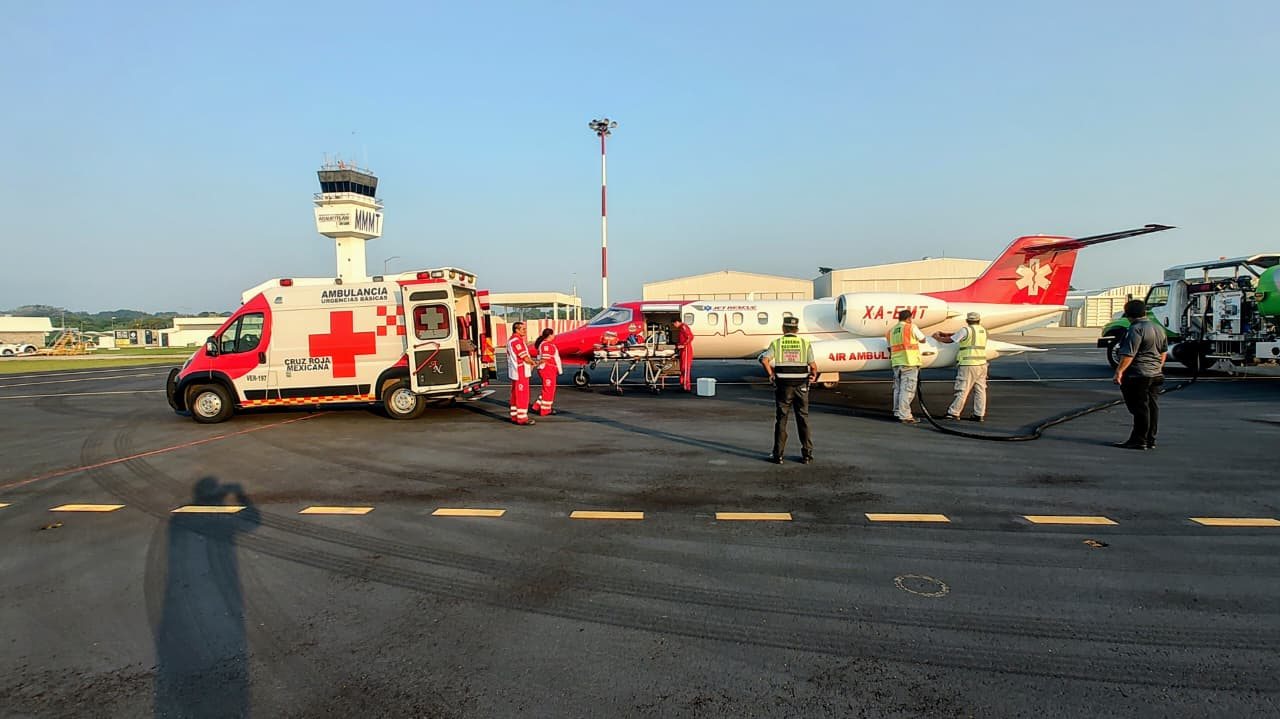
We most often collect from Galenia, Hospiten, Amerimed, Azura and the Costamed facilities down the coast. They are genuinely capable hospitals and they are used to foreign patients. They are also private businesses, and the single most common surprise for a family is that the hospital bill and the transport are two separate negotiations — the hospital bill is frequently the larger of the two, and it has to be settled or guaranteed before the patient is released to us.
We do not get involved in what the hospital charges. What we do is tell you early that it is coming, so the discharge is not held up on the day the aircraft is standing on the ramp.
Diving, cenotes and decompression illness
The reef, the cenotes and Cozumel make this coast one of the busiest diving regions in the world, and decompression illness is the case type here that needs the most careful planning. A diver who has been treated in a recompression chamber in Playa del Carmen or Cozumel cannot simply be loaded onto a normal flight afterwards. The interval since the last treatment and the cabin altitude flown both have to be planned with the treating hyperbaric physician, because an ordinary cabin altitude can undo the treatment.
We fly these cases at the cabin altitude the hyperbaric physician specifies — sometimes a lower cruise altitude, a longer flight and more fuel — and we plan it that way from the first call. Tell us it is a dive case straight away.
The Riviera Maya is not Cancun
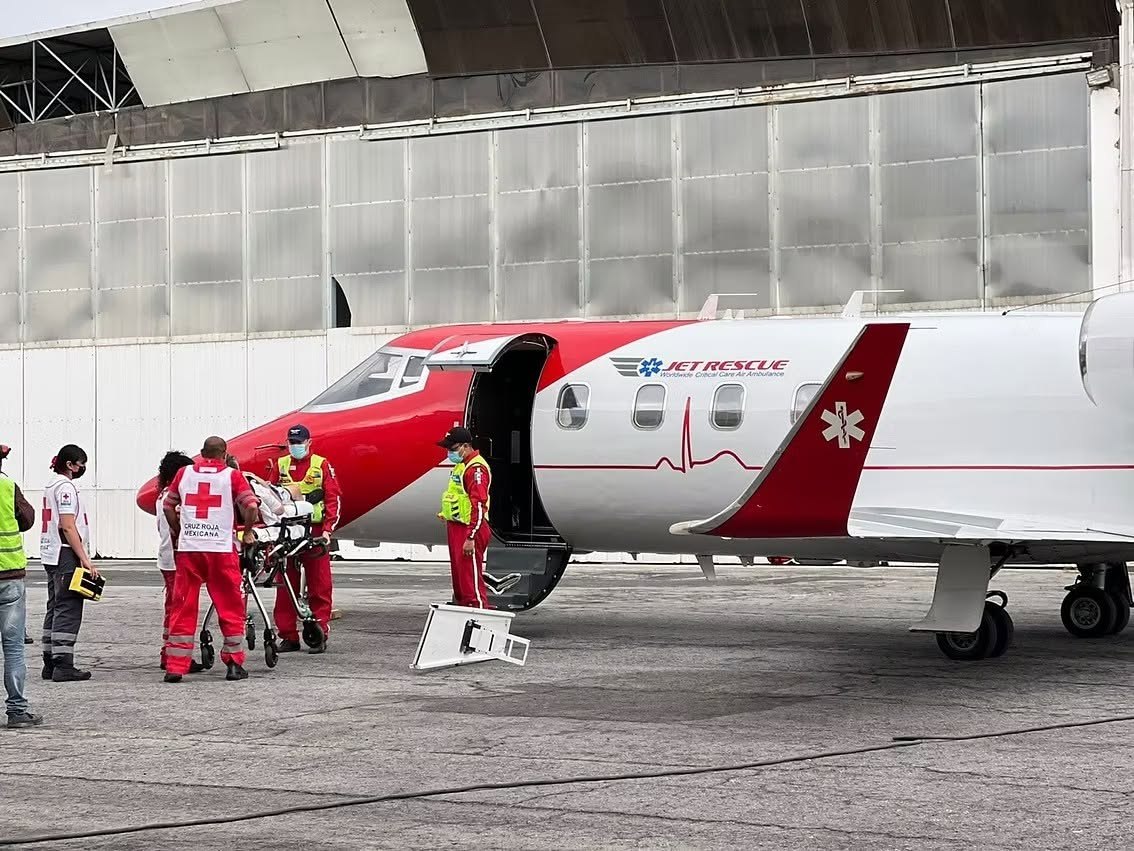
Patients are admitted in Playa del Carmen, Tulum, Puerto Morelos, Akumal and on Cozumel, and each of those adds a ground leg to the plan. Tulum now has its own airport, but the hospital the patient is in, the road at the hour we are moving and where the specialist equipment lives all decide the routing. We work the ground leg into the schedule rather than leaving the family to discover it. For Cozumel and the islands the ferry or a short hop into CUN comes first.
Where patients go from Cancun
- Miami, Fort Lauderdale and Tampa — the shortest legs out of here, and the most common.
- Houston, Dallas, Atlanta, New York and Chicago, and onward to the patient's own hospital. See Mexico to Houston.
- Toronto, Montreal, Ottawa and the western provinces — see Canada air ambulance.
- Europe, for the large European visitor population, on the long-range aircraft.
- Mexico City or Monterrey, when the patient needs a specialist centre now and is not yet fit to cross a border.
Insurance, assistance companies and the thing that delays cases
Cancún is where travel insurers and assistance companies are most active, and that cuts both ways. A policy that approves the repatriation makes everything simple. A policy that stalls makes everything slow, and the stall is almost never clinical — it is a missing form, an unconfirmed receiving bed or a pre-existing condition clause nobody read.
We work the receiving hospital's written acceptance first, because that is the document everything else hangs on, and we deal with the insurer directly so the family is not relaying messages. See does insurance cover an air ambulance and, if it has already been refused, insurance denied.
Cruise passengers
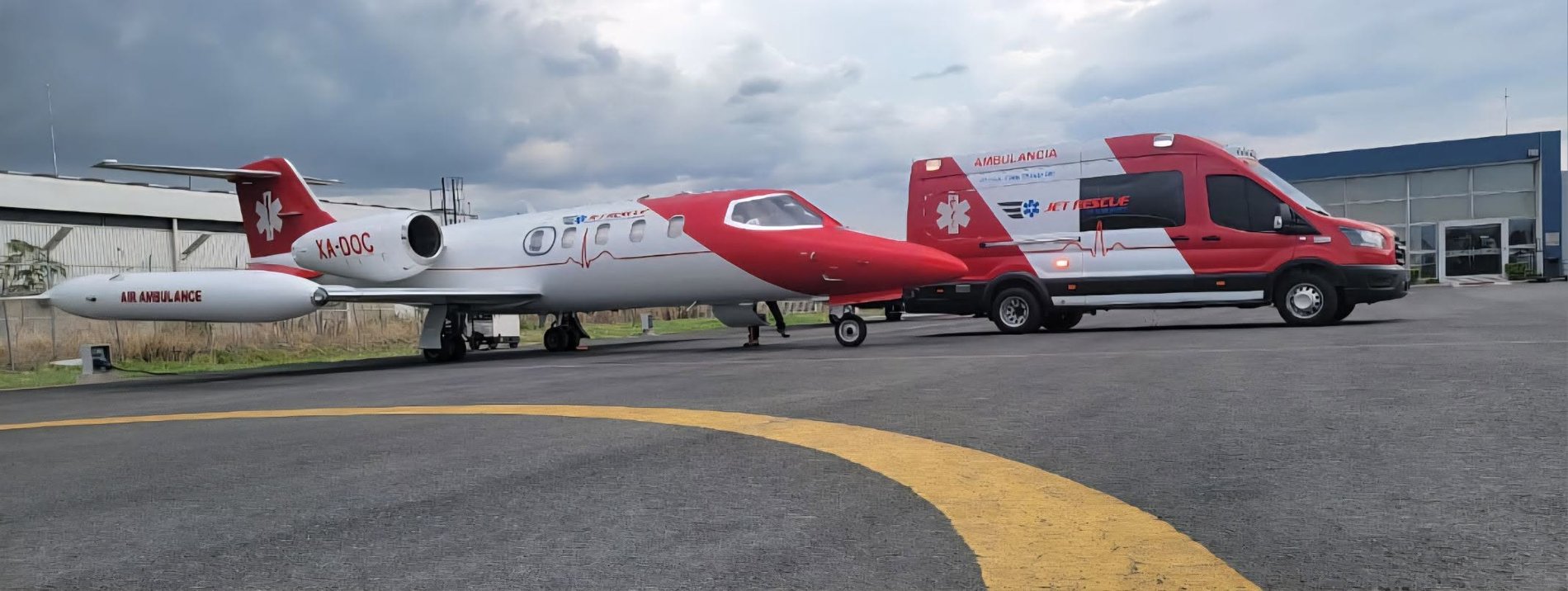
A passenger left behind by a ship is a particular kind of case: no accommodation, no luggage, sometimes no documents, and a medical department back on the vessel that may or may not be paying. Say at the first call that it is a cruise case. We have run enough of them to know which questions to ask the line and in what order.
Common questions
How quickly can you get out of Cancun?
Most cases launch the same day. The aircraft is rarely what sets the clock; the receiving hospital's acceptance and the discharge paperwork are, which is why we start on both immediately.
Do we have to settle the hospital bill before the patient can leave?
In practice, yes — it has to be settled or formally guaranteed. It is separate from the cost of the flight, and it is usually the larger number. We will say so early rather than let it ambush the departure.
Can you take a patient on a ventilator or on infusions?
Yes. That is the standard configuration: transport ventilator, monitor, pumps, a flight physician and a critical care paramedic.
Is an air ambulance always necessary?
No, and we will tell you when it is not. A stable, non-ambulatory patient can often travel on a commercial flight with a medical escort for a fraction of the cost. The honest recommendation is part of what you are paying us for.
What about the rest of Quintana Roo and the Yucatan?
We fly the whole region — see Mexican Caribbean air ambulance.
Call +1.786.619.1268 and ask for a mission coordinator, or send the case details. The clinical review is free and there is no obligation to fly with us.
Tell us about the patient
A mission coordinator answers 24 hours a day. The benefits review is free and carries no obligation.