


Case Manager
Jet Rescue Air Helping Case Managers to coordinate Air Ambulance. Call Us: +17866191268
What a case manager actually needs from an air ambulance provider
Not a brochure. A disposition, a date, and a document trail that survives review. Most of the friction in a medical transfer is not flying the patient — it is finding a receiving physician who will accept, agreeing what level of care travels with the patient, and producing the paperwork that lets you close the chart. That is the part we do.
You will speak to a mission coordinator who stays with your case from referral through admission, and a flight physician reviews the clinical picture directly with the treating team. We are not a broker passing your patient to whichever operator answers first.
Who we are
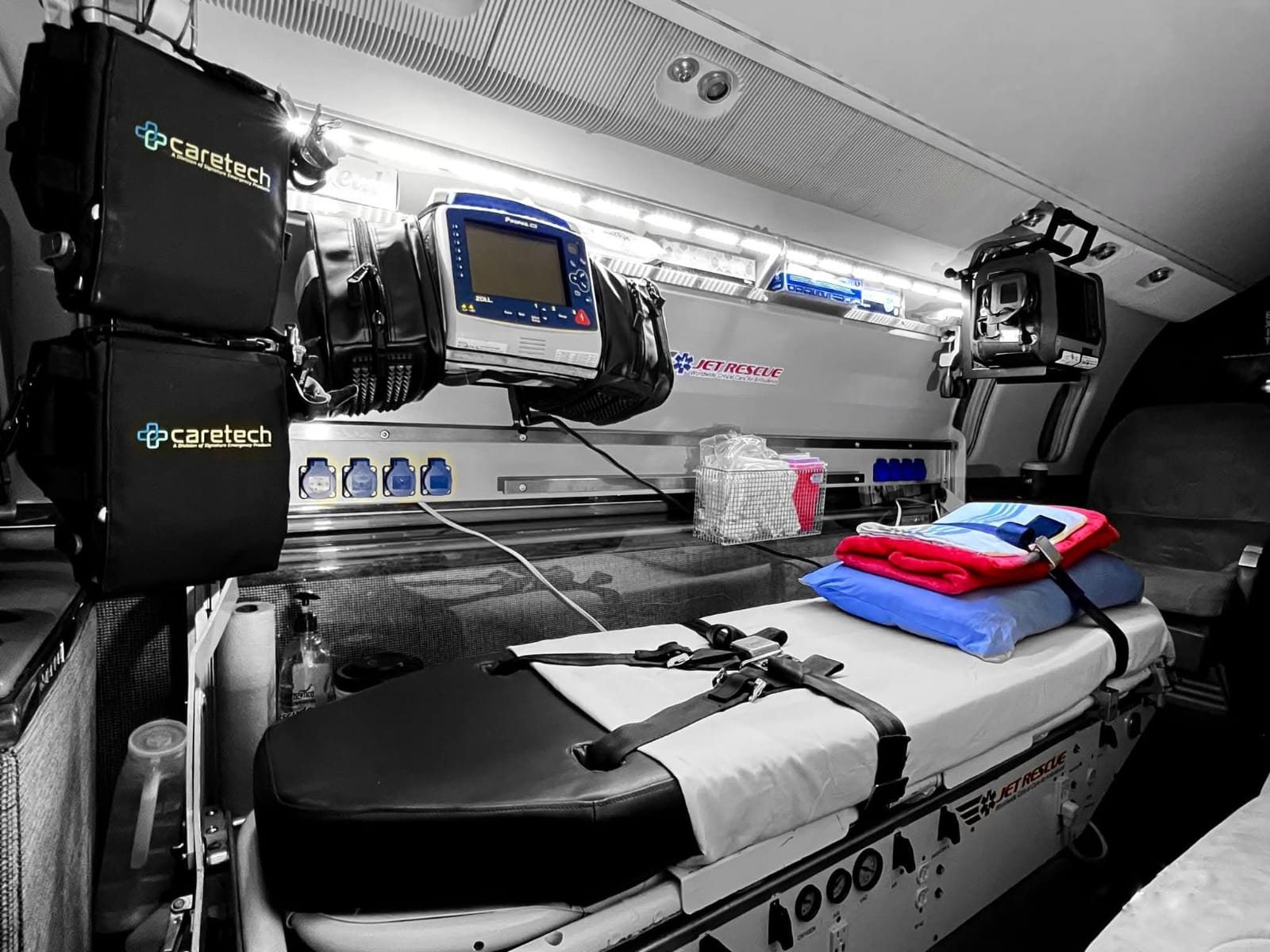
Jet Rescue is a Florida-licensed fixed-wing air ambulance program. We own and operate our own ICU-configured jets and fly them with our own crews, across the United States and Canada and on to the Caribbean, Mexico, Europe, Latin America and Asia.
Most of the work we do for US case managers is domestic: a patient in one American hospital who needs to be in another, and a discharge that will not move until the transport is settled. We also hold regional bases in two countries and run part of the fleet on a floating basis, which shortens time to bedside and keeps the price honest on long legs.

How a case runs
One coordinator owns the case from your first call to the signed handover at the receiving bed. That coordinator works your patient's insurer, the sending and receiving facilities and the attending physicians directly, so you are not relaying messages between four parties. Bed to bed, one phone number, one file.
What to send us to open a case
Patient location and facility, diagnosis and present condition, level of care, mobility, airway and ventilator status, infusions, dialysis dependence, destination city, whether family has been contacted, and whether an insurer, consulate or employer is involved. Nothing more is needed to get a real answer.
A flight physician reviews it, usually the same day. You get back the transport mode the patient actually needs, the crew and equipment plan, the aircraft, the routing and an honest departure window — not just a price. There is no charge for the review and no obligation to proceed.
The case types we are asked for most
- Hospital-to-hospital transfers within the United States, where the receiving centre has a service the sending hospital does not.
- Transfers to a specialist centre — transplant, burns, paediatric cardiac surgery, oncology — that does not exist in the patient's region.
- Repatriation of an unfunded or uninsured foreign national who no longer meets inpatient criteria and whom no post-acute facility will accept. This has its own page covering consent, receiving-facility confirmation and consular travel documents.
- Insured international patients repatriated under a travel, expatriate or corporate policy, where the insurer wants direct billing and a documented chain of care.
- Neonatal and paediatric transfers, which are crewed and equipped differently and have their own pages.
- Patients going home to die. Comfort-focused transfers with the family travelling, arranged so the patient arrives with dignity and a receiving team expecting them.
What you receive before and after the flight
- Written acceptance from the receiving facility, naming the admitting physician, the service and the bed.
- Signed consent, translated where required, with interpreter attestation.
- The flight physician's fitness-to-fly assessment and transport plan.
- The complete transport medical record — vital signs, interventions and medications given in flight.
- A signed handover document confirming the patient was admitted at the other end, not merely delivered.
- One point of contact throughout, and confirmation after arrival.
Three modes, and the honest recommendation
Not every patient needs an air ambulance, and recommending one where a medical escort is clinically sufficient is how this service becomes expensive for no reason. A dedicated air ambulance is for stretcher-bound and ICU-level patients — ventilator dependence, vasoactive infusions, balloon pump, neonatal isolette, or anyone who cannot tolerate a commercial cabin. A commercial airline stretcher carries a non-ambulatory but stable patient with a medical crew and oxygen. A commercial medical escort sends a flight paramedic with a patient who tolerates a seat, and covers more cases than most case managers expect.
We will tell you which one the patient needs, including when the answer is the cheapest one.
When we say no
We decline cases. A patient who should not fly yet, a transfer with no confirmed receiving physician, a repatriation without valid informed consent, or a destination where we cannot verify the receiving facility — we will say so in writing rather than quietly take the booking. A discharge planner needs a provider whose refusal means something.
Reaching us
Call at any hour and ask for a mission coordinator. Cases are accepted around the clock, and the clinical review happens in hours, not days.
Tell us about the patient
A mission coordinator answers 24 hours a day. The benefits review is free and carries no obligation.