


Neonatal Air Ambulance - Advanced NICU Critical Care Transport for Newborns
Specialized neonatal and pediatric air ambulance transport with incubators and pediatric critical-care teams. Call +1-786-619-1268.
The incubator flies as part of the aircraft
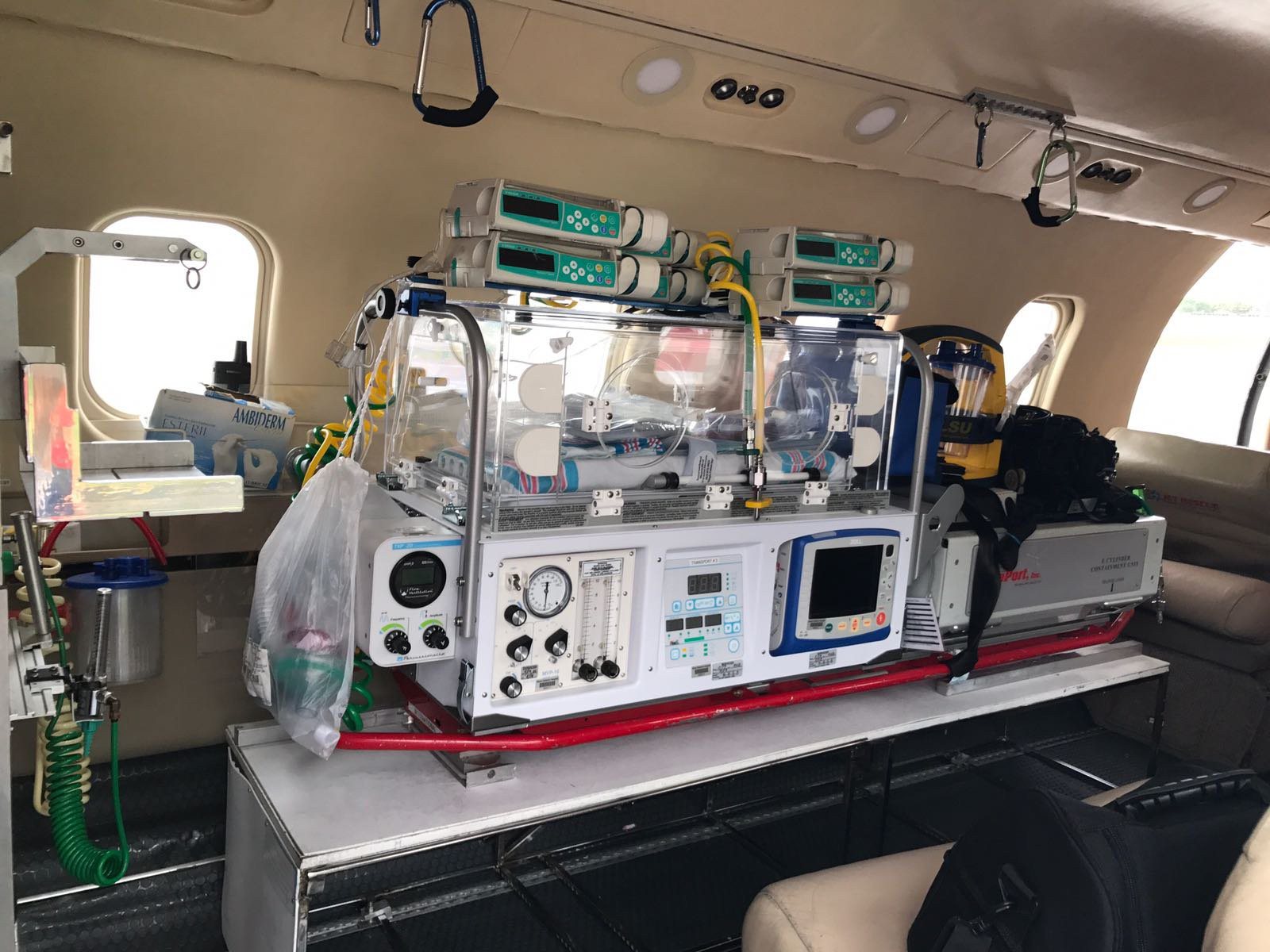
A neonatal transfer is not an adult transfer with a smaller patient. The incubator has to be mounted to the aircraft’s own stretcher platform and certified to stay there through turbulence, with its own power, its own gas supply and the syringe pumps, transport ventilator and monitor riding with it.
Our aircraft carry a transport incubator with a neonatal ventilator, invasive and non-invasive monitoring and multiple infusion channels, flown by crews who train for these cases in our Learjet medical simulator.
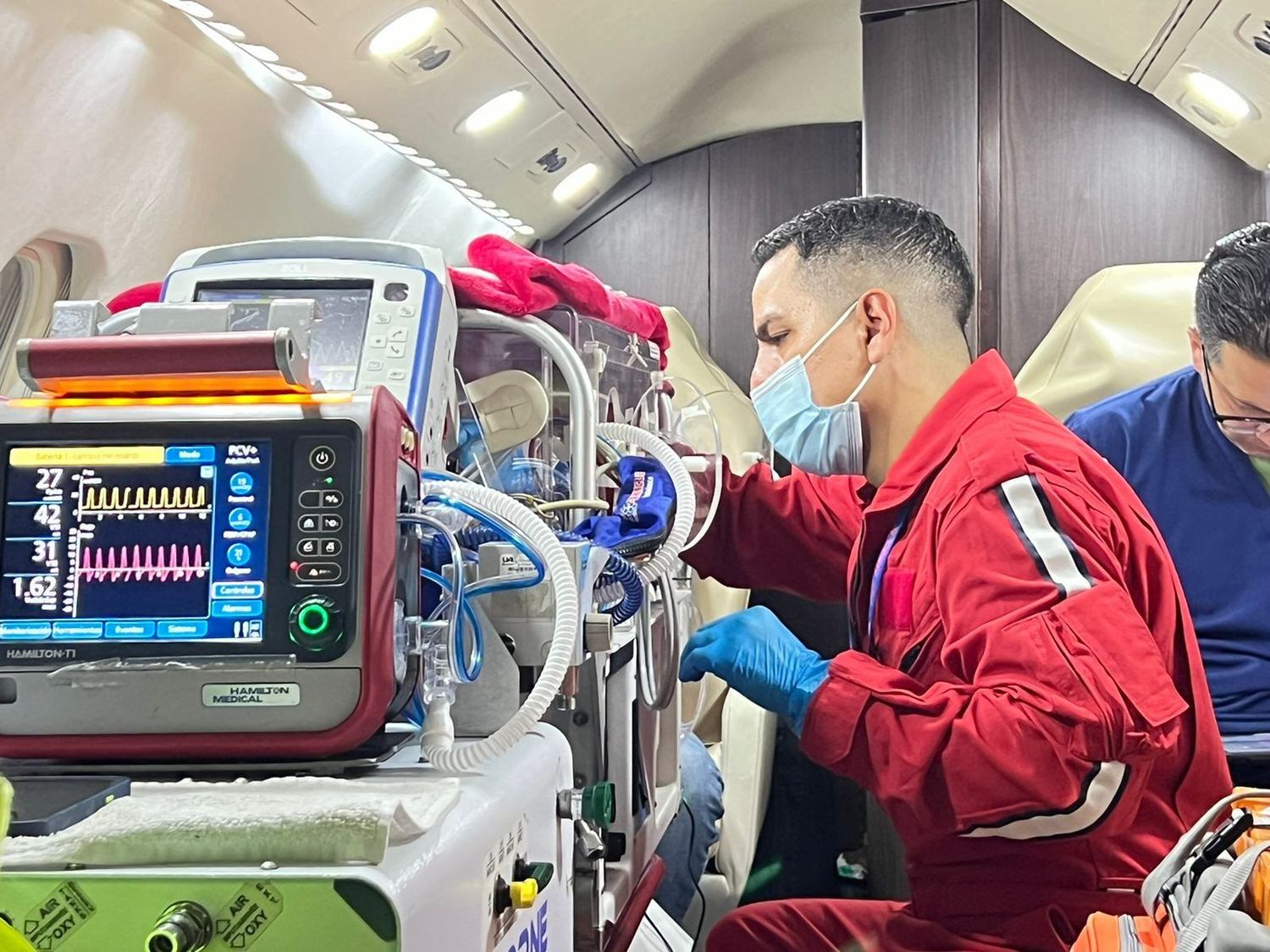
Neonatal Air Ambulance Service
Since our inception, the air medical transport by air ambulance of newborns to tertiary care facilities has been one our specialties. These delicate and precious patients are flown under the care of our own neonatal and pediatric intensive care specialists. Neonatal air ambulance missions always include a neonatologist as well as 2 Critical Care Neonatal Nurses.
All neonatal specialty team members have a minimum of three years critical care experience in Level III or Level IV Neonatal Intensive Care Units and are certified in Neonatal Resuscitation Program (NRP). Additional advanced certifications include Certified Neonatal Pediatric Transport (C-NPT) and Neonatal Pediatric Specialist (RRT-NPS)
Jet Rescue Air Ambulance utilizes the latest in neonatal transport technology and equipment to ensure top quality care during transport. Our transport isolettes have the capability to maintain a neutral thermal environment, accommodate complex ventilation and invasive line needs. Jet Rescue Air Ambulance is also equipped to deliver Inhaled Nitric Oxide (INO) during transport if needed.
We understand that this may be a very stressful time for families. One call to our communications center is all it takes. Our lair ambulance specialists will handle all phases of the transport from ground transportation to working with your private insurance company to verify benefits for the transport.
When would you use air medical transport for pediatric & neonatal patients?
Neonatal air medical transport is used when neonates need a transfer to a specialized facility for a major operation, procedure or evaluation. This can be used for neonatal and pediatric cases and isn’t limited to urgent cases. We can help you decide the best method of transportation.
Planes that are equipped to handle neonatal patients
Equipment
- Airborne Voyager Isolette with thermoregulation temperature control, Propaq Encore monitor with invasive capabilities, Crossvent 2i+ ventilator, and Braun Infusomat Syringe IV pumps
- INOmax DSIR Inhaled Nitric Oxide system
Why a neonate is not simply a small patient
Altitude, vibration, noise and time on the ramp act faster and harder on a newborn than on anyone else we carry. An infant under two kilograms loses core temperature in minutes. Reduced cabin pressure expands trapped gas, which matters enormously in an undrained pneumothorax or an obstructed bowel. Vibration makes auscultation useless and works loose the lines that were perfectly secure on the ground. Hypoglycaemia develops quietly across a flight an adult would sleep through.
So a neonatal mission is planned backwards from the baby: the cabin altitude the aircraft will hold, the thermal plan from the referring incubator to the receiving one, which infusions must not be interrupted, and what the crew does if the infant deteriorates at cruise. The airframe is chosen to fit that plan rather than the plan being trimmed to fit an available aircraft.
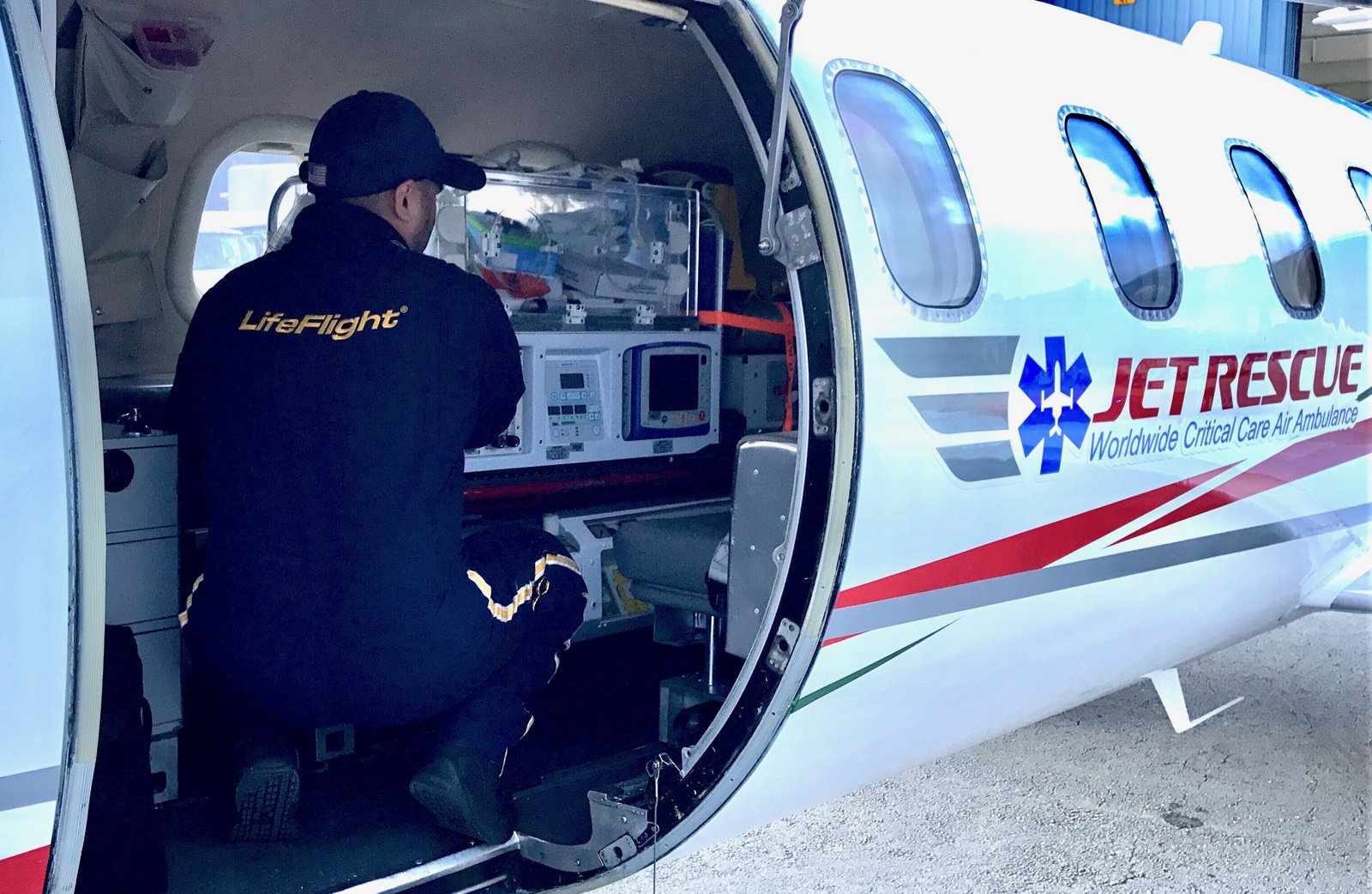
How the mission is equipped
- Transport isolette with servo-controlled thermoregulation, secured to the airframe, the infant visible and reachable throughout.
- Neonatal ventilation, invasive and non-invasive, with blended air and oxygen rather than 100% oxygen, and gas calculated for the whole route plus reserve.
- Syringe-pump infusions for prostaglandin, inotropes, sedation, antibiotics and dextrose, with battery autonomy covering the ground segments as well as the flight.
- Full neonatal monitoring — ECG, invasive and non-invasive pressures, pre- and post-ductal saturations where indicated, capnography and continuous temperature.
- Nitric oxide and other specialised therapies where the referring and receiving teams agree they are indicated and the aircraft permits.
- Incubator to incubator. The mission starts at the referring unit and finishes at the receiving one. It does not start or finish at an airport.
Who flies
Each neonatal mission is crewed for the individual case, normally a neonatal or paediatric intensive care physician with a neonatal transport nurse or respiratory therapist, scaled up when the infant’s condition demands it. A general adult critical care crew is not sent to a neonatal case. If the right crew cannot be assembled for the window requested, we say so rather than fly the mission short.
What we are asked to move
Extreme prematurity and very low birth weight. Respiratory distress syndrome and meconium aspiration. Persistent pulmonary hypertension of the newborn. Duct-dependent congenital heart disease on prostaglandin, moving to a surgical centre. Congenital diaphragmatic hernia, gastroschisis and other anomalies needing a tertiary unit. Neonatal sepsis. Hypoxic-ischaemic encephalopathy, including transfers for therapeutic hypothermia. And stable post-operative infants going back to a hospital near their family.
What the referring unit should send
Current weight and corrected gestational age, working diagnosis, ventilation mode and settings, infusions and doses, the most recent blood gas, vascular access in place, the receiving unit and accepting neonatologist if already identified, and whether a parent will travel. A mission coordinator opens the case and a flight physician reviews it, then comes back with the crew and equipment plan, the aircraft, the routing and an honest departure window.
Where no receiving unit has been found yet, we find one. We secure confirmed NICU beds across most of the countries we serve and obtain the accepting neonatologist’s acceptance in writing before anything is scheduled.
A parent flies with the baby
On almost every neonatal mission there is a seat for one parent, and wherever the aircraft and the clinical picture allow, we carry one. A mother who is herself still a post-partum patient is assessed before she flies. Where only one can travel, we arrange the other’s commercial routing so the family is reunited on arrival rather than days later.
Newborns crossing a border
A good share of our neonatal work is international — a baby born prematurely while the family was abroad, an infant needing a surgical centre that does not exist in the country of birth, or a stable newborn being brought home after treatment. These carry an administrative layer on top of the clinical one, because a newborn frequently has no passport yet and sometimes no birth certificate. We coordinate with the family’s consulate for the emergency travel document and obtain the civil papers the receiving hospital and the carrier require, as part of the case rather than as an extra.
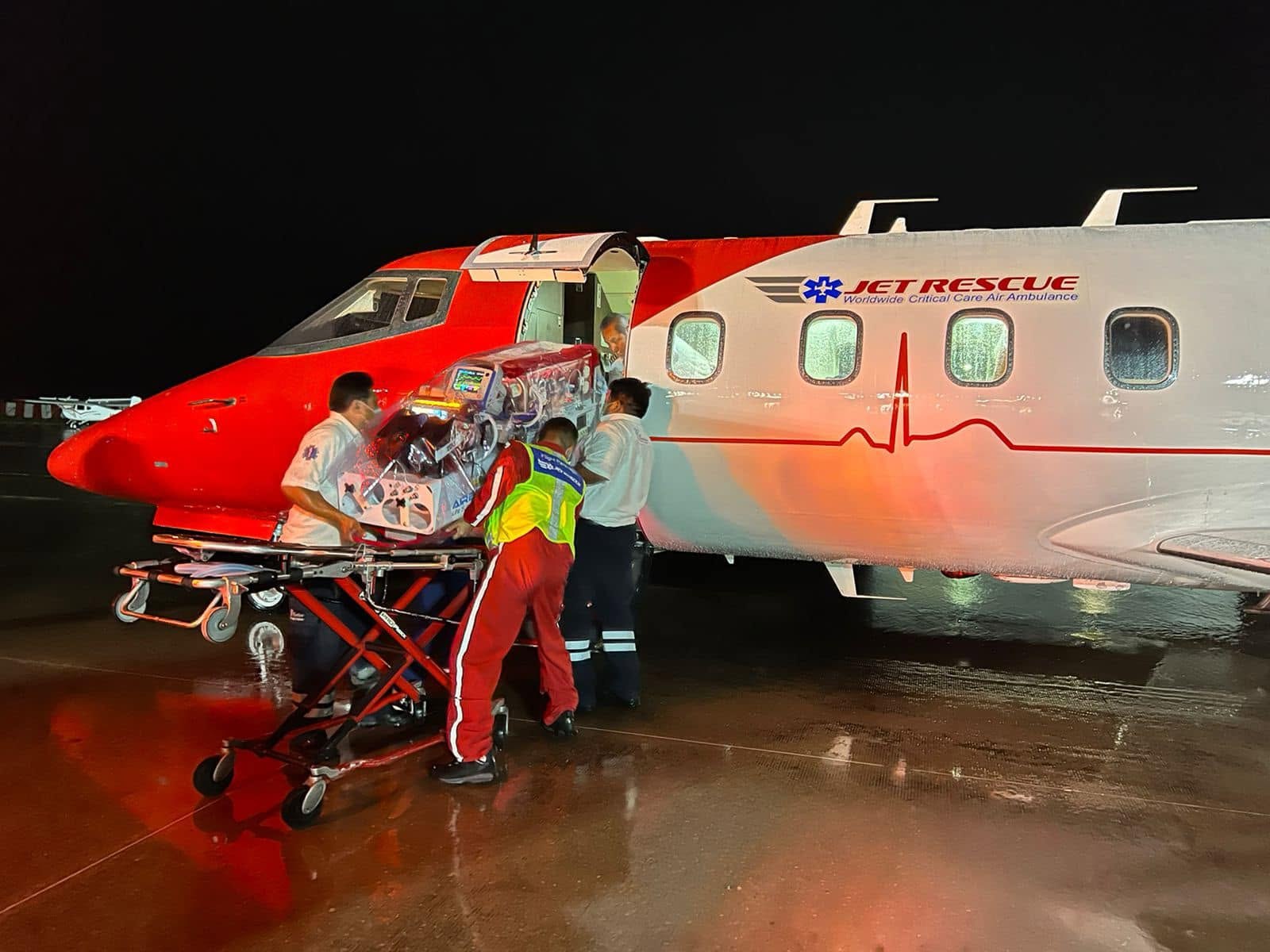
Arranging a neonatal transport
Call at any hour and ask for a mission coordinator. The case goes straight to a flight physician, who will speak directly with your neonatologist and will tell you plainly if the infant should not be moved yet, should go by ground, or should wait for a specific therapy to take effect first.
Tell us about the patient
A mission coordinator answers 24 hours a day. The benefits review is free and carries no obligation.