

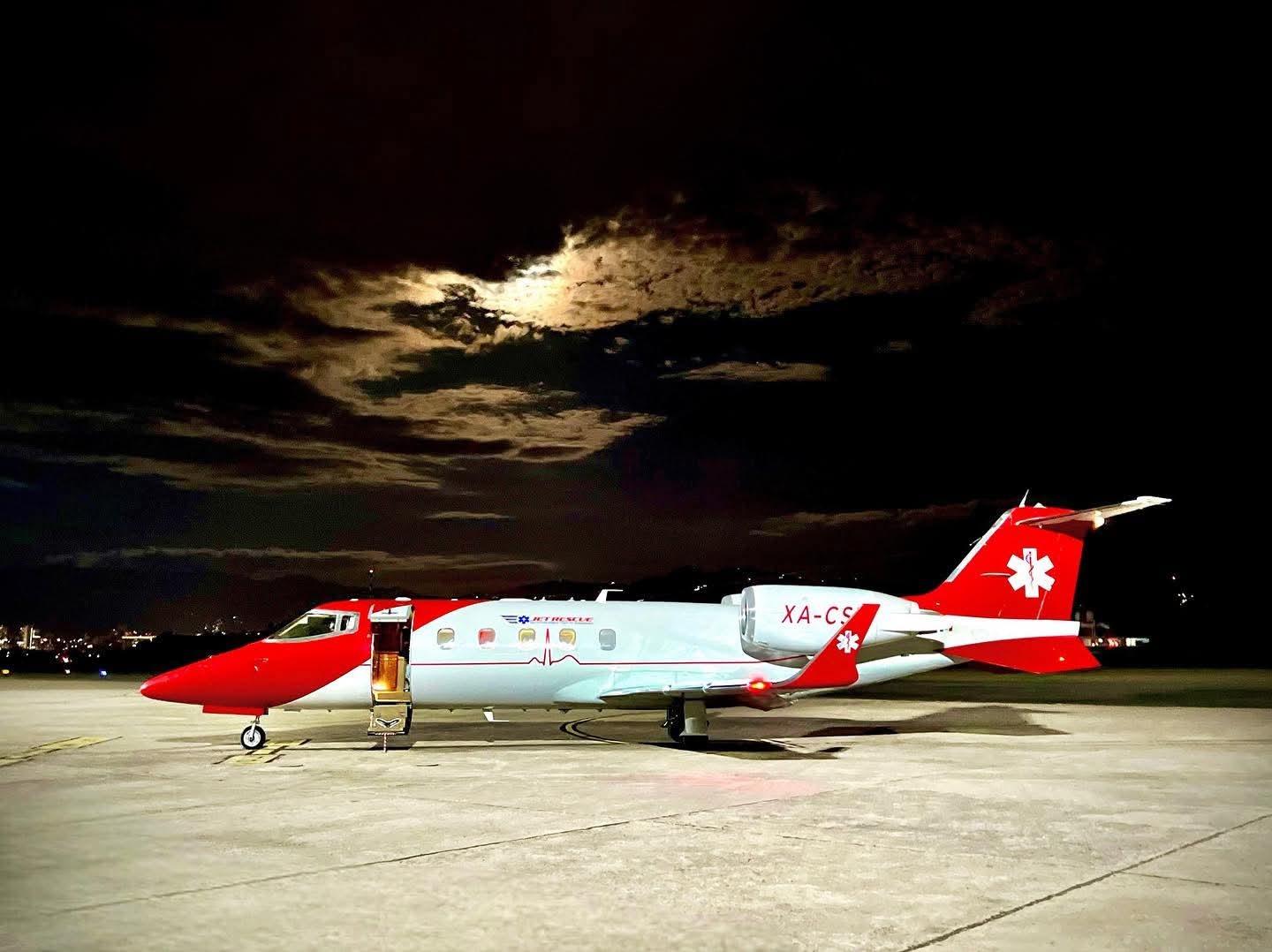
Air Ambulance from Asia to the Americas
Air ambulance from Asia to the Americas: a 7,000 nm journey in three or four sectors, and when a short regional flight comes first.
Air Ambulance Service from Asia
A patient in Asia who needs to reach a hospital in North America faces the longest transport in civil aeromedicine. Bangkok to Los Angeles is over 7,000 nautical miles in a straight line, and no air ambulance flies that in one leg. The real journey is three or four sectors, two sets of crew, 24 to 30 hours door to door, and a patient who has to stay stable through all of it.
Eastbound or westbound
There are two ways across and the choice is made case by case. Eastbound over the Pacific usually stages through northern Japan and Anchorage before dropping into the continental United States. Westbound runs through the Gulf, Europe and the North Atlantic. Wind, the patient's final destination and crew duty limits decide which is shorter in hours rather than miles, and the answer is not always the one the map suggests.

Often the right first move is a short flight
The decision that matters most comes before any of that: whether to attempt the long haul at all. For many Asian cases the correct sequence is a short regional flight to a major medical centre in Bangkok, Singapore, Seoul or Delhi, proper stabilisation and investigation there, and only then a long-range repatriation once the patient can tolerate a day in the air. We say so when that applies, even though it is the smaller job.
What limits the flight
Not range — consumables and crew. Oxygen, drugs, batteries and disposables have to be carried for the whole duration with reserve, and the medical crew has to be able to work a full sector and hand over at a planned stop rather than continuing indefinitely. These flights are planned around the patient's physiology over 30 hours, not around the aircraft's performance.
What is arranged
Jet Rescue arranges the regional and long-range aircraft, the medical crews and their handovers, the permits and technical stops, and the ground legs and hospital acceptance at both ends.

Tell us about the patient
A mission coordinator answers 24 hours a day. The benefits review is free and carries no obligation.