

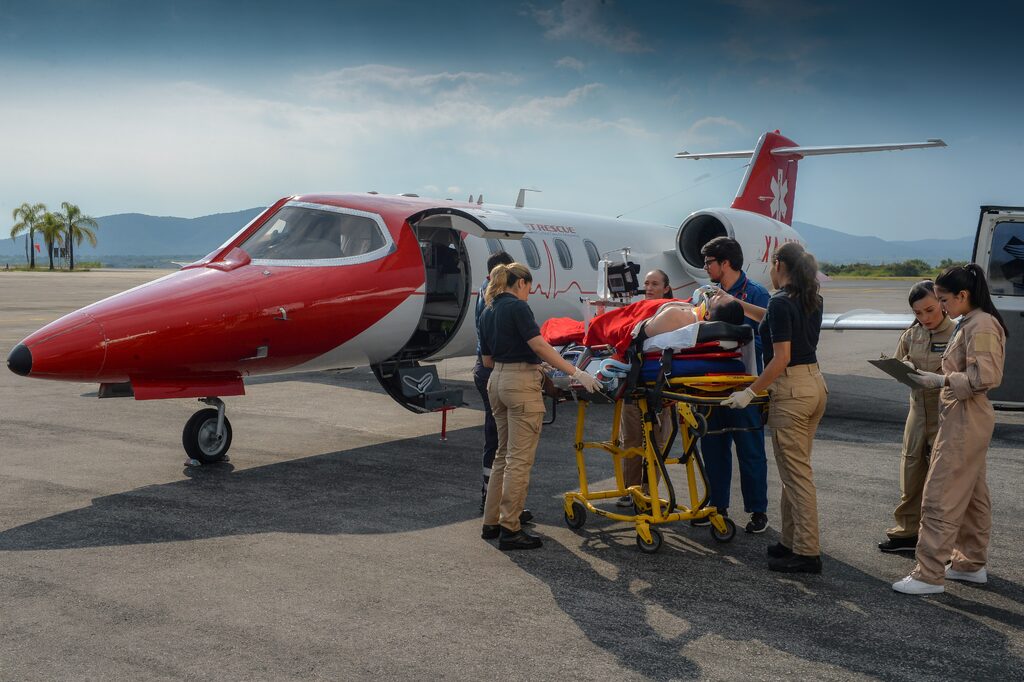
Air Ambulance for Stroke Patients
Moving a stroke patient to a thrombectomy-capable centre: why door-in-door-out time decides the case, and what we need from the sending hospital.
Getting a stroke patient to a centre that can treat them
A stroke patient in a hospital that cannot perform mechanical thrombectomy is in the wrong building, and the only question that matters is how fast that changes. The 2026 AHA/ASA guideline supports thrombectomy in selected patients up to 24 hours from the time they were last known well, and in children aged six and older within 6 hours, or later when imaging shows salvageable brain tissue. A long window is not permission to move slowly: outcomes still fall with every hour.
The clock we can actually move
Families focus on flight time. The number that decides the case is door-in-door-out: how long the patient sits at the sending hospital between arriving and leaving. That is where hours are lost, and most of it is paperwork, acceptance and ground transport rather than flying.
We work that gap from the first call. Receiving-centre acceptance, the neurointerventional team’s availability, the bed, the ambulances at both ends and the flight plan are arranged in parallel, not in sequence. A transfer that waits for each step to finish before starting the next is how a 24-hour window gets spent on the ground.

What the flight itself has to manage
Blood pressure is the main in-flight problem. Both extremes damage the penumbra, the brain tissue that is threatened but not yet dead, and the targets differ before and after thrombolysis or thrombectomy. The flight physician carries the infusions to control it either way and keeps to the parameters set by the sending and receiving neurologists.
Cabin altitude matters more in stroke than in most conditions. A pressurised cabin is not sea level; at a typical cruise cabin altitude the oxygen available in the blood falls, which is the last thing an ischaemic brain needs. The flight is planned around the cabin altitude the patient can tolerate rather than the fastest profile.
The patient is also monitored for the things that turn a transferable stroke into an emergency at 41,000 feet: a falling level of consciousness, a new deficit, seizure, or vomiting with an unprotected airway. Where the risk is high enough, the airway is secured on the ground before departure rather than managed in the air.
What we need from the sending hospital
The CT or MRI and, where it exists, the angiography; the time the patient was last known well, not the time they were found; current medication including anticoagulants and whether thrombolysis has been given; the neurological examination; and the name and number of a physician the receiving centre can speak to directly. With those, acceptance usually moves in hours rather than days.
Who flies
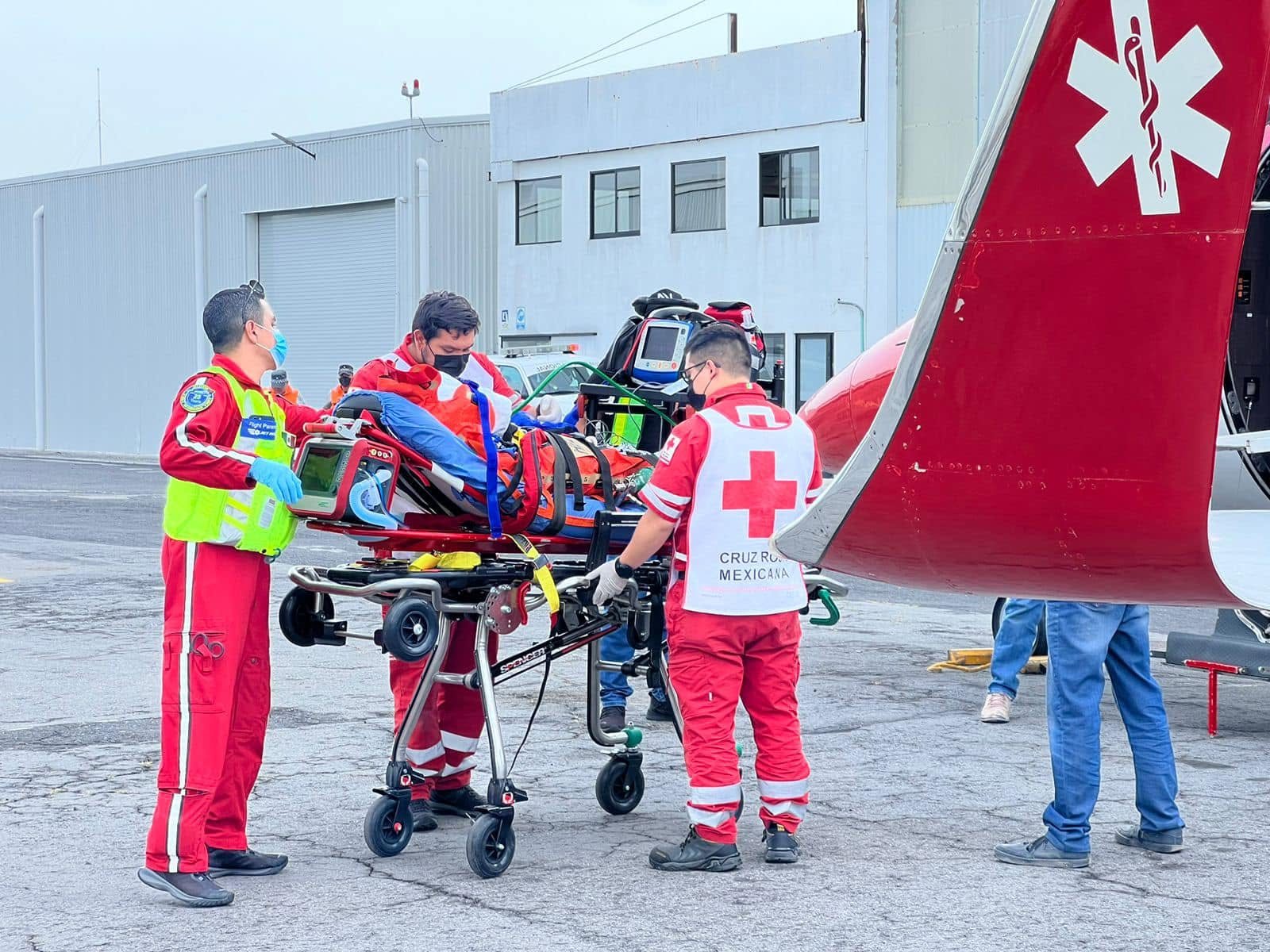
The standard medical crew is a critical care flight physician and a critical care flight paramedic, with a portable intensive care unit on board. For a stroke case that means ventilator and airway capability, invasive monitoring, and the vasoactive and antihypertensive infusions the patient may need at any point in the flight.
Next steps: request a quote, what an air ambulance costs, whether insurance covers it.
Tell us about the patient
A mission coordinator answers 24 hours a day. The benefits review is free and carries no obligation.