

Air Ambulance for Cardiac Patients
Air transfer for cardiac patients after infarction or awaiting catheterisation: what cabin altitude does to a damaged heart, and how the flight is planned.
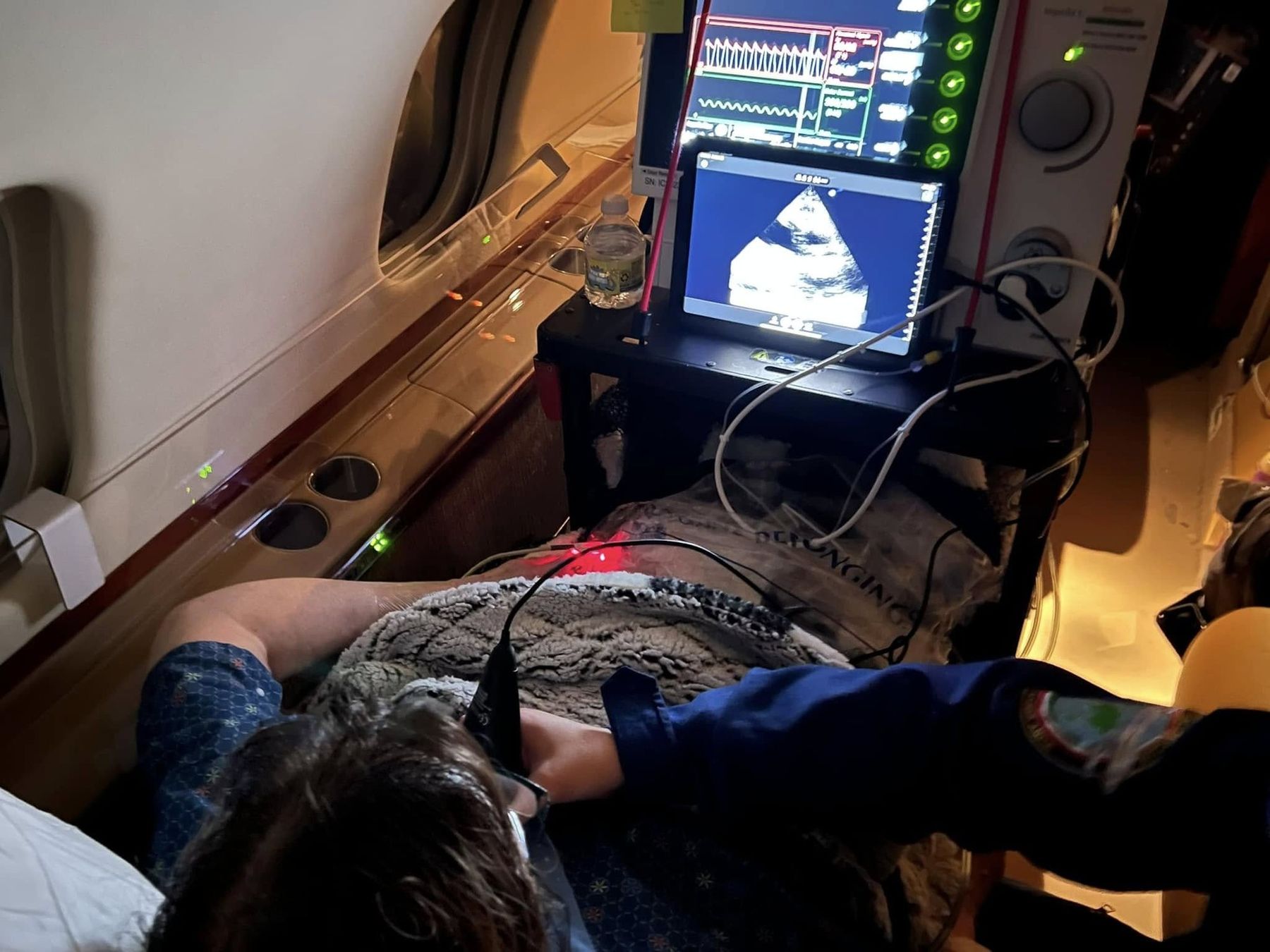
The first air ambulance in Mexico to fly a patient on Impella
An Impella 2.5 is a heart pump the size of a pencil, threaded up through an artery and sat across the aortic valve, where it takes over part of the work of a failing left ventricle. It does not pause for a transfer. Until Jet Rescue did it, no operator in Mexico had moved a patient who was on one.
Why this one is hard
The console, its purge system and its power have to run without interruption from the referring catheterisation lab or ICU, through the ground ambulance, into the aircraft and out again at the receiving hospital — with the catheter position undisturbed the whole way. A few centimetres of migration is a different patient.
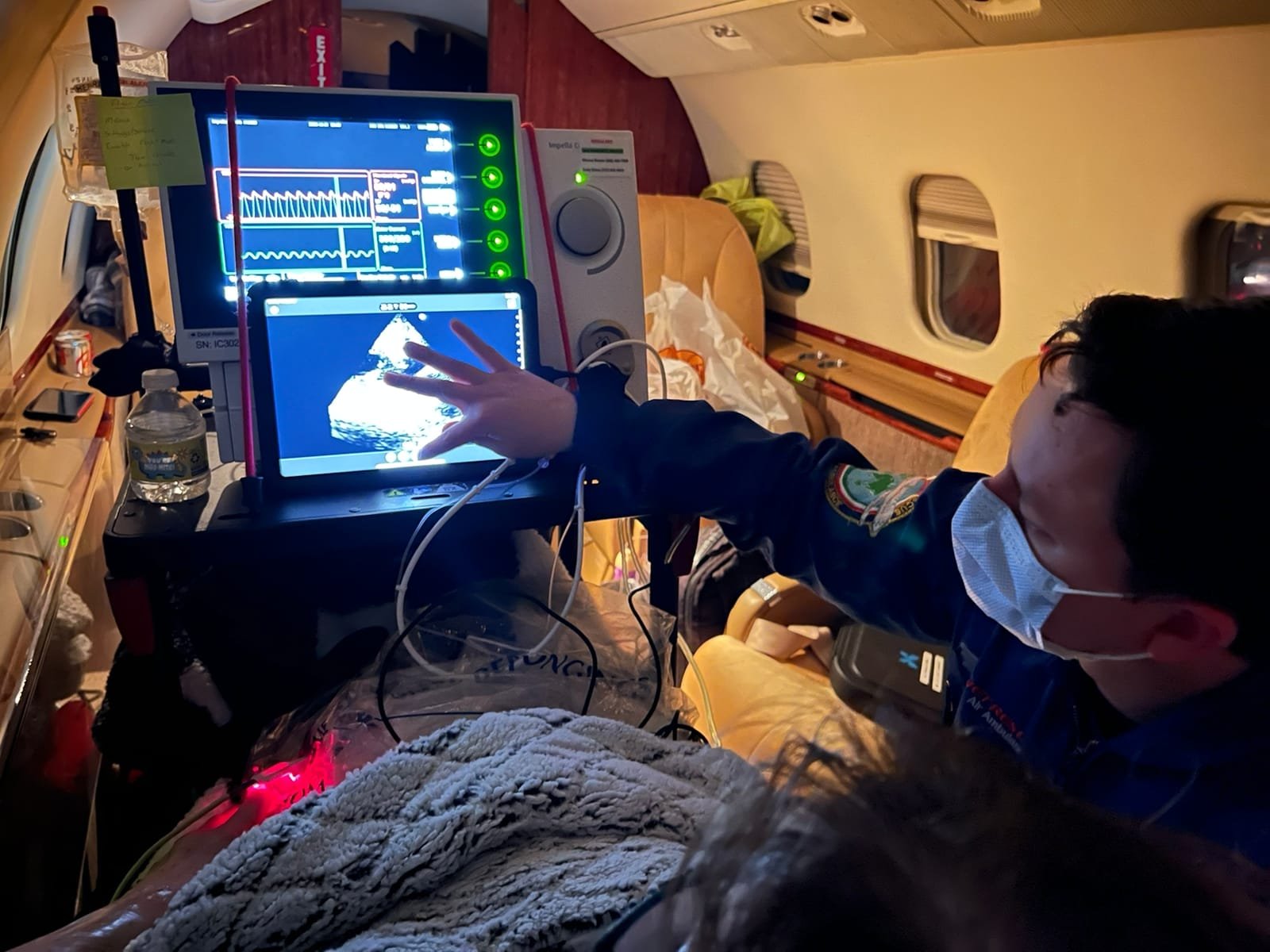
That needs a cabin with the electrical capacity and the securing points to carry the console, a crew that has rehearsed the handover and the failure modes, and a flight plan built around the patient rather than the other way round. We fly echo in the cabin as well, so position and function are checked in the air rather than assumed.
It is the same discipline we apply to ECMO, where we hold the world distance record twice over.
If you have a patient on Impella, an intra-aortic balloon pump or another form of mechanical circulatory support, call the flight desk and we will tell you straight away whether we can take the case.
Transferring a cardiac patient for the procedure they need
Most cardiac transfers we fly have the same shape. A patient has had a heart attack somewhere without a catheterisation lab, or has been stabilised after one and needs surgery that the local hospital does not perform, or is in heart failure that is not responding and needs a centre with more options. The patient is stable enough to move and will not stay that way indefinitely.
Why altitude is not neutral for a damaged heart
A pressurised cabin still sits well above sea level, and the lower oxygen pressure there means the heart has to work harder to deliver the same oxygen to the body. In a healthy passenger that is unnoticeable. In a myocardium that is recently infarcted, ischaemic or failing, increased demand is exactly the problem. Supplemental oxygen is standard in these flights, and the cruise profile is chosen with the cabin altitude in mind rather than the schedule.
Fluid shifts matter too. A patient in heart failure who is lying flat for several hours tolerates it differently from one sitting up, and the stretcher position, the fluid balance and the diuretic plan are part of the medical brief rather than an afterthought.
Monitoring and what we are ready to treat
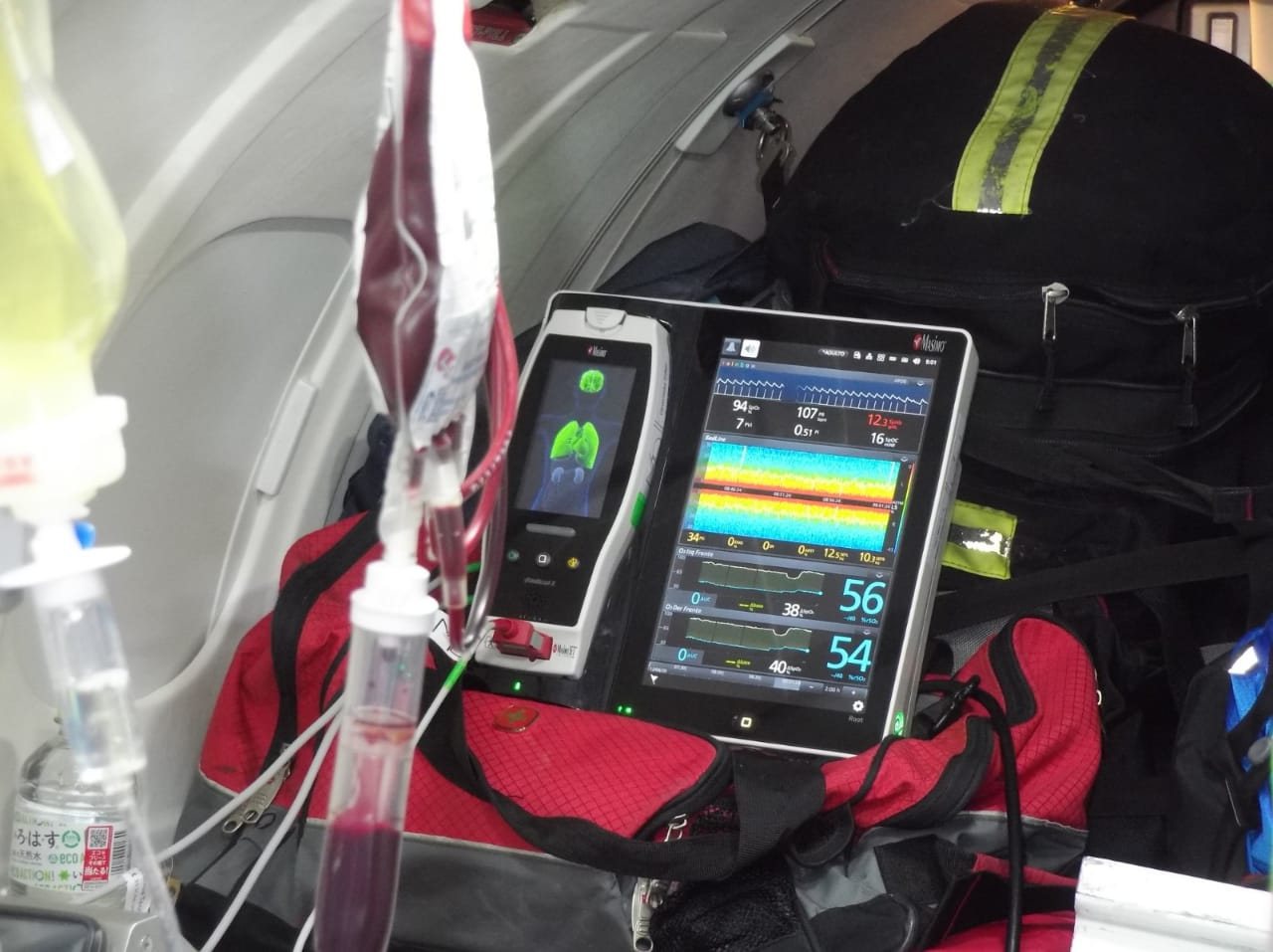
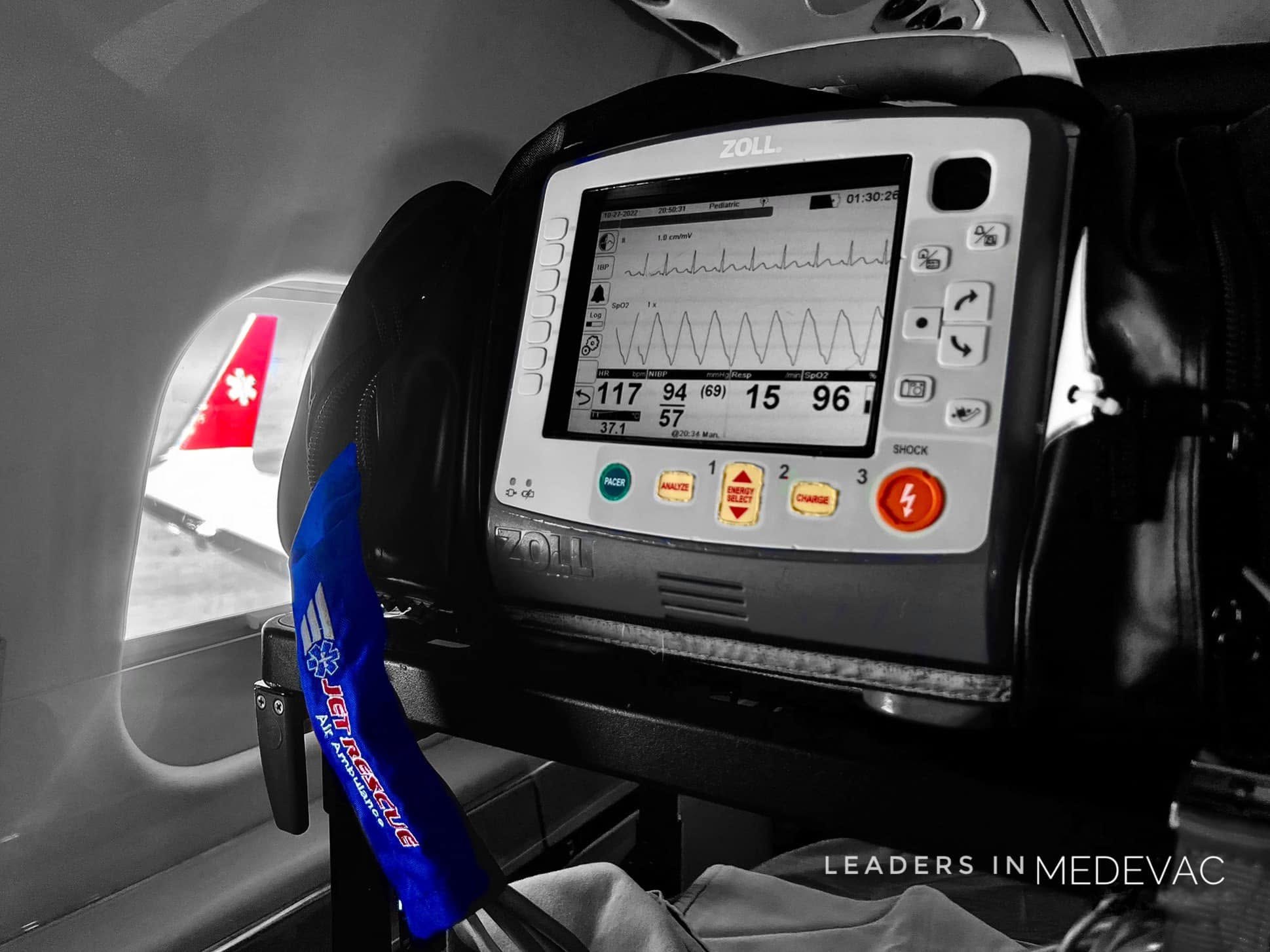
Continuous ECG, invasive or non-invasive blood pressure, oxygen saturation and capnography where the airway is supported. The crew carries antiarrhythmics, vasoactive infusions, anticoagulation as prescribed, and a defibrillator with pacing capability. The realistic in-flight emergencies for this group are arrhythmia, pulmonary oedema and a further ischaemic event, and the aircraft is stocked to treat all three.
Patients on mechanical support, including intra-aortic balloon counterpulsation, are a different category of transfer. They are flown, but they are planned as a specialist case with the equipment and the people that support requires, and the decision is made with the sending cardiologist rather than assumed.
What decides whether we fly today or tomorrow
Acceptance at the receiving hospital and a confirmed bed in the right unit. A cardiac patient does not get delivered to an emergency department to wait; the transfer is to a coronary care or intensive care bed with the receiving cardiologist expecting them. We arrange that before the aircraft moves, and we will say so plainly if the honest answer is that the patient is safer where they are until a bed exists.
Who flies
A critical care flight physician and a critical care flight paramedic, with intensive care monitoring and infusion capability on board. Where the case calls for it — mechanical support, or a specialist escort requested by the referring team — the crew is built for that case.
Next steps: request a quote, what an air ambulance costs, whether insurance covers it.
Tell us about the patient
A mission coordinator answers 24 hours a day. The benefits review is free and carries no obligation.