

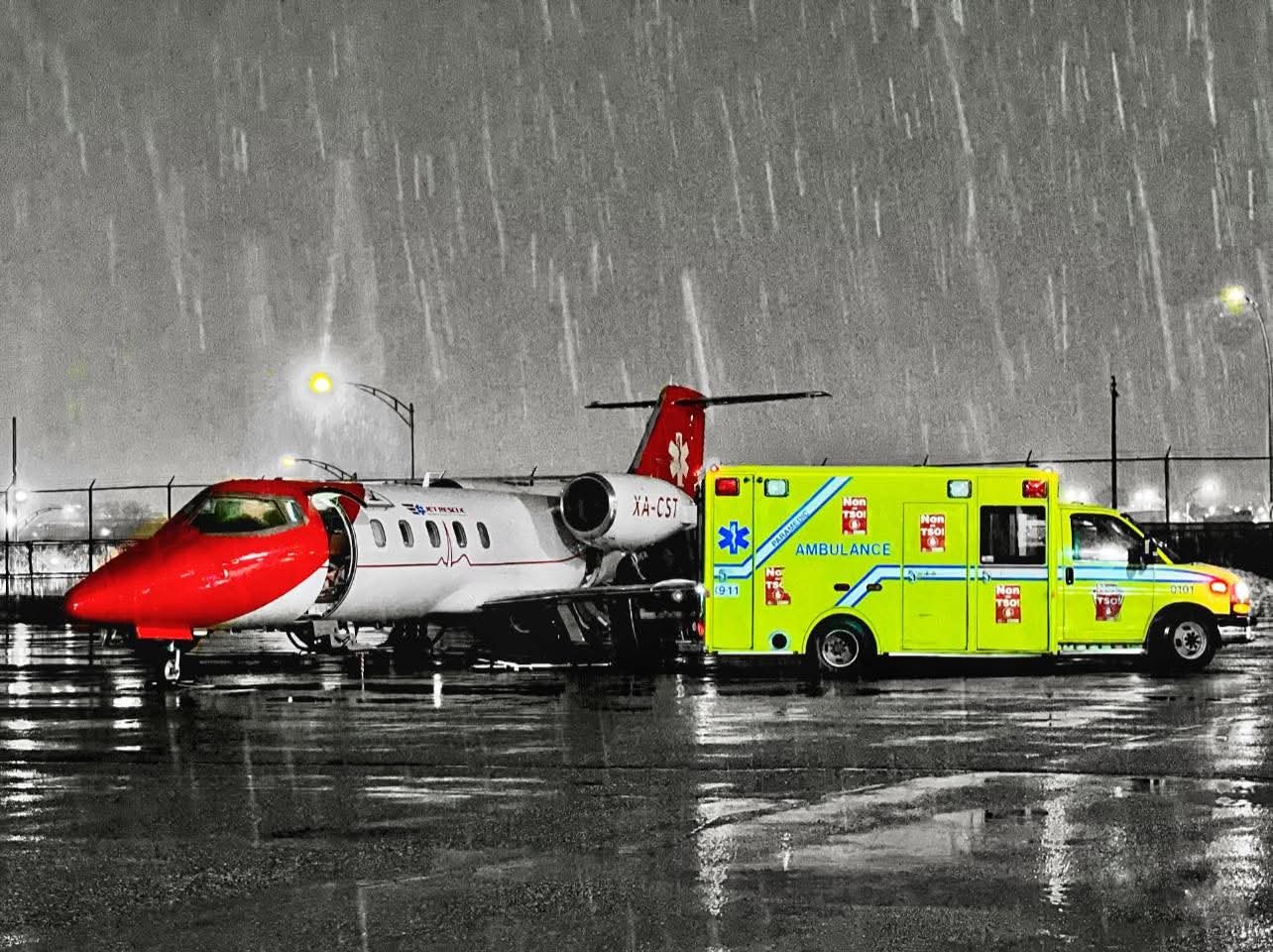
Mexico City Air Ambulance to the United States
Air ambulance from Mexico City at 7,300 ft: what altitude costs in payload, why it helps the patient, and the traffic to the airport.
Mexico City is the highest major departure point in North America, and altitude is the first thing we plan around. Benito Juárez International sits at 7,300 feet and Toluca, 40 miles west, at 8,500. At those elevations an aircraft cannot lift the same weight off the same runway that it could at sea level, which in practice means less fuel, a shorter first leg, or fewer people aboard. It is the reason a Mexico City departure is quoted differently from a coastal one.
For the patient, altitude works the other way
A patient who has been managing in Mexico City has been living at a cabin-equivalent altitude already. The flight will not expose them to less oxygen than they are used to, and the descent into Houston, Dallas or Miami gives them more. For families worried about putting an unwell relative on an aircraft, that is usually the reassuring half of the explanation.
The hospitals are not the problem
Médica Sur, the ABC Medical Center at Santa Fe and Observatorio, Hospital Ángeles Lomas and the national institutes give the city tertiary capability in essentially every specialty. Transports out of Mexico City are therefore repatriations rather than escalations: continuity of care, insurance requirements, or family. The exception is the patient referred into the city from elsewhere in Mexico, for whom the inbound flight is the one that matters.
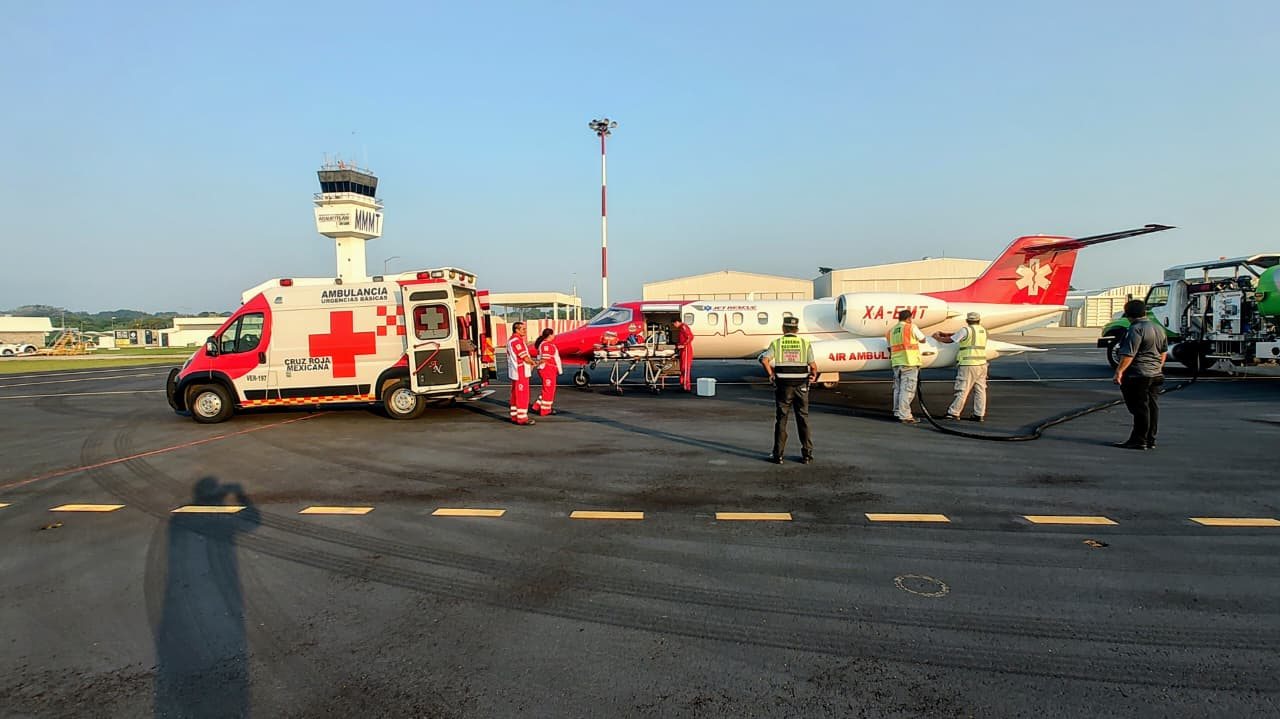
Getting to the aircraft
Traffic is the unglamorous constraint. A ground leg from a hospital in Santa Fe or the south of the city to Benito Juárez can take well over an hour at the wrong time of day, and for an unstable patient that is the least controlled part of the move. We plan departure times around it, and use Toluca when the patient's location makes it the shorter run.
What is arranged
Jet Rescue arranges the ICU aircraft, the flight physician and critical care paramedic, both ground legs, the receiving hospital's acceptance and the handover of records and imaging. Houston is one and a half hours' flying; Miami around two and a half.
Tell us about the patient
A mission coordinator answers 24 hours a day. The benefits review is free and carries no obligation.