

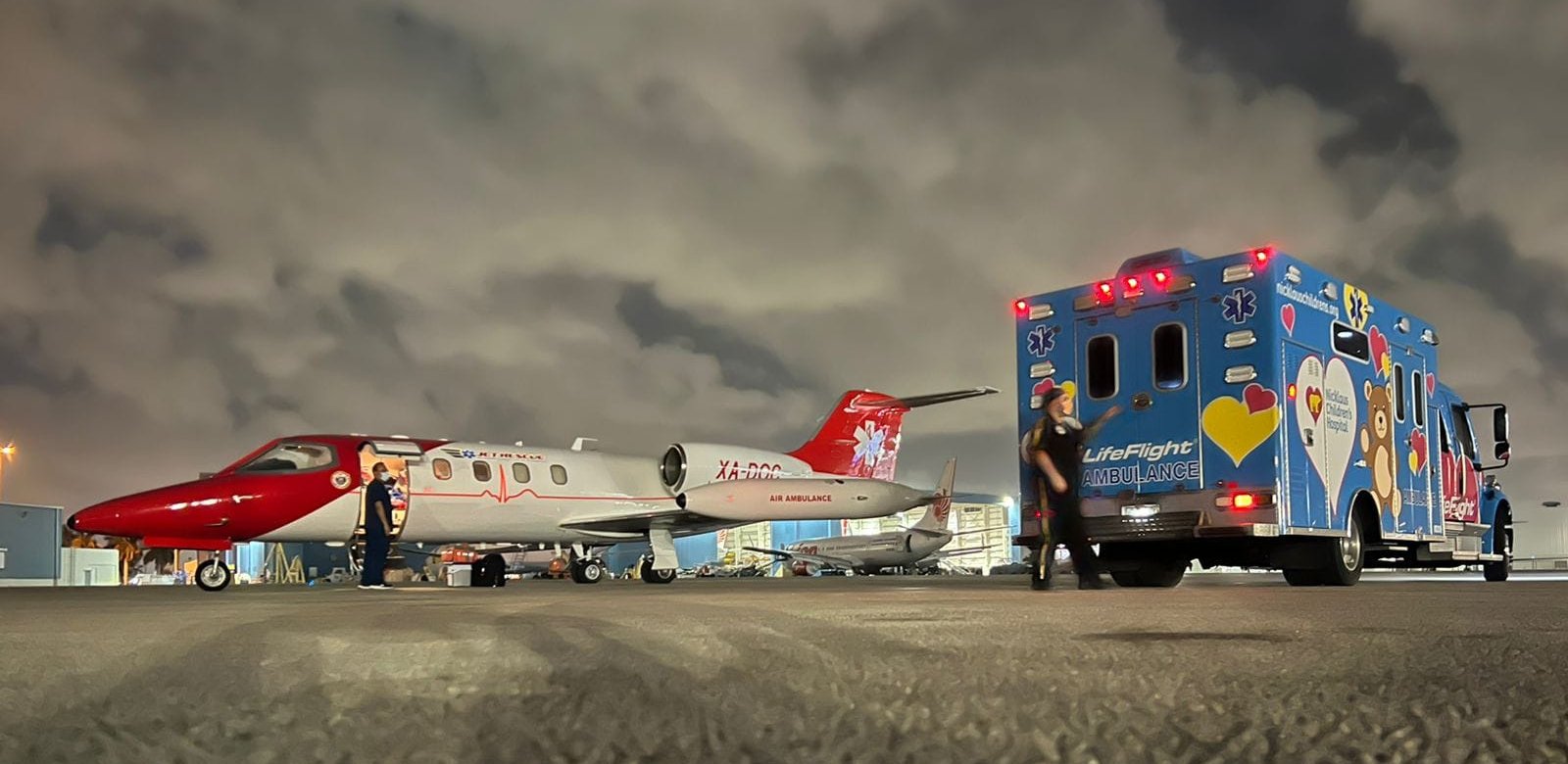
Pediatric Air Ambulance - Specialized Critical Care Transport for Children
Jet Rescue Air provides specialized pediatric air ambulance to transport sick kids. Worldwide service. Call Us: +17866191268
Pediatric Air Ambulance
Our pediatric division specializes in the air ambulance transport of pediatric intensive care patients. Pediatric air medical transport missions always include a Pediatric Doctor as well as 2 Critical Care Pediatric Nurses.
All Pediatric specialty team members have a minimum of three years critical care experience in Level III or Level IV Pediatric Intensive Care Units and are certified in Pediatric Advanced Life Support (PALS). Additional advanced certifications include Certified Neonatal Pediatric Transport (C-NPT) as well.
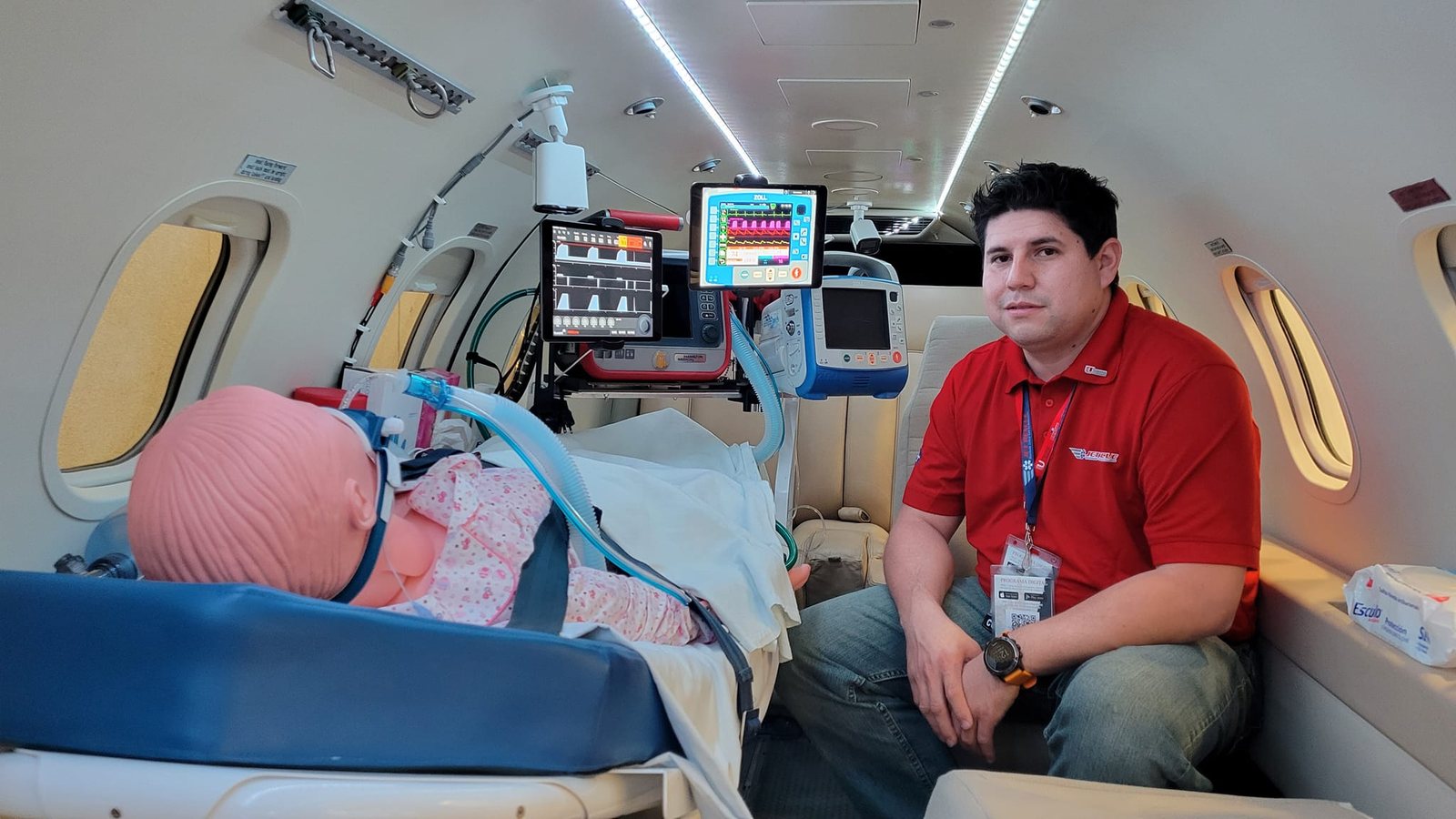
Jet Rescue Air Ambulance utilizes the latest transport technology and equipment to ensure top quality care during transport.
We understand that this may be a very stressful time for families. One call to our communications center is all it takes. Our air ambulance specialists will handle all phases of the transport from ground transportation to working with your private insurance company to verify benefits for the transport.
When would you use air medical transport for pediatric patients?
Kids need to be transported by a very specialized air medical transport team. Pediatric Patients often need a transfer to a specialized facility for a major operation, procedure or evaluation. Pediatric Air ambulances should be used for the transport of very sick kids. We can help you decide the best method of transportation.
Equipment
- Propaq MD monitor with invasive capabilities, Crossvent 2i+ and Hamilton T1 ventilator, Braun Infusomat Syringe IV pumps, Portable Lab Istat and Ultrasound.
Where paediatric transport goes wrong
Paediatric missions fail on details that simply do not arise in adult work. Every drug dose is per kilogram and has to be calculated rather than estimated. Airway equipment has to be sized, and what fits a four-year-old will not fit a nine-year-old. Fluid margins are narrow in both directions. A frightened child fighting the crew desaturates far faster than a sedated adult, and sedating a child with an unprotected airway at altitude is a decision in its own right.
The second difference is the family. A mission that is clinically flawless but leaves the parents behind, uninformed, or unable to follow what the crew is saying is not a successful mission. Our crews brief parents in Spanish or English before departure and keep them briefed in the air.
How a paediatric mission is equipped
- Age- and weight-matched airway and ventilation — paediatric circuits, cuffed and uncuffed tubes across the full size range, non-invasive support, and ventilators that deliver reliable small tidal volumes.
- Weight-based drug and infusion planning prepared before departure and checked against the referring chart, not improvised in the cabin.
- Paediatric monitoring with correctly sized cuffs and probes, invasive pressures where indicated, capnography, and continuous temperature in the youngest patients.
- Immobilisation sized to the child, including specialised stretcher configuration and, for the smallest patients, a transport isolette.
- Blood products, point-of-care testing and specialised infusions arranged case by case with the referring and receiving teams.
- Bed to bed, with physician-to-physician handover at both ends.
Who flies
Crews are assembled for the individual case, usually a paediatric intensive care or emergency physician with a paediatric transport nurse or respiratory therapist, scaled to the child’s condition. A stable adolescent with a femur fracture and a ventilated toddler in status epilepticus are not the same mission and do not get the same crew. For newborns and premature infants, our neonatal air ambulance service is configured differently again.
What we are asked to move
Trauma, including head injury and polytrauma, to a paediatric trauma centre. Respiratory failure, severe asthma and bronchiolitis. Status epilepticus and acute neurological presentations. Sepsis and meningitis. Congenital heart disease moving for surgical correction or afterwards. Oncology patients travelling for or between treatment cycles. Burns. Post-operative transfers back to a hospital near the family. And children who fell ill or were injured while the family was travelling and need to get home.
A parent travels with the child
A parent or guardian flies with the child on essentially every paediatric mission we operate, and where the aircraft allows, both do. Where there is only one seat, we arrange the second parent’s commercial routing so the family is not separated by days. Where a minor is travelling without a parent, documented authorisation from the legal guardian is required before departure and we will not launch without it.
Crossing borders with a child
Much of our paediatric work crosses a border: a child who needs a specialist centre that does not exist where they are, a family who want their child brought home to continue treatment near relatives, or an insurer repatriating a covered minor. We secure confirmed paediatric beds across most of the countries we serve and obtain the accepting physician’s acceptance in writing. Where a child has no passport or no birth certificate, we coordinate with the family’s consulate for emergency travel documents and obtain the civil papers the receiving hospital and the carrier require, as part of the case.
Not every child needs a dedicated aircraft
A stable child who can tolerate a seat can often travel home safely on a commercial flight with a paediatric nurse or paramedic escort, at a fraction of the cost of an air ambulance. We say so when it is true. A mission coordinator opens the case and a flight physician reviews it, then recommends what the child actually needs — dedicated air ambulance, commercial stretcher, or medical escort.
What the referring team should send
Age and weight, working diagnosis and current condition, airway and ventilation status with settings, infusions and doses, relevant labs and imaging, vascular access, the receiving unit and accepting physician if identified, and who will travel with the child. We return the crew and equipment plan, the aircraft, the routing and an honest departure window. If the child should not fly yet, or should go by ground, or should wait for a therapy to take effect, we will tell you that first.
Tell us about the patient
A mission coordinator answers 24 hours a day. The benefits review is free and carries no obligation.