

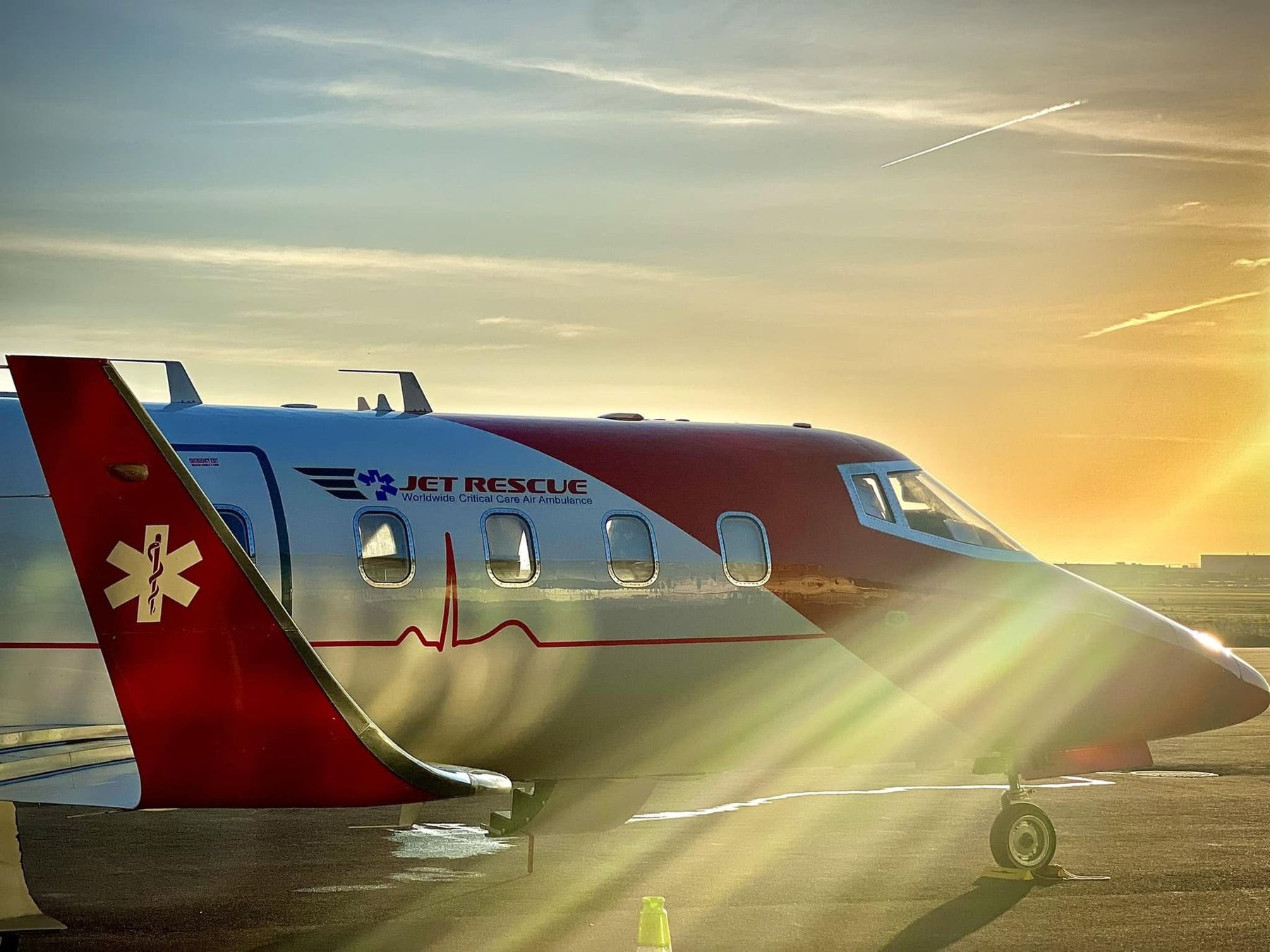
Air Ambulance from Africa
Air ambulance from Africa. Why cases stage through Johannesburg, Nairobi or Cairo, overflight permits, and tropical disease transport.
Africa Air Ambulance Service
Africa is the continent where the gap between where a patient is and where the nearest capable hospital sits is widest. Tertiary care is concentrated in a handful of cities — Johannesburg, Cape Town, Nairobi and Cairo — and a patient taken ill in Zambia, Mozambique, Tanzania or West Africa may be several hours' flying from any of them, with the nearest alternative on another continent.
Almost every case stages through a hub
That geography means an African repatriation is rarely one flight. The usual sequence is a regional leg into Johannesburg, Nairobi or Cairo, stabilisation and proper investigation at a hospital that can do it, and only then the long-haul flight to Europe or the Americas. Johannesburg to Miami is 7,000 nautical miles; attempting that from a regional airstrip with a patient who has not been worked up is a risk we will advise against.

Permits across many borders
A long flight out of Africa crosses more sovereign airspaces than the same distance anywhere else, and each needs an overflight permit with its own lead time. Some are issued in hours, some are not. Flight planning for these cases starts with the permit calendar, not the map, and it is the reason an African transport sometimes cannot leave as quickly as a family expects even when the patient is ready.
Malaria and tropical disease
The clinical mix differs from any other region we fly. Severe falciparum malaria, typhoid, viral haemorrhagic presentations and advanced HIV complications appear in travellers and residents alike, and some of them change how the patient can be carried and what the crew must be prepared for. A patient with a suspected highly transmissible infection is a different transport altogether, planned with isolation and the receiving hospital's infectious disease team.
What is arranged
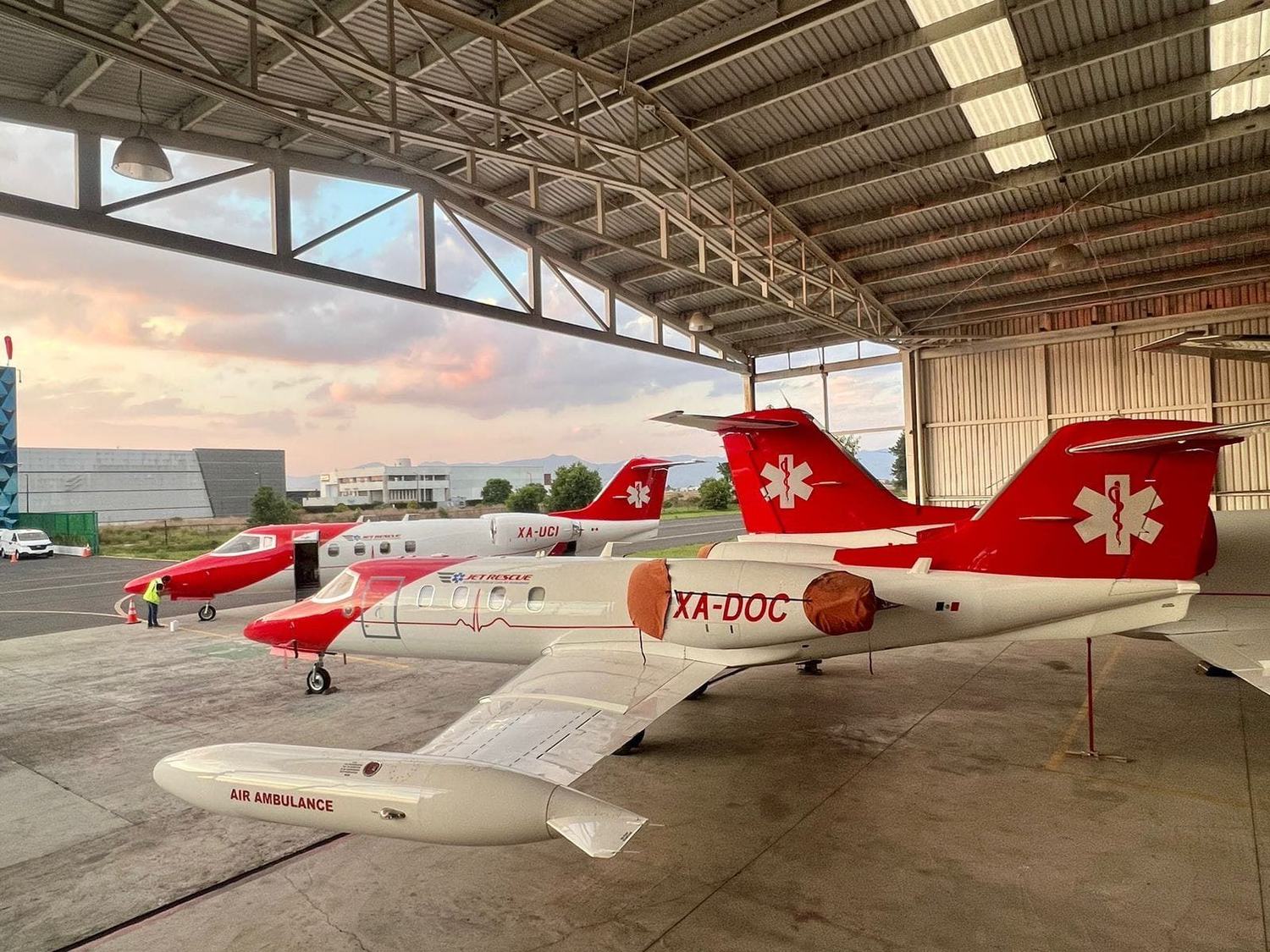
Jet Rescue arranges the regional and long-range aircraft, the flight physician and critical care paramedic, the permits and technical stops, and the ground legs and hospital acceptance at both ends.

Tell us about the patient
A mission coordinator answers 24 hours a day. The benefits review is free and carries no obligation.