

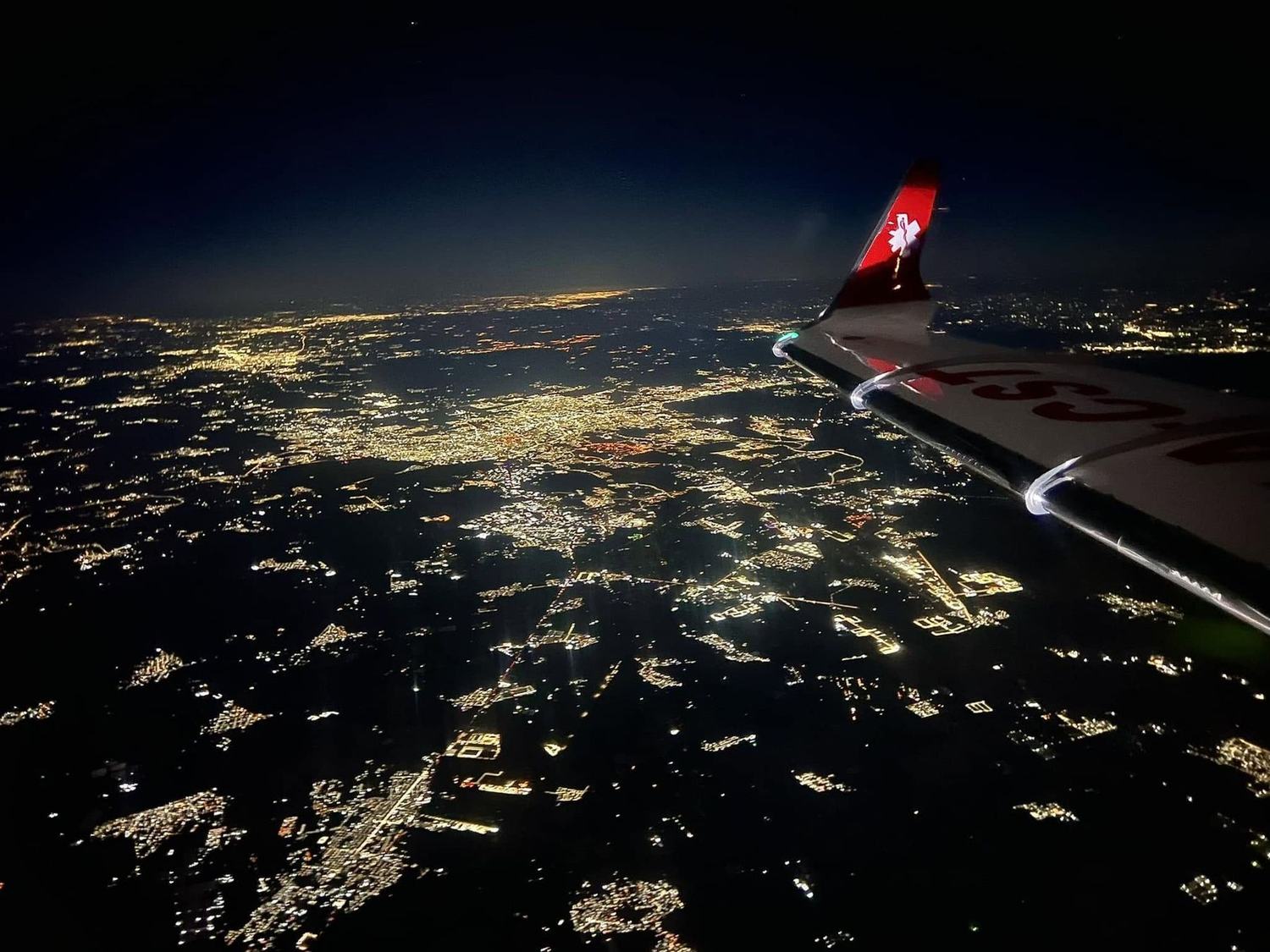
Air ambulance worldwide
Worldwide air ambulance flights: the Americas, the Caribbean, Europe, the Middle East and Asia, including two ECMO world distance records.
Where we actually fly
Most air ambulance companies describe themselves as worldwide. The question worth asking is narrower: has this operator flown the route you need, and can its aircraft reach it without a fuel stop in a place you would rather avoid?
The heart of our operation is the Americas — North, Central, South and the Caribbean. That is where most of our missions begin or end, and where we hold the deepest knowledge of hospitals, handling agents, customs and the officials who clear a patient at three in the morning. Beyond that we fly regularly to Western and Eastern Europe, the Middle East and Asia, as far as the Philippines.
The range question
Range is not a specification sheet entry. It decides how many times a critically ill patient is taken down to a lower altitude, slowed, and exposed to a ground handler at an airport no one chose.
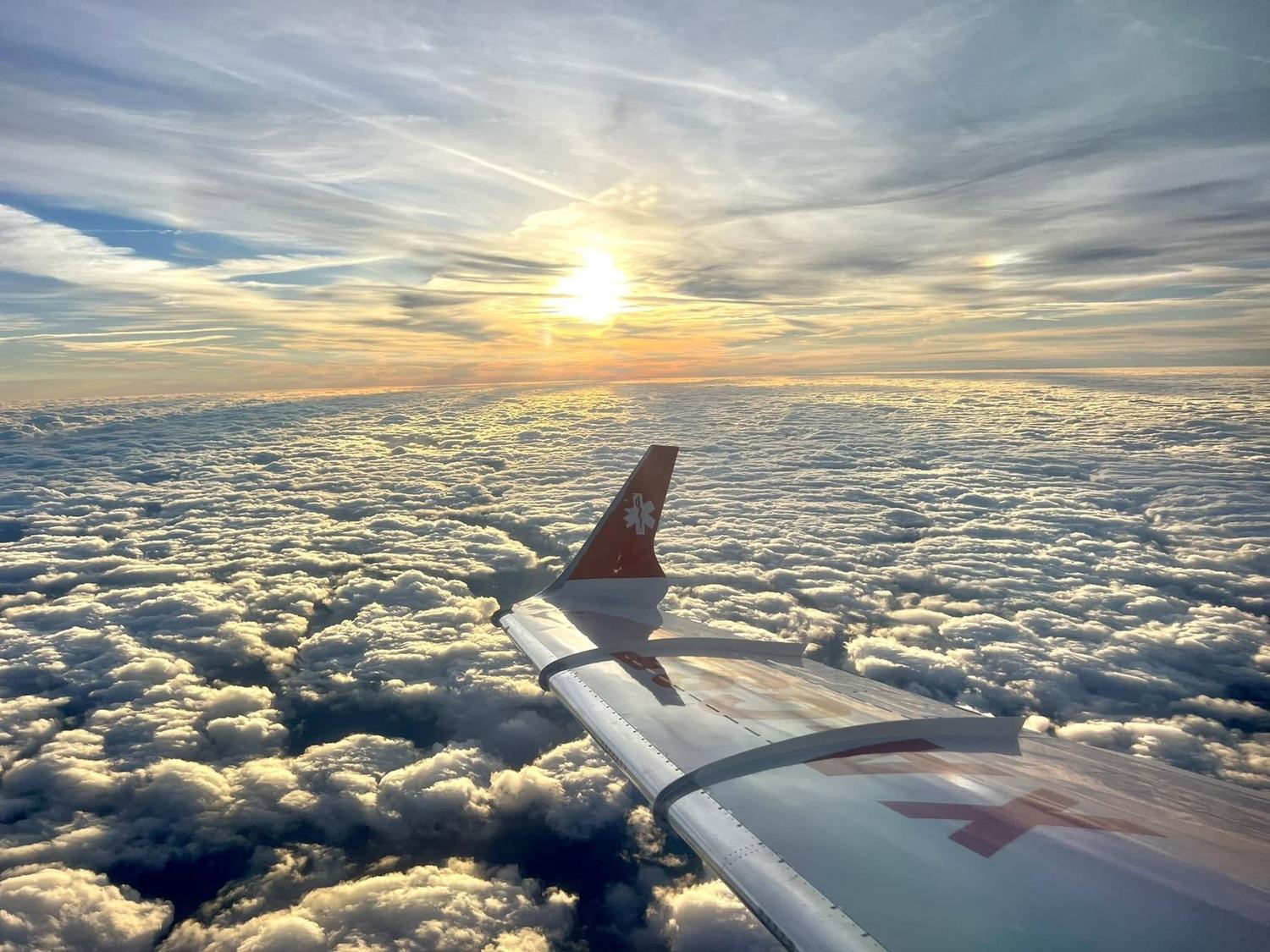
Our two Learjet 36-ARX are the long-range aircraft. A standard Learjet 36 carries about 2,425 to 2,550 nautical miles; the Avcon R/X wingtip modification adds roughly 750 lbs of usable fuel per side and takes them past 2,800 nm — up to forty minutes more flight time at normal cruise. On a transatlantic or transpacific routing, forty minutes is often one fewer stop. The Learjet 60 covers about 2,500 nm with the largest cabin in the fleet, which matters when the patient needs a device and a team around them rather than just a stretcher.
The hardest thing we do
Jet Rescue holds the world distance record for transporting a patient on ECMO — extracorporeal membrane oxygenation, a circuit that takes over the work of the heart and lungs outside the body — and we set it twice, both times from Monterrey, Mexico to Seoul, South Korea. About 6,500 miles, roughly 21 hours in the air, with fuel and oxygen stops in Vancouver, Anchorage and Kamchatka and a second flight crew positioned in Alaska for the change. Before that, the long-distance adult ECMO records were held by the US Air Force.
We mention it because it answers the only question that matters about range: not whether an aircraft can reach a place, but whether the organisation around it can keep a patient alive across that distance.
What a worldwide mission needs on the ground
- Overflight and landing permits for every country on the routing, obtained before departure rather than chased in the air
- Fuel and oxygen stops chosen for the hospitals near them, not only for fuel price
- A second flight crew positioned ahead of the aircraft on any sector that exceeds duty limits — the alternative is an unplanned overnight with a patient aboard
- A receiving hospital that has formally accepted the patient, and a bed that still exists when you land
- Ground ambulances at both ends booked against the real schedule, not the filed one
Licensing across borders
MED JETS S.A. de C.V. operates the Mexican aircraft under air operator certificate MTS/2015 and also holds a taxi aéreo permit. Jet Rescue holds a State of Florida air ambulance licence and is the only Mexican company that does — it can be verified directly with the Florida Department of Health. That combination is what lets a single operator work both sides of the US–Mexico border without handing the patient to a second company halfway.
Our bases · The fleet and its range · ECMO transport · Records and coverage
Tell us about the patient
A mission coordinator answers 24 hours a day. The benefits review is free and carries no obligation.