

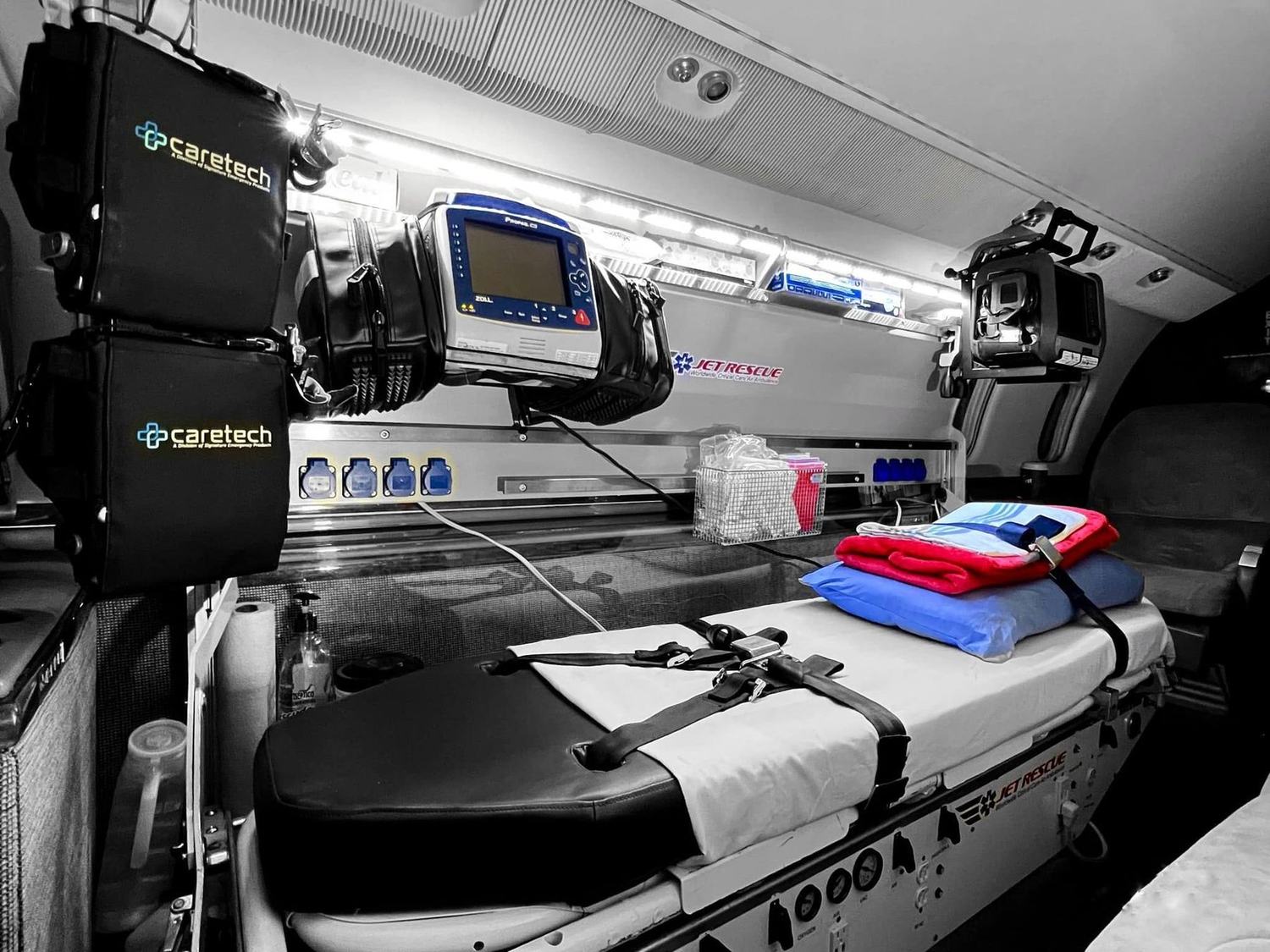
Medical Equipment Carried on an Air Ambulance
The equipment carried on an air ambulance: ventilator, invasive monitoring, infusion pumps, neonatal incubator and ECMO configurations.
Air Ambulance Medical Equipment
An air ambulance carries what an intensive care unit carries, with one constraint an ICU does not have: nothing can be fetched in flight. Everything that might be needed has to be aboard, secured and working before the door closes, and sized for the whole duration of the flight with reserve.
Airway and ventilation
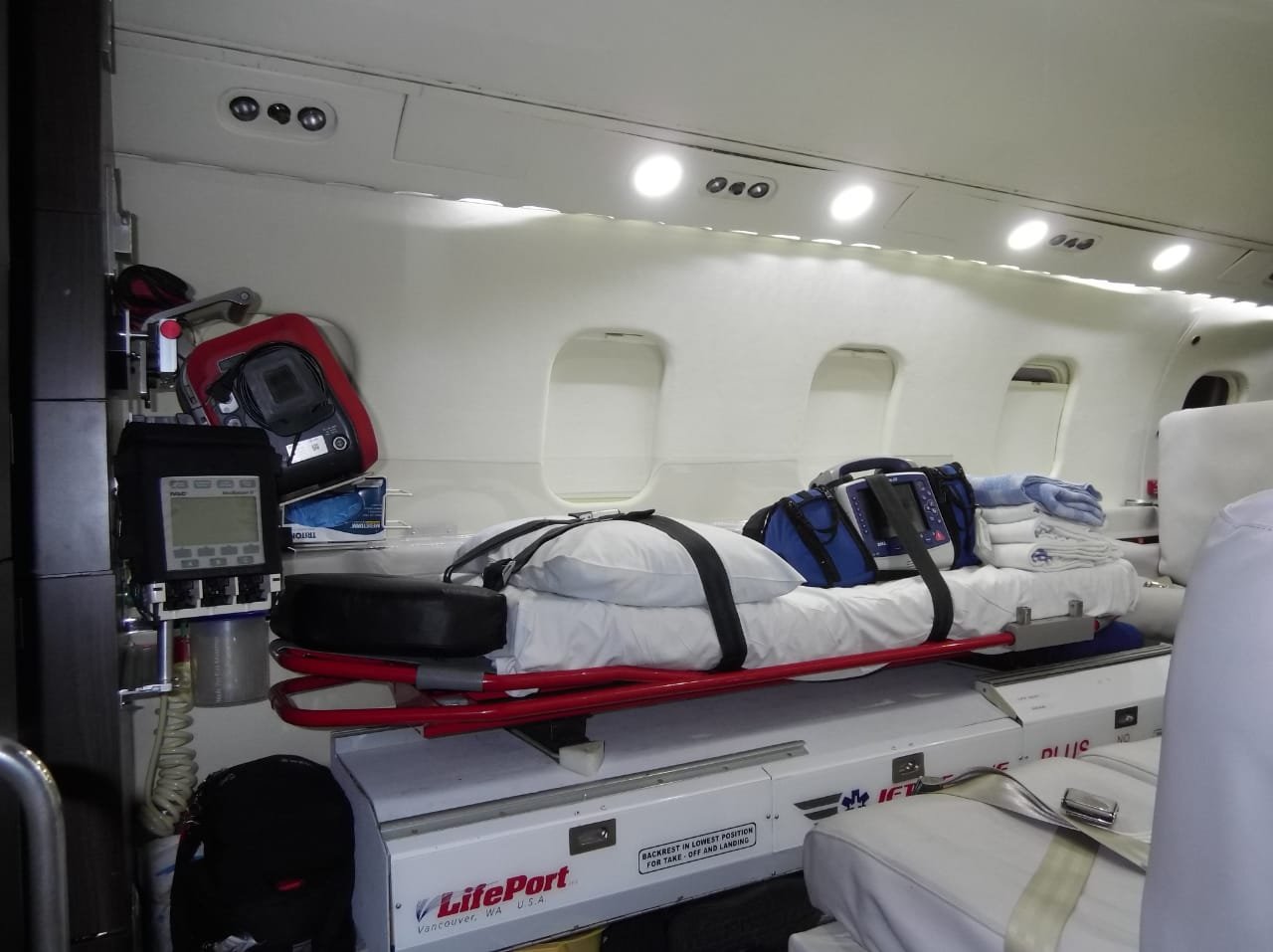
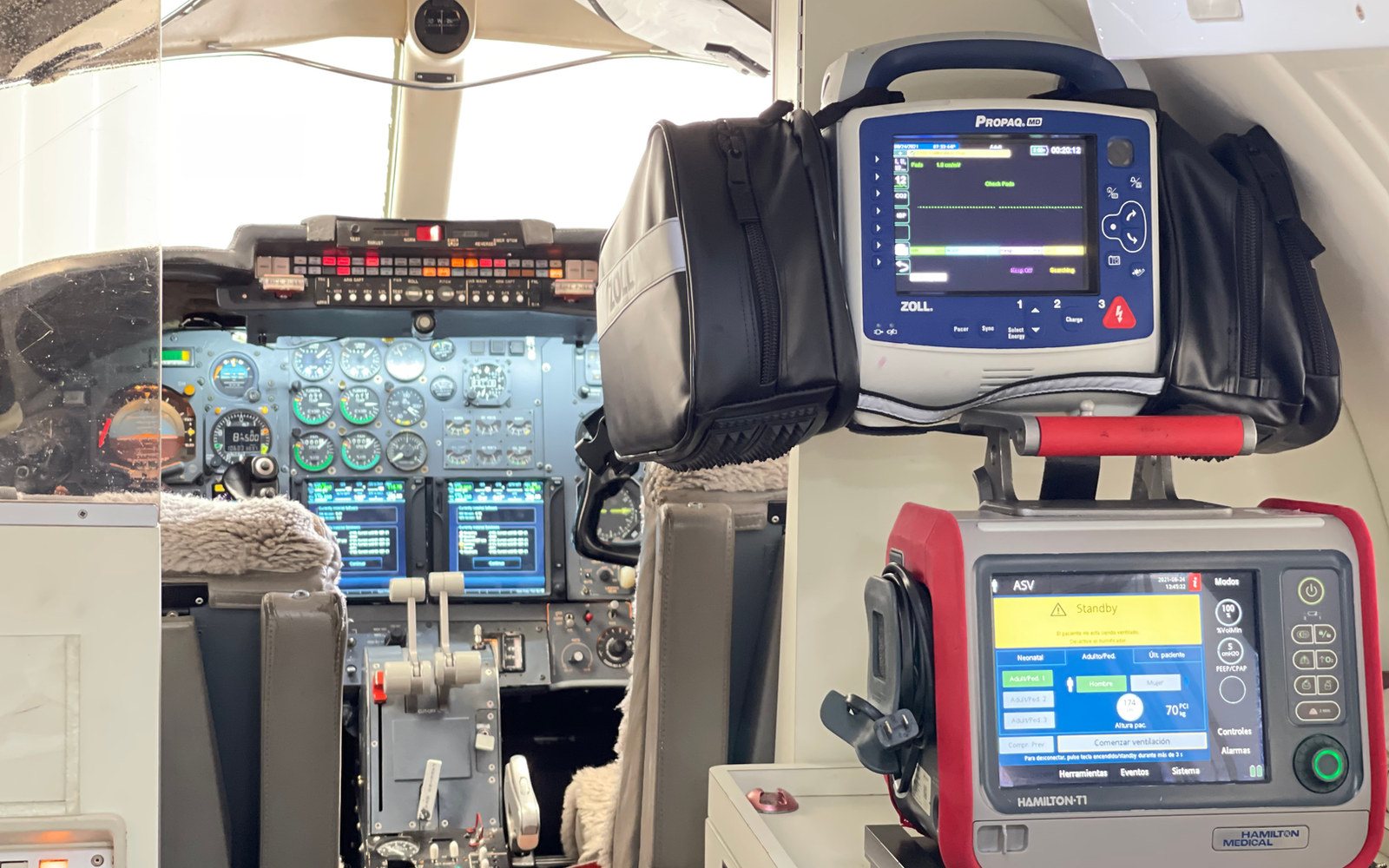
A transport ventilator capable of the full range of modes, with circuits and filters, plus bag-valve-mask, suction, and the equipment for a difficult airway including video laryngoscopy and a surgical airway kit. Medical oxygen is calculated for the planned flight time plus a margin for a diversion or a hold; on long overwater legs that calculation is the thing that decides whether the flight can be flown non-stop.
Monitoring
A multiparameter monitor with ECG, pulse oximetry, non-invasive and invasive blood pressure, capnography and temperature. Capnography matters more in the air than on the ground, because cabin noise makes auscultation unreliable and the monitor is the crew's main source of truth.
Circulation and infusion
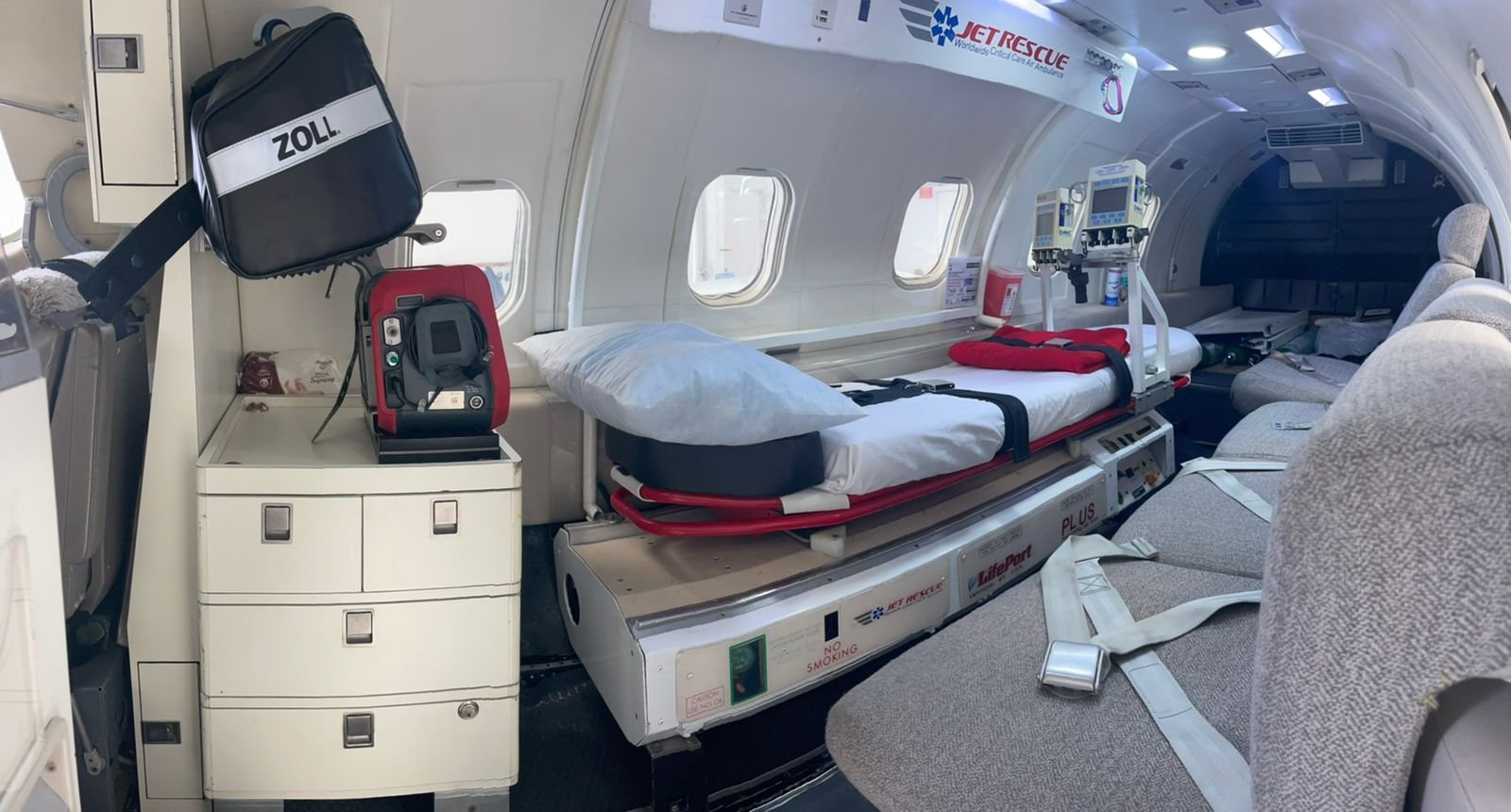
Multiple infusion pumps and syringe drivers for vasoactive and sedative agents, a defibrillator with pacing capability, and the drugs to manage arrhythmia, pain, sedation and paralysis across the whole flight. Blood products are carried where the case requires and the regulations allow, in validated temperature-controlled transport.
Specialist configurations
A neonatal transport incubator with its own power, gas and monitoring for premature and newborn patients; isolation equipment for a patient with a transmissible infection; and, for ECMO transport, the circuit and the hospital team that runs it, which travels with the patient rather than being replaced by flight crew.
What is arranged
Jet Rescue specifies the equipment against the clinical case and confirms it with the treating physician before departure, so the receiving team knows what the patient arrived on as well as what they left with.
What this equipment is for, case by case: ventilated patients, cardiac patients, trauma patients.
Tell us about the patient
A mission coordinator answers 24 hours a day. The benefits review is free and carries no obligation.