

Air Ambulance for Ventilated Patients
Air transfer for ventilated patients: transport ventilator settings, oxygen planning with a diversion reserve, cabin altitude, and when ECMO is needed.
Flying a patient who depends on a ventilator
A ventilated patient cannot travel any other way. There is no commercial option, no stretcher in an airliner, no medical escort. It is an air ambulance with an intensive care unit on board, or the patient stays where they are. That makes the planning questions narrow and technical, and it makes oxygen arithmetic the centre of the flight.
Oxygen is a finite quantity decided before the door closes
Nothing can be fetched in flight. The oxygen carried is calculated against the patient’s current requirement, the planned flight time, and a reserve for a diversion or a hold. A patient on a high fraction of inspired oxygen on a long oceanic leg is an operational planning problem before it is a clinical one, and it is one of the few things that can change the routing: an extra fuel stop may be flown specifically so the oxygen maths works.
The same applies to power, circuits, filters and the spare equipment for the things that fail quietly on a long flight.
Cabin altitude changes what the lungs have to do
A pressurised cabin is not sea level, and the oxygen available in the blood falls accordingly. A patient who is marginal on the ground can be in trouble at cruise. Where the lungs are the problem, the flight is planned around the cabin altitude the patient can tolerate, which can mean flying lower, slower and with an extra stop. The alternative — flying the fastest profile and managing the consequences — is not a trade we make.
Trapped gas expands as cabin pressure falls, so any pneumothorax is drained before departure, and a patient with bullous lung disease is assessed specifically for that risk.
Transport ventilation in practice
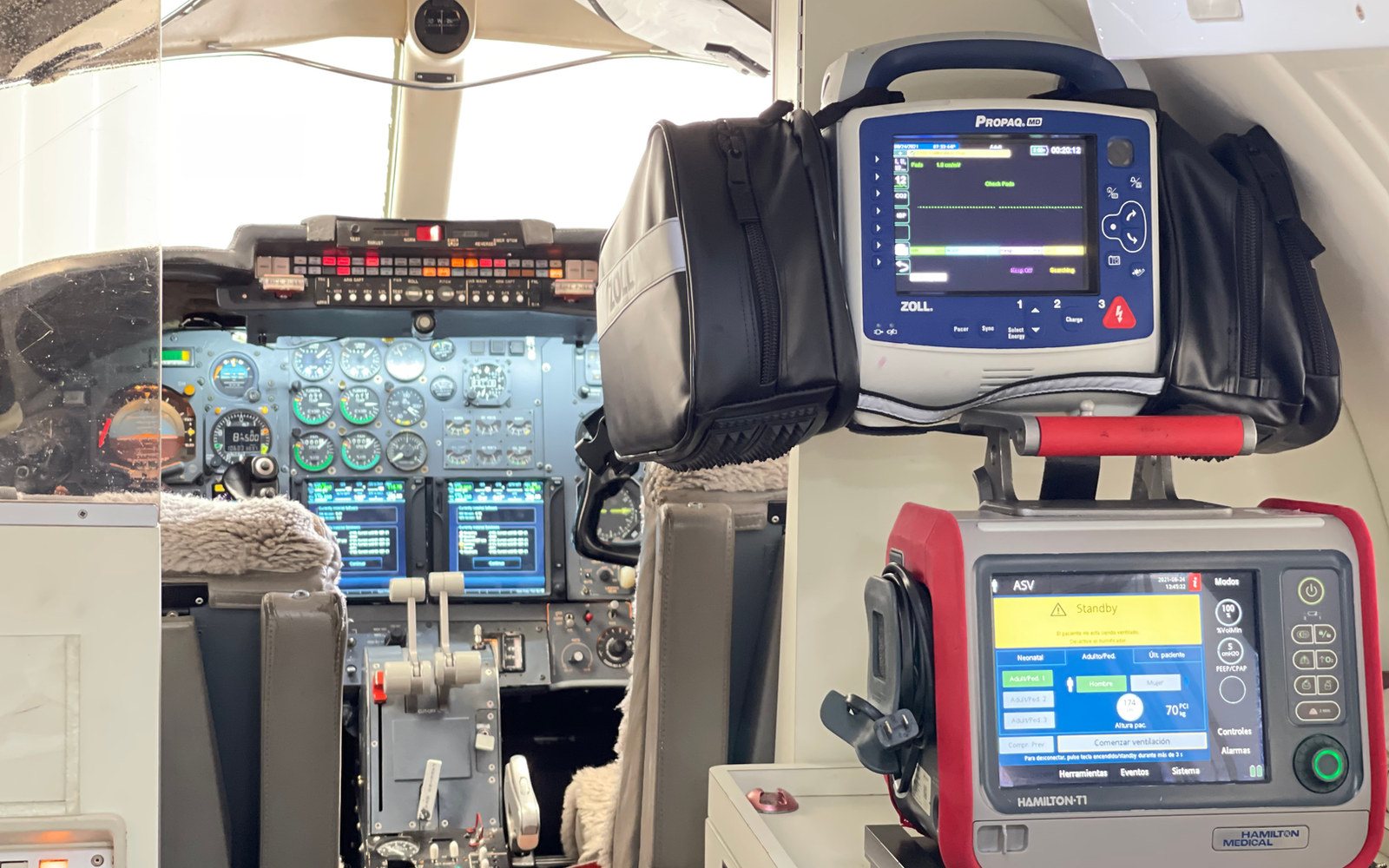
The transport ventilator covers the full range of modes, and the settings are matched to what the patient is on in the unit rather than simplified for transport. Sedation and analgesia are planned for a patient who will be moved, loaded and exposed to noise and vibration. Capnography runs continuously; it is the first thing that tells you a tube has moved during a transfer.
Where the lungs cannot be supported by ventilation alone, the question becomes ECMO. Jet Rescue flies ECMO patients and performed the longest civilian adult ECMO transport in the world, over 6,500 nautical miles from Latin America to Asia. If that is the conversation, it is better had before the patient deteriorates further.
Who flies
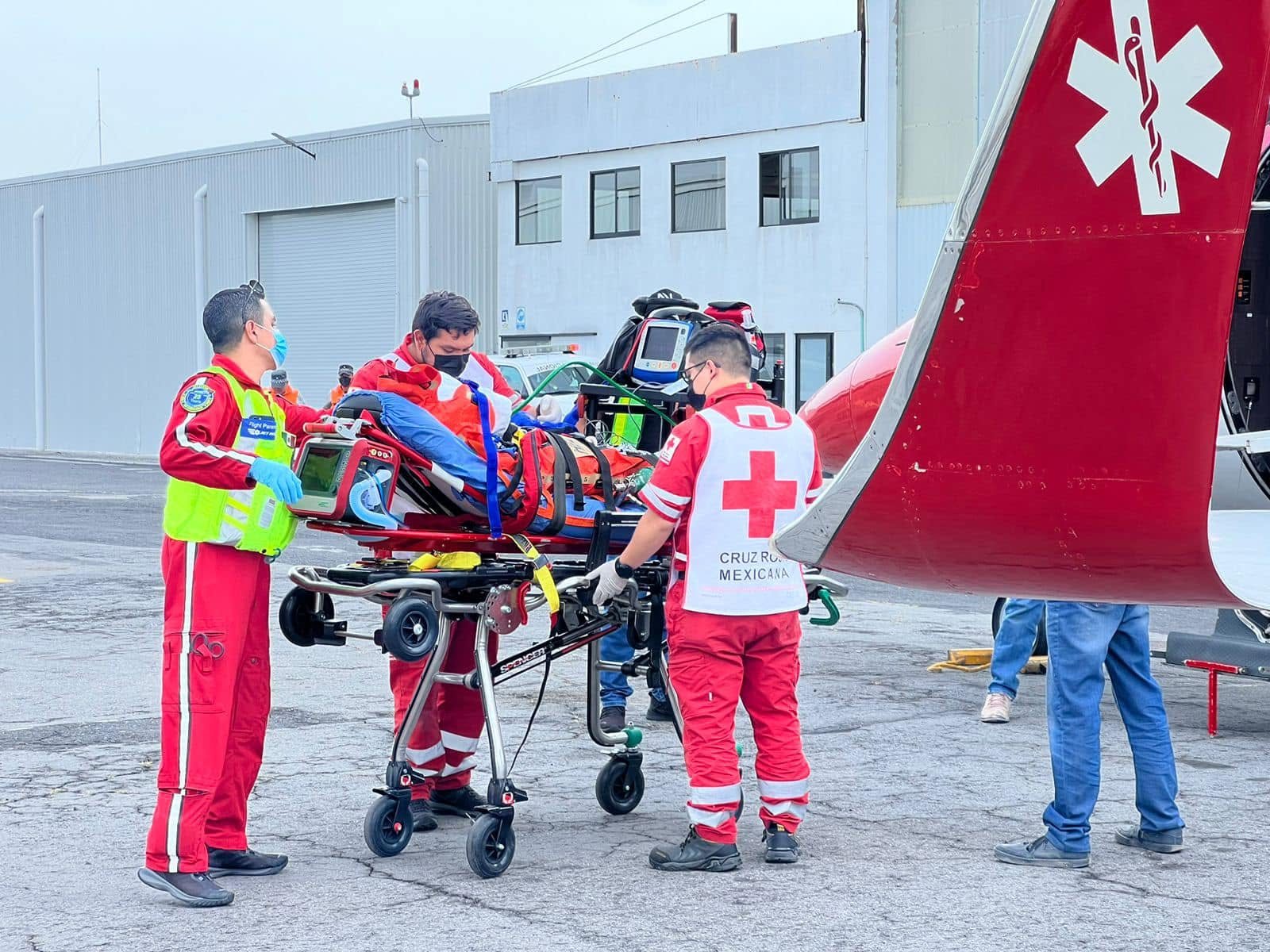
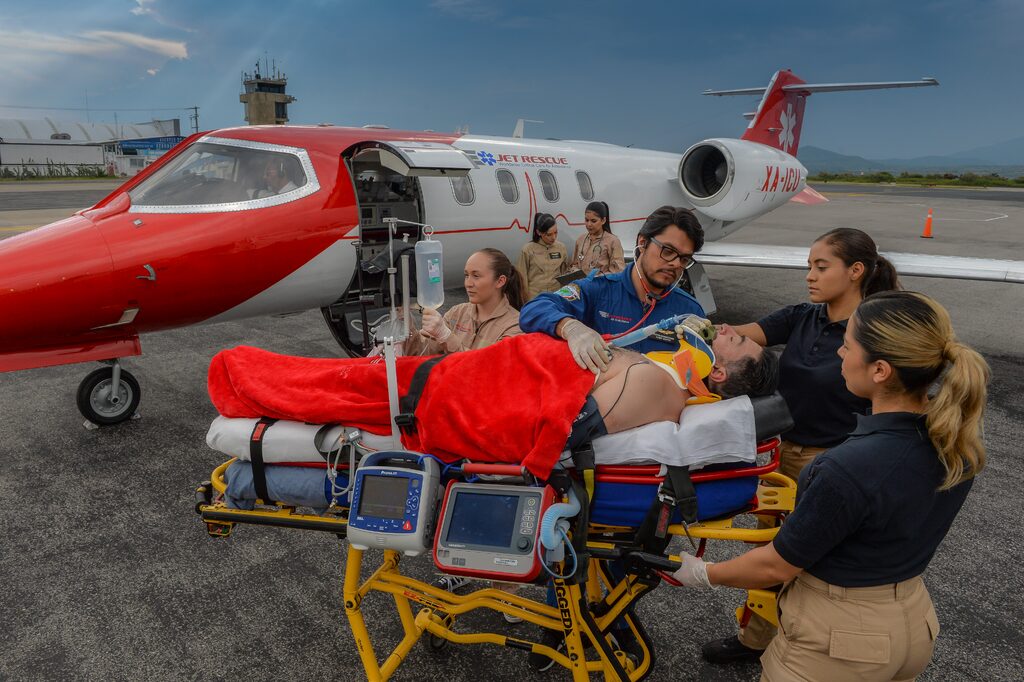
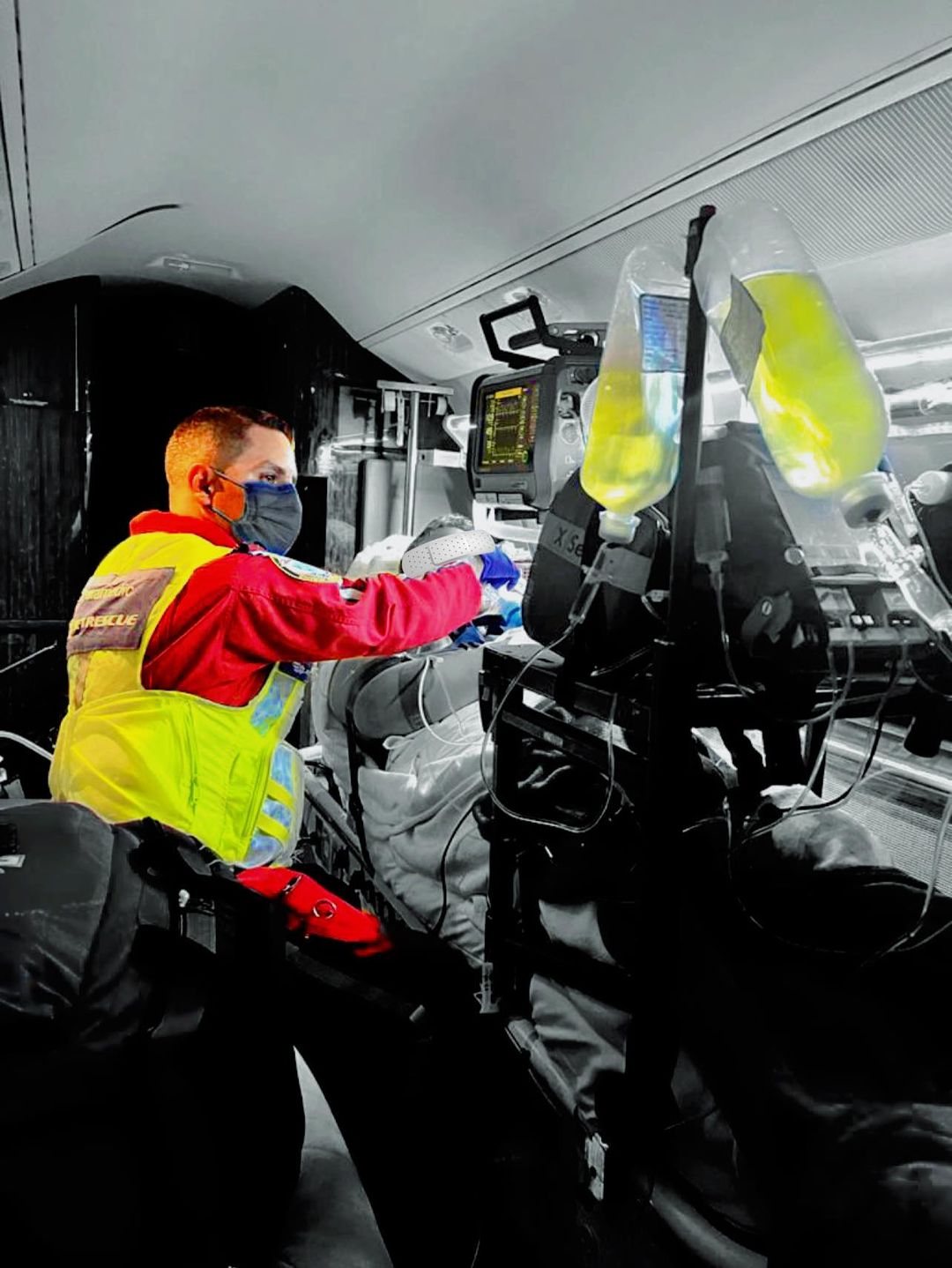
A critical care flight physician and a critical care flight paramedic, with a portable intensive care unit — transport ventilator, difficult-airway equipment including video laryngoscopy and a surgical airway kit, suction, invasive monitoring and infusion pumps.
Next steps: request a quote, what an air ambulance costs, whether insurance covers it.
Tell us about the patient
A mission coordinator answers 24 hours a day. The benefits review is free and carries no obligation.