

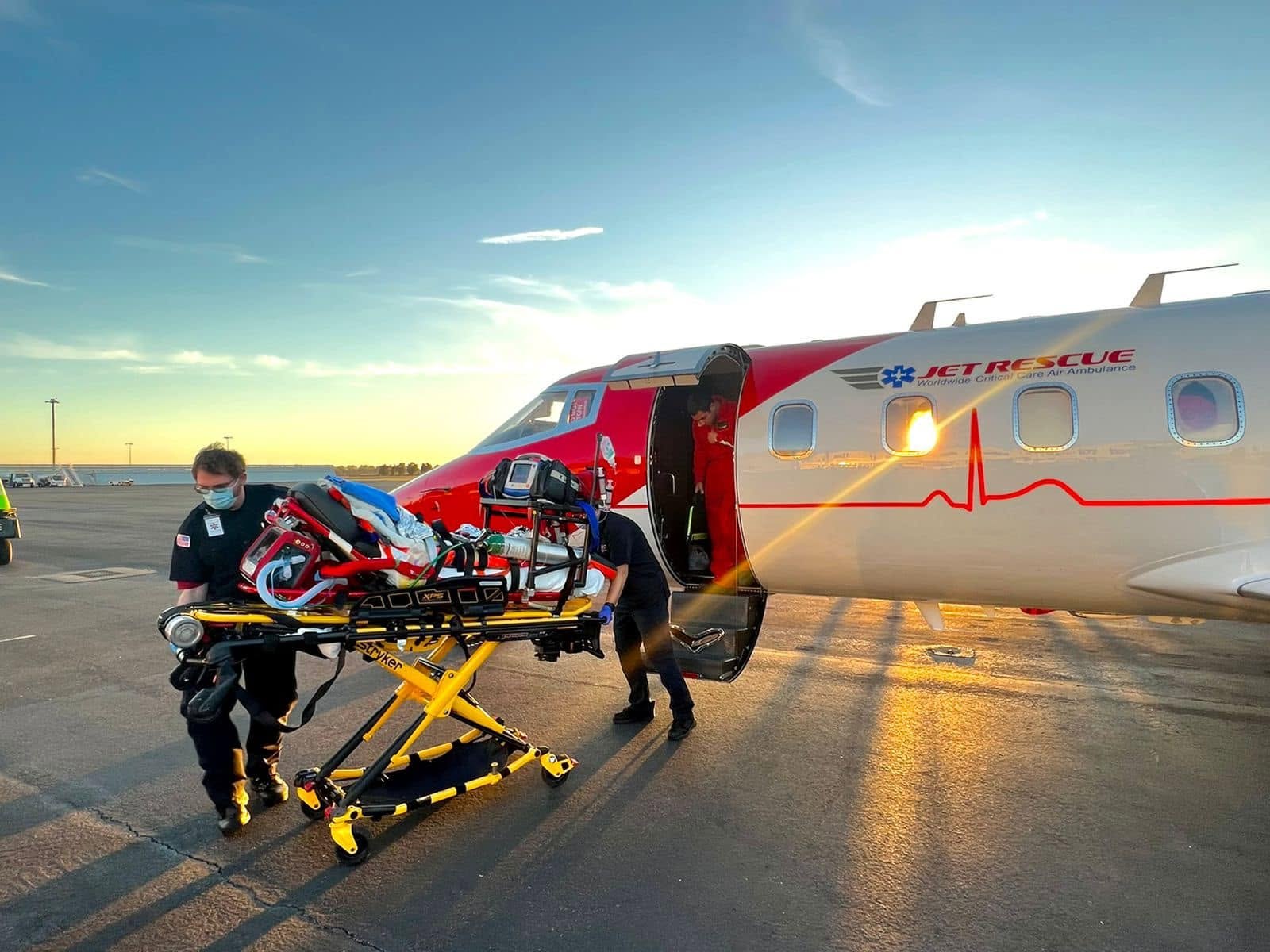
Puerto Escondido air ambulance
Air ambulance from Puerto Escondido: surf injuries, spinal trauma and medical evacuation to the United States, Canada or Mexico City.
Puerto Escondido has grown faster than its hospital capacity, and the waves that made it famous produce a particular kind of injury.
The town grew faster than its hospital
Puerto Escondido has gone from a surf town to a destination in about a decade, and the medical infrastructure has not kept pace with the number of people in it. Hospital Ángel del Mar, the Hospital General and the Cruz Roja are what the town has. They are competent at stabilising and they are used to trauma, because trauma is what this coast produces. What they do not have is a neurosurgical theatre, an interventional cardiology suite or a spinal unit.
So the question in Puerto Escondido is rarely whether the patient needs to move. It is how fast they can move, and whether the move itself will make them worse.
Zicatela is why so many of these cases are spinal
The Mexican Pipeline is a heavy beach break that closes out on sand, and a heavy beach break that closes out on sand puts people head first into the bottom. Suspected cervical and thoracic spine injuries are the most distinctive reason we are called here, along with the head injuries, shoulder dislocations and ruptured eardrums that come off the same wave. La Punta and Carrizalillo add their own share, and the scooters everyone rents add the rest.
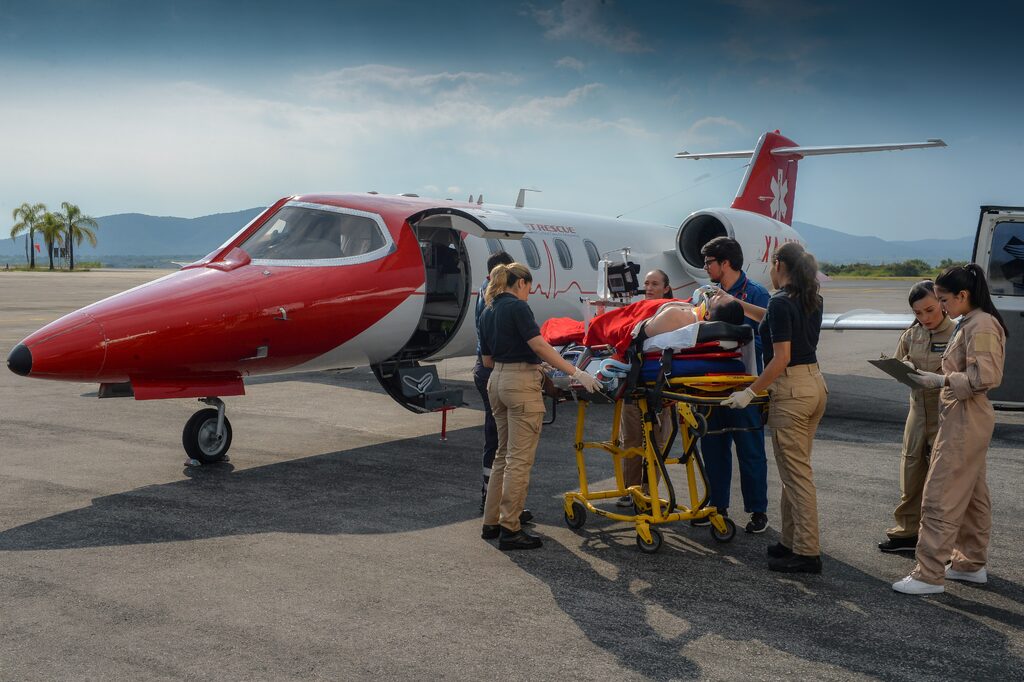
A spinal transfer is judged on one thing: whether the cord is in the same condition on arrival as it was on departure. Precautions have to survive every transfer between surfaces — the hospital trolley, the ground ambulance cot, the aircraft stretcher, the receiving bed — not just the flight itself. That is the part we plan in detail, and it is the part that gets rushed when a transfer is improvised. More on how we handle these on spinal cord injury transport.
The airport, and what it allows
Puerto Escondido International (PXM / MMPS) has one asphalt runway, 09/27, 2,300 metres — 7,546 feet — at 289 feet of elevation. It moved roughly 950,000 passengers in 2025, more than Huatulco. That runway comfortably takes the Learjets we fly, which is the practical point: we can land, load and go without the patient being driven anywhere else first. Oaxaca City is a short hop away; Mexico City is a little over an hour.
Drowning, near-drowning and the thing people underestimate
The rip currents here are serious and the rescues are frequent. A near-drowning patient who looks fine at the beach can deteriorate hours later, and the decision to move them is a lung decision as much as a neurological one. Cabin altitude matters to an injured lung. We fly these patients low and slow when that is what the lung needs, and we say so in the plan rather than discovering it at altitude.
Where patients go from here
- Mexico City for neurosurgery, spinal fixation or interventional cardiology, when the patient is not yet fit to cross a border.
- Houston, Dallas, Phoenix, Miami or Los Angeles, then onward to the patient's own hospital in the United States.
- Canada, back inside the provincial system, with the receiving bed confirmed before we launch.
- Europe, for the large European community here — see long-range repatriation.
The digital-nomad problem
A large share of the foreign population here is young, long-stay and underinsured. Travel policies bought for a two-week holiday have usually expired; some never covered surfing at all, because a lot of policies exclude it by name. We have taken enough of these calls to say it plainly: check the policy exclusions before you need them, and if you are living here rather than visiting, a membership is the cheaper answer than a flight bought on the day.
What flies with the patient
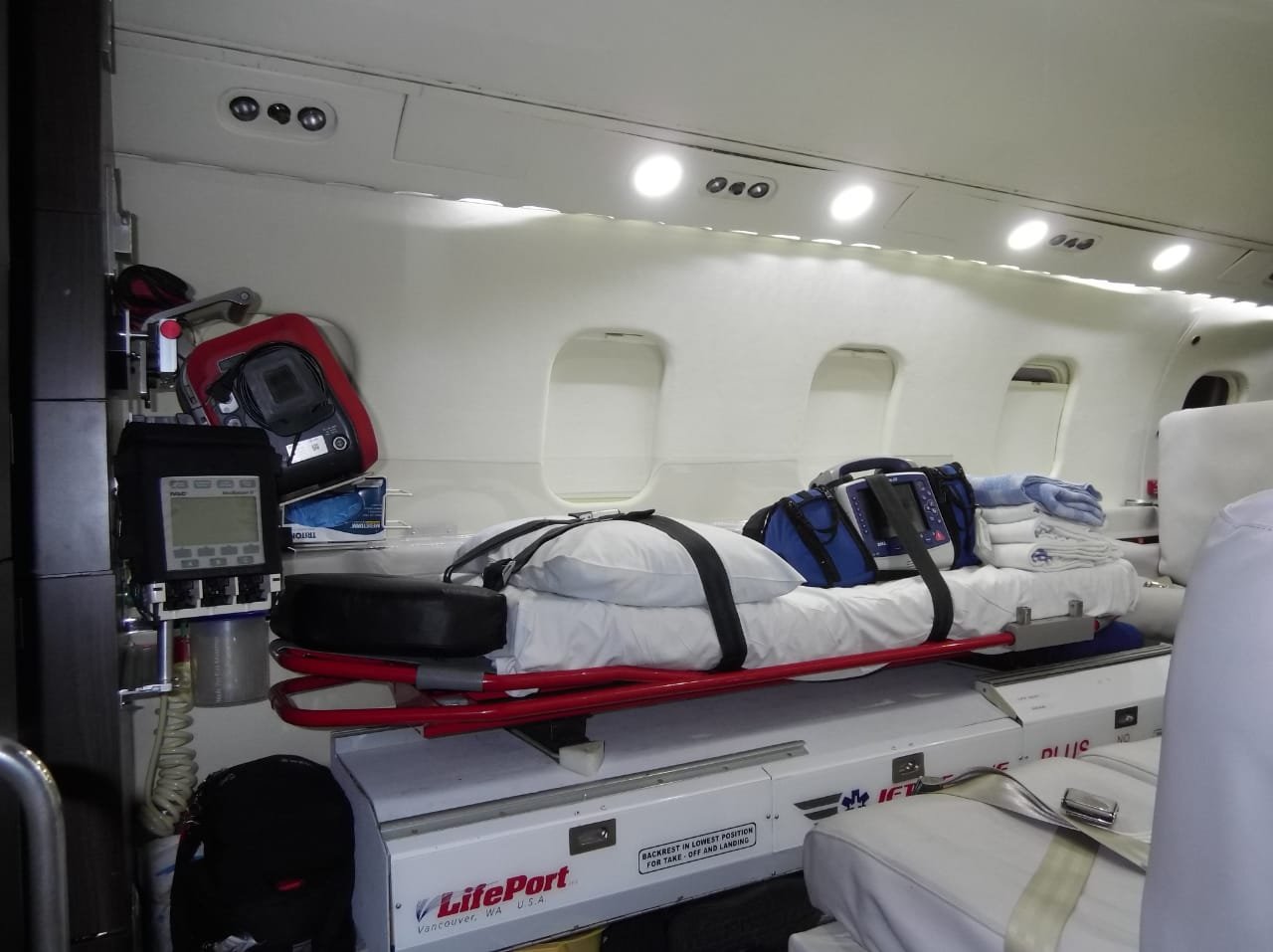
An ICU-configured Learjet, a flight physician and a critical care paramedic, full spinal immobilisation where it is indicated, transport ventilator, monitor and pumps, and the oxygen for the entire leg with reserve. Ground ambulances at both ends, and one coordinator on the case throughout.
Common questions
Can someone with a suspected spinal injury fly?
Usually yes, and often they should, because the definitive imaging and the surgeon are not in Puerto Escondido. The transfer is planned so that immobilisation is never broken for convenience. The flight physician reviews the imaging and the treating doctor's findings before we commit to a departure time.
How long does it take to arrange?
Most of these cases launch the same day. The limiting factor is the receiving hospital's acceptance, which we work first, not the aircraft.
Will my travel insurance pay for a surfing injury?
It depends on the policy, and surfing is excluded more often than people realise. Send us the policy and we will read it with you before you commit to anything. If it is declined, there are still options — see insurance denied.
Can you collect from the beach or a clinic?
We collect from the hospital or clinic, by ground ambulance, to the aircraft at PXM. We are not a helicopter rescue service and we do not pretend to be one.
What if the patient needs a ventilator?
That is routine. The aircraft carries a transport ventilator and the crew manages ventilated patients as a matter of course — see ventilated patient transport.
Call +1.786.619.1268 and ask for a mission coordinator, or send the case details. The clinical review is free and there is no obligation to fly with us.
Tell us about the patient
A mission coordinator answers 24 hours a day. The benefits review is free and carries no obligation.