

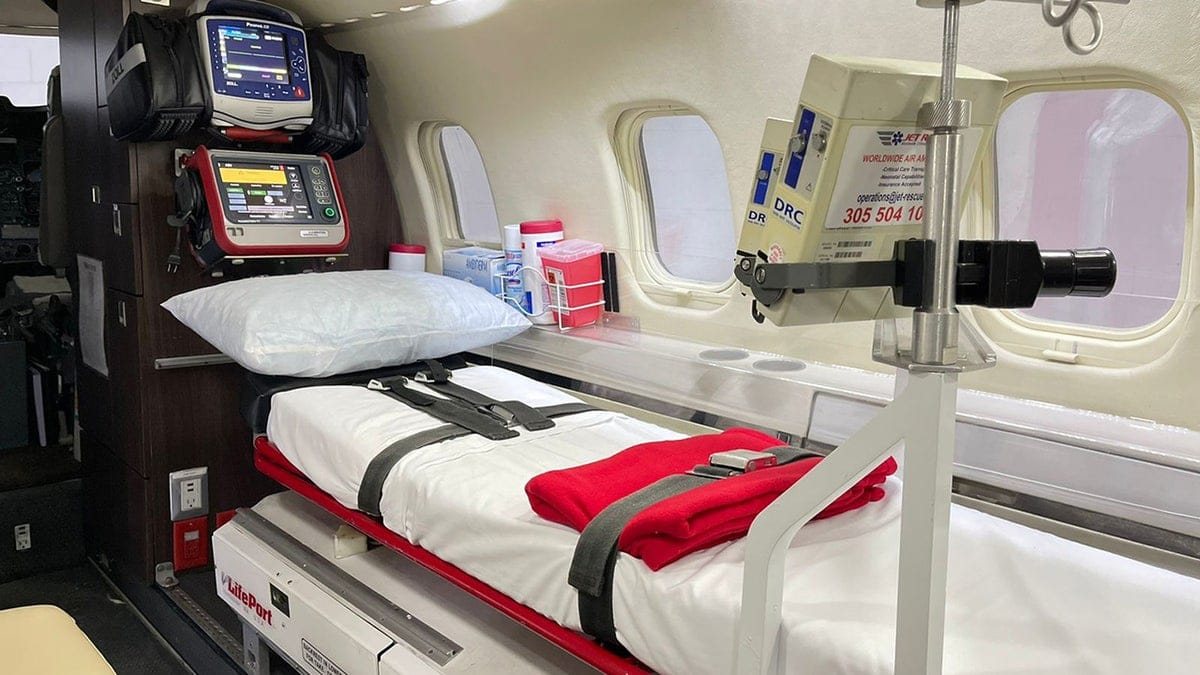
Ventilator Transport Preparation: Critical Steps
Ventilator transport preparation protects unstable patients through clinical planning, equipment checks, monitoring, and reliable handoffs before safe departure.
A ventilated patient can appear stable until movement, altitude, a battery change, or a brief interruption in oxygen delivery exposes a narrow clinical margin. Ventilator transport preparation is the disciplined process that reduces those risks before a patient leaves the sending facility. For critical care transfers by ground ambulance, helicopter, or fixed-wing air ambulance, the departure decision must be based on readiness, not urgency alone.
The goal is not simply to move a ventilator from one location to another. The transport team must preserve the patient’s airway, ventilation strategy, oxygenation, sedation, circulation, monitoring, and access to time-sensitive interventions throughout every phase of transfer.
Start With Transport-Level Clinical Assessment
Preparation begins with a current assessment, not a copy of the last charted bedside values. The team needs to understand why the patient is ventilated, whether the respiratory condition is improving or deteriorating, and what level of support is required to maintain acceptable gas exchange.
Ventilator mode, set rate, tidal volume or pressure target, PEEP, FiO2, peak pressure, minute ventilation, recent arterial blood gas results, and secretion burden all influence transport planning. A patient with high PEEP, escalating FiO2 needs, severe acidosis, bronchospasm, or frequent suctioning may require a more capable team, additional equipment, or stabilization before departure.
The clinical picture also extends beyond the lungs. Hypotension, active bleeding, intracranial pressure concerns, arrhythmias, vasopressor requirements, renal replacement therapy, and difficult vascular access can change the appropriate transport platform and staffing model. A patient may be stable enough for one transfer environment but not another.
Confirm the Airway Before Leaving
An endotracheal or tracheostomy tube must be secure, clearly documented, and reassessed immediately before movement. Confirm tube depth, cuff integrity, breath sounds, chest rise, waveform capnography, and ventilator-delivered volumes. If there is any uncertainty about placement or a recent airway event, resolve it while full hospital resources are available.
The team should identify the anticipated rescue pathway if the airway fails. That includes knowing what backup airway devices, suction capability, medications, and personnel are immediately accessible. Transport is the wrong time to discover that a tube holder is loose, secretions are thick, or a patient cannot tolerate even a short circuit disconnection.
Match the Transport Ventilator to the Patient
A transport ventilator is not interchangeable with every ICU ventilator. Before transfer, the team verifies that the selected unit can reliably deliver the ordered settings and alarms, including the required FiO2 range, PEEP level, pressure control capability, and monitoring parameters.
The patient should be observed on the transport ventilator before departure whenever the clinical setting permits. This transition helps uncover problems with compliance, triggering, air leaks, alarm thresholds, or the patient’s response to a different flow pattern. A brief trial can prevent an in-transit adjustment made under far more difficult conditions.
Alarm settings need to be purposeful. High-pressure, low-pressure, apnea, disconnect, volume, and battery alarms should reflect the patient’s condition rather than default values. Alarms that are too broad can miss deterioration. Alarms that are too narrow can create repeated alerts that distract from meaningful changes.
Protect Power and Oxygen Reserves
Battery and oxygen planning are among the most consequential parts of ventilator transport preparation. Teams calculate expected consumption based on transport duration, patient minute ventilation, FiO2, reserve requirements, and the possibility of delays. High oxygen concentration and high minute ventilation can drain a supply much faster than a routine estimate suggests.
A sound plan accounts for the full mission, not only flight or drive time. It includes loading, departure delays, ground segments, weather diversions, facility handoffs, and an emergency reserve. Battery planning follows the same principle: confirm the ventilator’s internal battery status, available external power, spare batteries, chargers, and the compatibility of aircraft or vehicle power systems.
Oxygen supply must be physically secured and accessible. The team should know which cylinder is active, which is reserve, how to switch safely, and where the oxygen pressure can be checked during transport. A clinically excellent ventilator cannot compensate for a depleted gas source.
Build Redundancy Into Essential Equipment
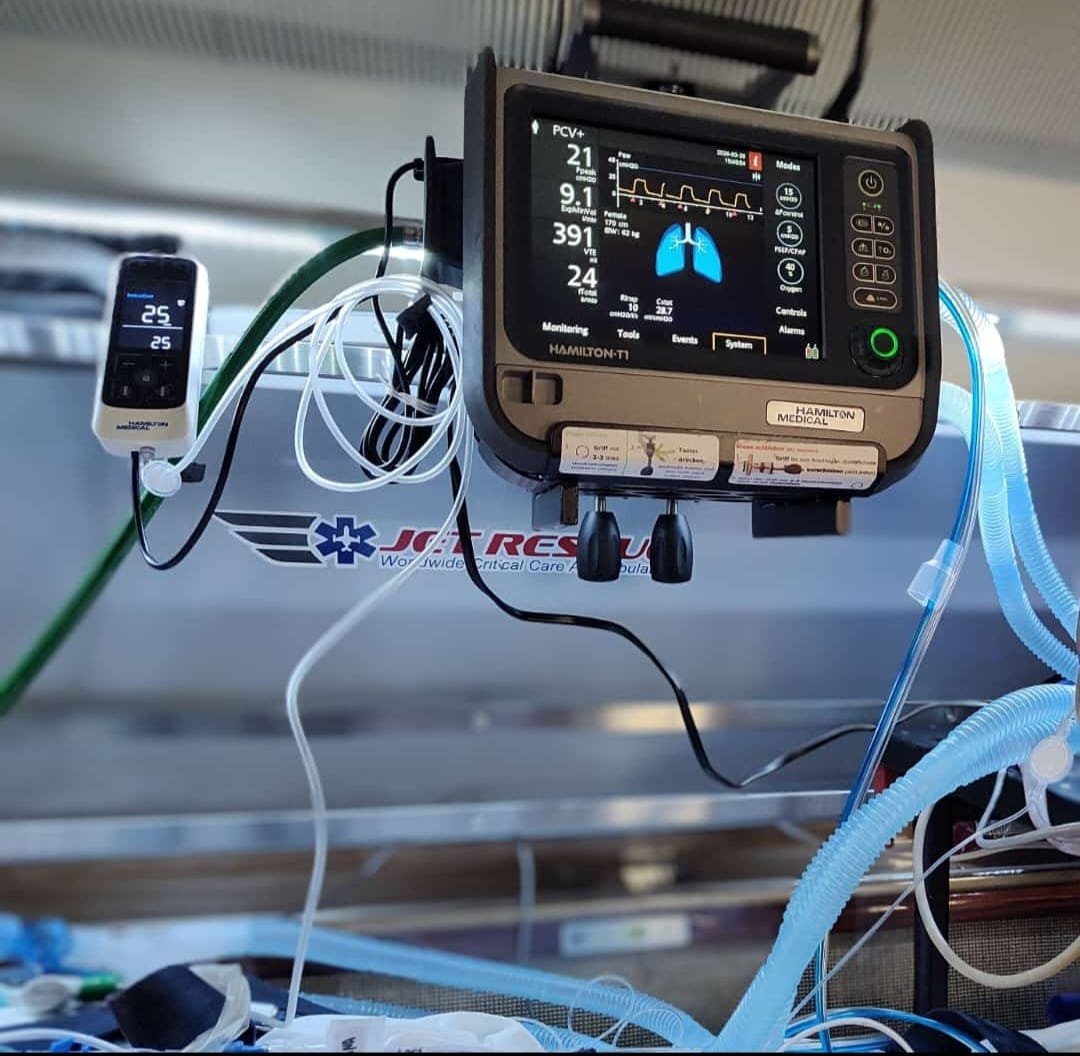
Redundancy is not duplication for its own sake. It is a deliberate response to the fact that transport removes immediate access to hospital infrastructure. The exact equipment package depends on patient acuity and transport mode, but critical ventilator transfers typically require a tested primary ventilator, manual ventilation capability with appropriate PEEP support, suction, oxygen reserves, airway rescue equipment, medications, infusion pumps, and continuous monitoring.
Every device should be inspected, charged, secured, and function-checked before patient loading. Tubing must be routed to avoid traction, kinking, or accidental disconnection during stretcher movement. Pumps, monitors, and ventilator circuits should remain visible enough for the team to identify issues quickly without compromising patient restraint or cabin safety.
For patients with high-acuity needs, preparation may also involve specialized support such as inhaled pulmonary vasodilator therapy, advanced hemodynamic monitoring, or ECMO transport capability. These cases require teams with the specific clinical experience and equipment to manage the therapy during movement, not simply observe it.
Coordinate Sedation, Infusions, and Monitoring
Movement often changes a ventilated patient’s needs. Stimulation from repositioning, vibration, noise, and changes in routine can increase agitation, dyssynchrony, or oxygen demand. Sedation and analgesia should be reviewed before departure, with infusion volumes, concentrations, rates, and backup supply confirmed.
The team must also consider the trade-off between deeper sedation and hemodynamic stability. A patient who is over-sedated may become hypotensive; a patient who is under-sedated may cough, fight the ventilator, or dislodge critical lines. The appropriate plan depends on the patient’s diagnosis, neurological status, blood pressure, and expected transport conditions.
Continuous pulse oximetry, ECG, noninvasive or invasive blood pressure monitoring, and waveform capnography are central to safe ventilator transfer. Where indicated, teams should document baseline vital signs and trends before movement so that they can distinguish a meaningful decline from a transient change related to repositioning.
Prepare for the Environment Outside the ICU
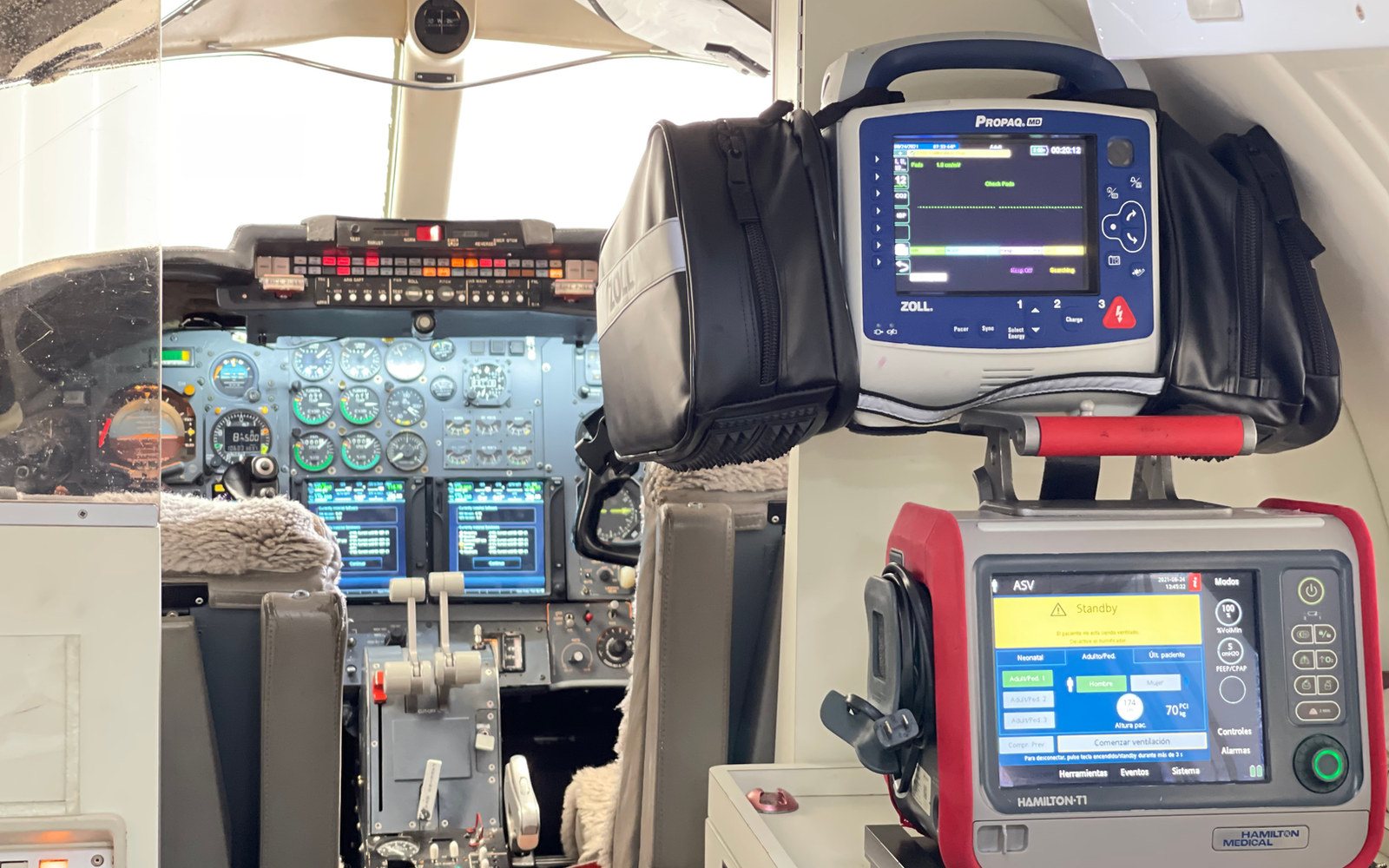
A transport environment has constraints that an ICU does not. Space is limited, access to the patient may be restricted in flight, and vibration, noise, temperature changes, and altitude can affect care. Equipment positioning must allow clinicians to reach the airway, ventilator controls, infusion pumps, and monitoring leads without delay.
Air transport adds planning considerations. Cabin altitude can alter gas behavior, and weather or air traffic conditions can affect timing. The medical team and aviation crew must coordinate patient loading, weight distribution, power availability, oxygen storage, and safety restrictions before the mission begins.
International or cross-border transfers add another layer. Medication documentation, medical records, travel clearance, receiving facility acceptance, ground ambulance timing, and border procedures should be coordinated before departure. A well-equipped aircraft cannot overcome an incomplete handoff or a receiving bed that has not been confirmed.
Make the Handoff Operational, Not Routine
The sending clinician, transport team, and receiving clinician need the same understanding of the patient’s respiratory status and current plan. A useful handoff includes the reason for ventilation, airway details, ventilator settings, recent changes, blood gas trends, suctioning needs, active infusions, allergies, pending concerns, and escalation instructions.
Written records matter, but direct clinician-to-clinician communication is often where critical nuance is transferred. For example, a patient may have tolerated a setting only after a recent recruitment maneuver, or may desaturate rapidly during turns. Those details can shape decisions made minutes later during loading or flight.
Before wheels move, the team should perform a final pause: patient identity and destination, airway security, ventilator settings, oxygen supply, battery status, medication infusions, monitoring, documentation, and contingency equipment. This is a short but essential confirmation that every system is ready to travel together.
Choose a Team That Can Act During Deterioration
The right transport team is defined by capability, not by a generic label. A stable ventilated patient may be appropriate for one staffing configuration, while a patient with refractory hypoxemia, multiple vasoactive infusions, complex pediatric needs, or ECMO requires specialized critical care resources.
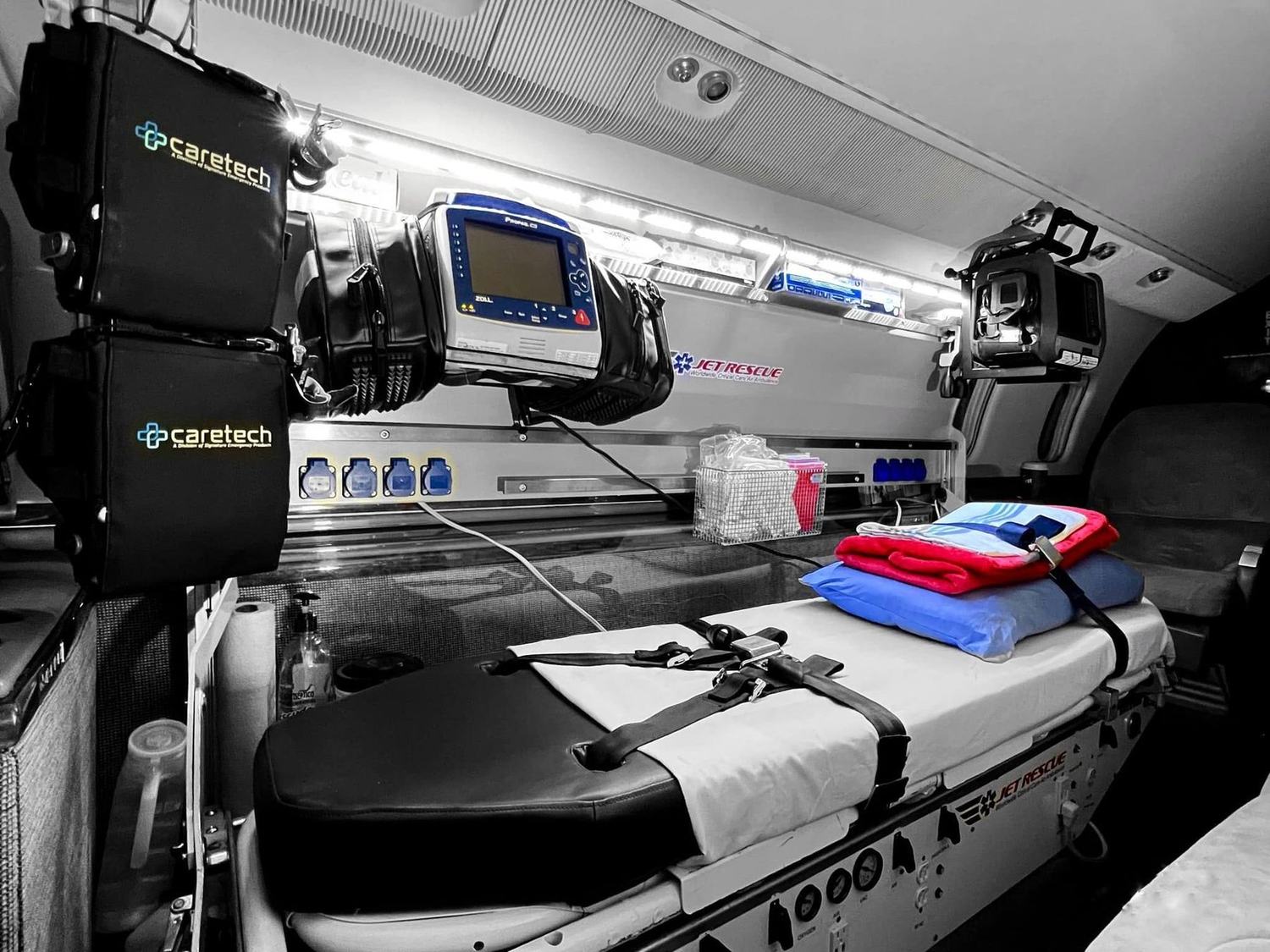
Jet Rescue Air coordinates high-acuity transport planning around the patient’s clinical requirements, route, and receiving destination. The key question is not whether the patient can be moved, but whether the selected team, aircraft or vehicle, and equipment can safely manage the patient if their condition changes en route.
Careful preparation creates options when time is limited. When the airway is secure, reserves are calculated, equipment is tested, and every clinician knows the plan, transport becomes a controlled extension of critical care rather than an interruption to it.
Tell us about the patient
A mission coordinator answers 24 hours a day. The benefits review is free and carries no obligation.