

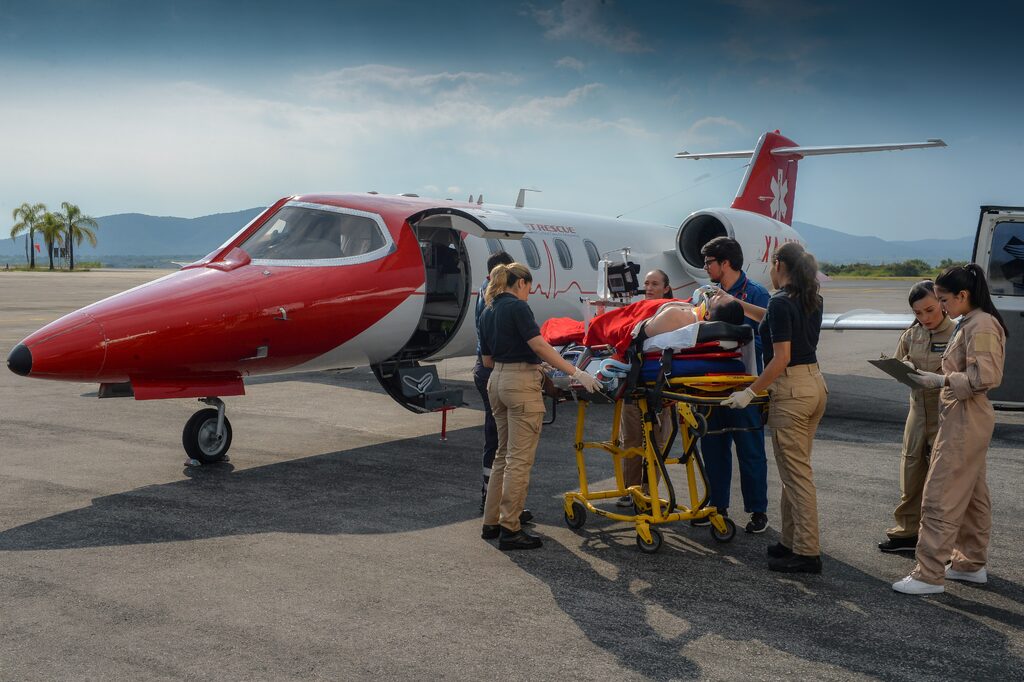
How to Prepare for Airlift Medical Transport
Learn how to prepare for airlift medical transport with records, consent, payment planning, and coordinated handoff steps for a safer transfer in flight.
When a patient needs to move hundreds or thousands of miles for specialized care, the details cannot wait until the aircraft arrives. Knowing how to prepare for airlift medical transport helps families, hospitals, and case managers prevent avoidable delays while protecting continuity of care. The goal is not simply getting a patient onto a plane. It is creating a medically appropriate transfer from the sending bedside to the receiving bedside.
A qualified air ambulance provider will guide the process, but the fastest cases are usually the ones where clinical information, decision-makers, and receiving arrangements are ready early. Preparation looks different for a stable hospital discharge, a neonatal transfer, or an ICU-level international repatriation. The planning must match the patient's acuity, equipment needs, and destination.
Start With a Clinical Transport Assessment
The first question is whether the patient can safely travel and, if so, what level of transport is required. A medical flight is not a standard commercial trip with a wheelchair added. The transport team must understand the patient's diagnosis, current condition, oxygen needs, medications, monitoring requirements, mobility, and risk of deterioration during flight.
Provide the current treating physician's contact information and ask that the medical team be available for a direct clinical handoff. The air medical provider will typically review the diagnosis, recent progress notes, vital-sign trends, medication administration record, laboratory results, imaging reports, and any active treatment plan. For complex cases, the transport medical director may speak directly with the sending physician before accepting the mission.
This assessment determines whether the patient needs a fixed-wing medical jet, helicopter, commercial medical escort, or ground critical care transport. It also determines the appropriate crew configuration. A patient on a ventilator, multiple IV infusions, or advanced cardiac support requires a different clinical team and aircraft setup than a patient who is stable but unable to travel commercially.
Do not minimize symptoms or equipment needs in an effort to speed approval. Accurate information allows the transport provider to bring the right crew, medications, oxygen supply, monitors, and specialty equipment. In air medical transport, proper planning is what makes rapid deployment possible.
How to Prepare for Airlift Records and Handoffs
A complete medical packet is one of the most valuable items in the transfer process. The packet should travel with the patient when possible, even if records have already been sent electronically. Receiving facilities need a reliable clinical history the moment the patient arrives.
Gather the patient's government-issued identification, insurance information, medication list, allergy list, advance directives, and contact details for the family or legal representative. For cross-border transport, confirm passport validity, visa requirements when applicable, and any documents needed for admission or entry at the destination. International medical evacuation may also require coordination with consulates, border authorities, airport officials, and receiving hospitals.
For hospital-to-hospital transfers, include the most recent documentation rather than relying on records from several days earlier. A useful packet generally contains the admission history and physical, discharge or transfer summary, recent physician notes, nursing notes, imaging on disk or electronically available files, lab results, operative reports, and specialist consultations. If blood products, cultures, isolation requirements, or implanted devices are relevant, make that information explicit.
The handoff should be more than paperwork. The sending nurse and physician should explain what has changed during the current shift, which medications are due next, what interventions have been effective, and what warning signs concern the team. The air medical crew needs the clinical story, not just the diagnosis code.

Confirm the Receiving Facility Before Departure
An aircraft should not launch without clarity about where the patient will go after landing. Families sometimes focus on the flight itself and overlook the receiving bed, physician acceptance, and ground transportation at the destination. Those arrangements are just as critical.
Confirm that the receiving physician has accepted the patient and that the appropriate unit is prepared. A general medical bed is not an adequate substitute when the patient needs an ICU, neonatal ICU, cardiac unit, burn center, obstetric service, or another specialty program. Ask who will receive the patient on arrival and whether any tests, medication changes, or isolation measures are expected immediately.
Ground transportation must be coordinated at both ends. The patient may need a critical care ambulance, a neonatal ambulance, or a standard ambulance depending on the level of care. Distance between the airport and hospital, traffic, border processing, and airport access rules can materially affect the overall timeline. A fast flight does not eliminate the need for a properly equipped ground transfer.
Prepare the Patient Without Disrupting Care
The treating team should continue necessary care until the transport crew takes responsibility. Do not stop medications, disconnect monitoring, withhold nutrition, or alter oxygen settings unless directed by the attending clinicians or transport team. The crew will manage the transition using protocols designed for flight physiology and the patient's condition.
If the patient is alert, explain the transfer in simple, direct language. Let them know where they are going, who will accompany them, and what they may experience. Noise, vibration, limited cabin space, and the use of headsets can be unfamiliar. For pediatric patients, a familiar blanket, comfort item, or age-appropriate explanation can reduce distress when clinical circumstances permit.
Pack only essential personal belongings. Medical aircraft cabins have limited space, and safety equipment must remain accessible. Keep identification, discharge paperwork, glasses, hearing aids, dentures, phone chargers, and a concise list of personal contacts together. Leave valuables and nonessential luggage with family whenever possible.
Family accompaniment depends on the aircraft, patient acuity, crew requirements, weight limits, international entry rules, and available seating. In high-acuity cases, clinical staffing and equipment take priority. Ask early whether a family member can travel in the aircraft, on a separate commercial flight, or meet the patient at the destination. A clear plan reduces stress for everyone involved.

Address Consent, Insurance, and Financial Authorization Early
Medical transport is time-sensitive, but it still requires proper authorization. The patient or legal decision-maker may need to sign consent for transport, release of records, and financial responsibility documents. If the patient cannot provide consent, be prepared to identify the legal surrogate, healthcare proxy, guardian, or person holding power of attorney.
Insurance coverage varies widely. Coverage may depend on medical necessity, network status, destination, policy exclusions, benefit limits, and whether the transfer is domestic or international. A provider can help verify available benefits, but verification is not the same as final payment approval. Ask what documentation the insurer needs and whether prior authorization is required.
If coverage is incomplete, request a clear estimate of the transport scope. The quote should account for the aircraft type, medical crew, ground ambulances, international permits, airport fees, and specialty equipment when applicable. Costs can change if the patient's clinical condition changes or if weather, destination access, or border requirements require a different operational plan. Transparency at the start helps families make decisions with fewer surprises.
Know What Can Change the Flight Plan
Even well-coordinated missions can require adjustment. Weather, airport closures, air traffic restrictions, runway limitations, patient instability, infectious disease precautions, and receiving-facility readiness can affect departure time or routing. These are not signs of poor planning. They are operational realities that a responsible air medical team evaluates continuously.
Some conditions require additional lead time. Patients requiring ECMO, neonatal intensive care, high-risk obstetric support, bariatric equipment, isolation capability, or multiple specialty infusions need highly specific staffing and equipment. International transfers may require overflight permissions, customs coordination, and documentation review. The right response is not to rush past these requirements. It is to assign an experienced transport coordinator who can move them forward in parallel.
Jet Rescue Air coordinates complex domestic and international transfers by aligning clinical review, aircraft logistics, ground transportation, and receiving-facility communication. For urgent cases, having one accountable coordination team can reduce the number of calls families and hospital staff must manage during a critical moment.

Keep One Point of Contact Available
Choose one family representative or facility contact who can make decisions and answer calls quickly. This person should have the patient's identifying information, sending and receiving facility contacts, insurance details, and authority to communicate with the transport coordinator. Multiple well-meaning callers can create conflicting instructions and slow approvals.
Keep your phone charged and remain reachable from dispatch through arrival. If the destination, contact information, legal decision-maker, or patient condition changes, report it immediately. Small updates can affect medical staffing, entry documentation, ambulance dispatch, and bed assignment.
The best preparation is focused, not complicated: share accurate clinical facts, secure the receiving plan, keep documents ready, and let the transport specialists manage the aviation and medical logistics. When every handoff is planned with the patient's condition in mind, airlift becomes a controlled extension of care rather than a gap between two hospitals.
Tell us about the patient
A mission coordinator answers 24 hours a day. The benefits review is free and carries no obligation.