

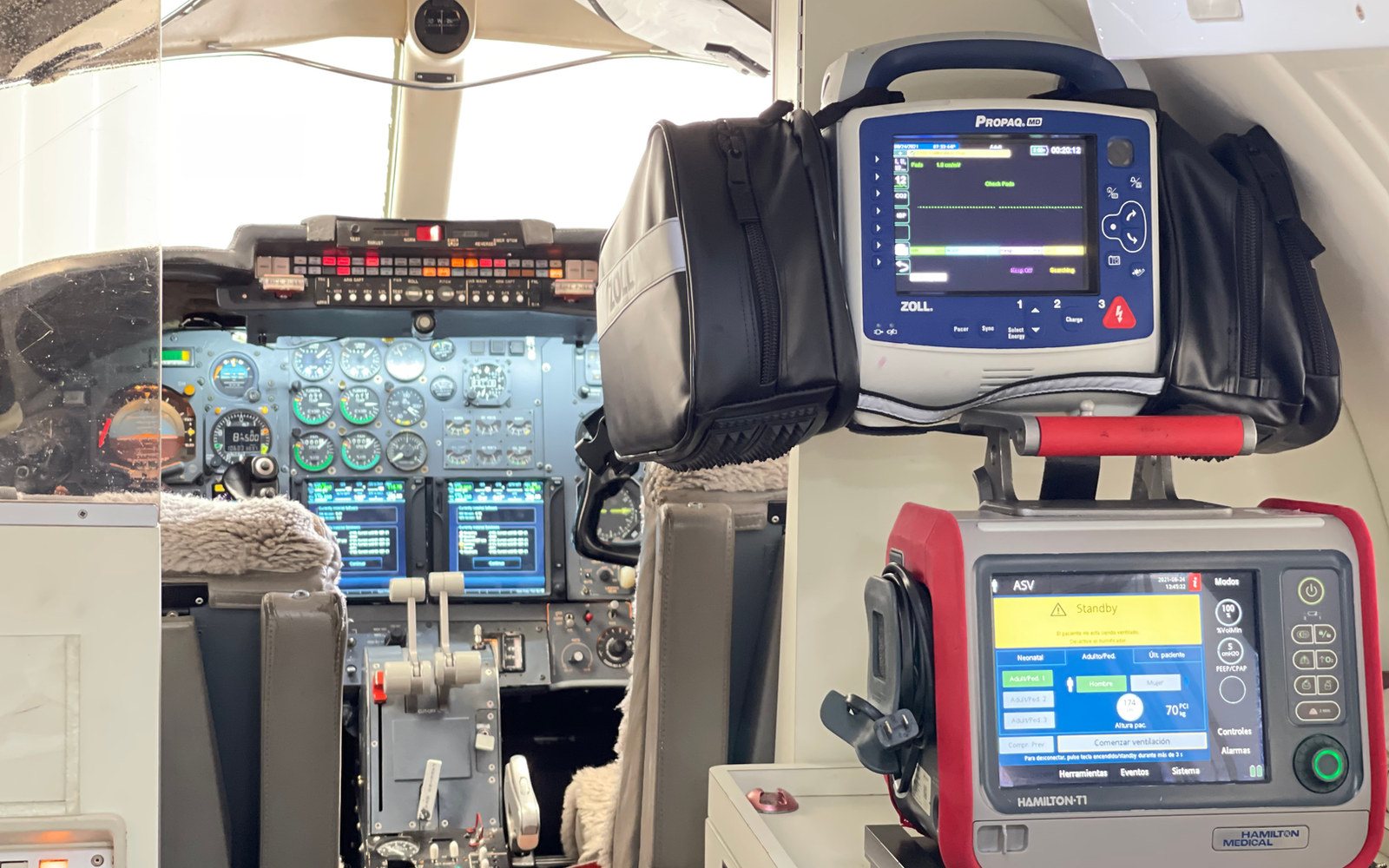
Essential In-Flight Medical Equipment Guide
Learn how essential in-flight medical equipment supports high-acuity air ambulance transfers, from monitoring and ventilation to neonatal and ECMO care.
A patient can look stable at a hospital bedside and become far more complex once the transport team closes the aircraft door. Cabin space is limited, altitude changes affect both patients and devices, and diversion options may be hours away. That is why essential in-flight medical equipment is not a generic checklist. It is a carefully configured clinical system matched to the patient's diagnosis, current support needs, route, and receiving facility.
For families, case managers, and referring clinicians, the central question is not simply whether an aircraft has medical equipment. It is whether the aircraft, crew, and equipment package can safely continue the level of care the patient requires from departure through handoff.
What Essential In-Flight Medical Equipment Must Do
Air ambulance equipment has one job: preserve continuity of care when ground-level resources are no longer immediately available. It must be compact enough for aviation use, secured for turbulence, powered appropriately, and operated by a team trained for the specific mission.
The appropriate setup depends on acuity. A medically stable patient traveling with a nurse escort may need basic monitoring, oxygen, medication management, and mobility support. A patient with respiratory failure, unstable cardiac status, traumatic injuries, sepsis, or neurological compromise may require a critical care configuration that resembles a highly condensed intensive care unit.
Equipment alone is never the complete answer. Device capability must be paired with clinical protocols, medication planning, battery and oxygen reserves, infection-control measures, and a team authorized and prepared to use the equipment in flight. For international transfers, planning also includes customs coordination, airport access, ground ambulance connections, and a clear plan for any operational change en route.
Monitoring That Makes Changes Visible Early
Continuous patient monitoring is the foundation of medical transport. It gives the clinical crew a real-time view of how the patient is tolerating the flight and allows intervention before a change becomes a crisis.
A critical care monitor may track heart rhythm, heart rate, noninvasive or invasive blood pressure, oxygen saturation, respiratory rate, temperature, and end-tidal carbon dioxide when clinically indicated. The exact parameters are selected according to the patient's condition. For example, a ventilated patient often requires close carbon dioxide monitoring, while a patient on vasoactive medications may need invasive arterial pressure monitoring.
Monitoring must be reliable in an aircraft environment. Motion, vibration, noise, cabin lighting, and limited physical access can affect how equipment is used. Experienced flight clinicians do not rely solely on alarms or screen readings. They combine device data with repeated clinical assessment, medication checks, ventilator evaluation, and communication with the referring and receiving teams.
Airway, Oxygen, and Ventilator Support
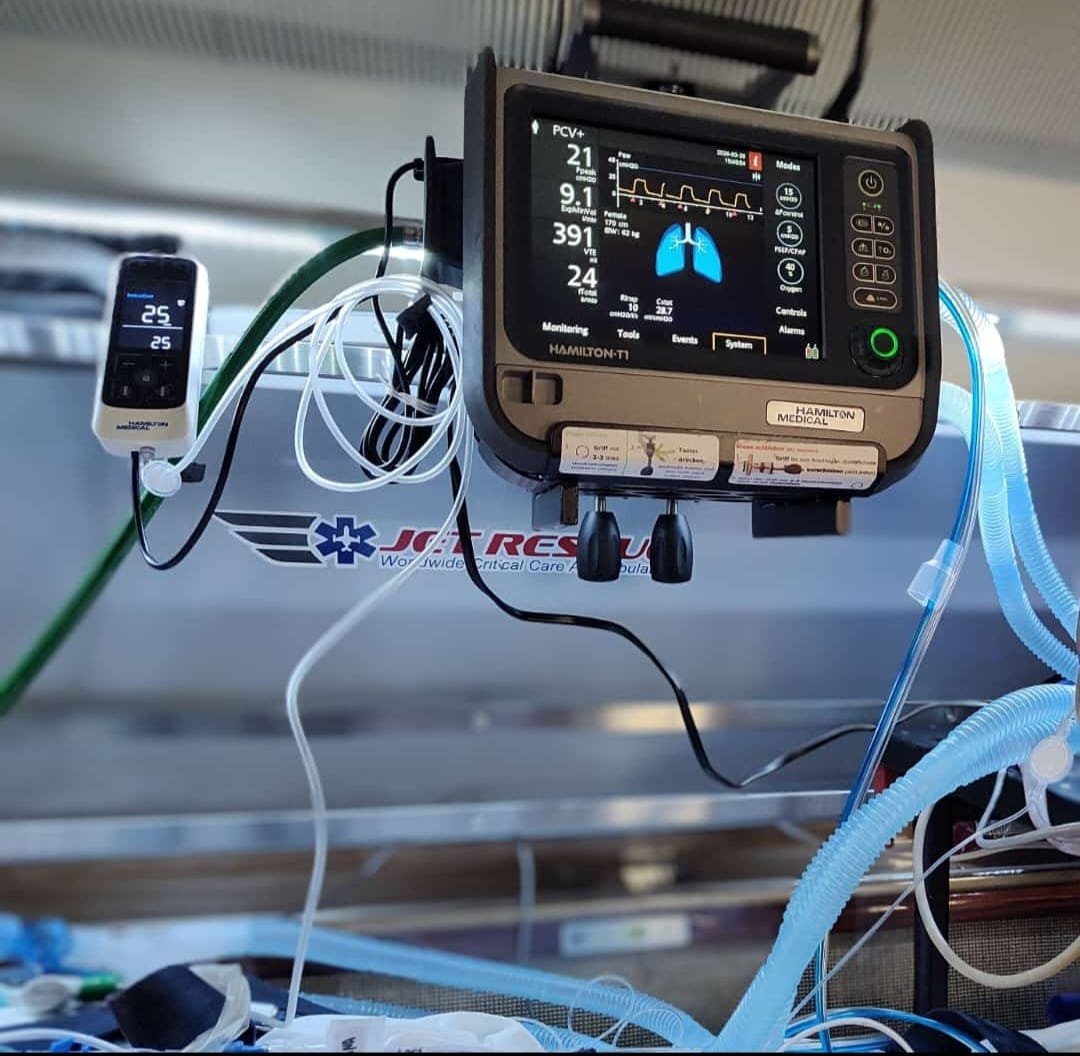
Respiratory capability is among the most consequential elements of essential in-flight medical equipment. Patients may need supplemental oxygen, suction, airway supplies, noninvasive ventilation, or invasive mechanical ventilation. The right level of support is determined before departure, not improvised after takeoff.
A transport ventilator is designed for mobility and aviation use, with settings tailored to the patient’s respiratory condition. It must have adequate battery capacity, appropriate circuits, alarm functions, and compatible oxygen delivery. The team also plans for oxygen consumption across the full mission, including potential delays, ground transfer time, and a safety reserve.
Portable suction, bag-valve ventilation equipment, airway management tools, and backup supplies are equally critical. A primary device can fail, tubing can become disconnected, and a patient’s condition can shift without warning. Redundancy is not excess capacity in critical care transport. It is a safety requirement.
For some patients, flying may require specialized planning because cabin pressure can affect gas expansion or respiratory status. Recent thoracic procedures, certain trapped-air conditions, and severe pulmonary disease warrant direct physician-to-physician review before transport is approved.
Medication Delivery and Infusion Control
Many high-acuity patients cannot safely pause medications for a flight. Infusion pumps allow crews to administer precisely controlled therapies, including sedation, pain management, antibiotics, insulin, fluids, vasoactive medications, and other time-sensitive infusions.
In-flight pumps need to be secured, battery-supported, and checked against the medication concentration and ordered dose before departure. The medical team calculates the quantity required for the planned flight and carries an appropriate reserve. Medication planning also accounts for temperature control, controlled-substance handling, and the possibility of a route extension or airport delay.
The equipment matters, but medication handoff matters just as much. Before transport, the crew verifies current infusions, recent doses, allergies, laboratory concerns, and any medications that must continue without interruption. This reduces preventable gaps when care moves from one clinical setting to another.
Specialized Equipment for Advanced Transport Missions
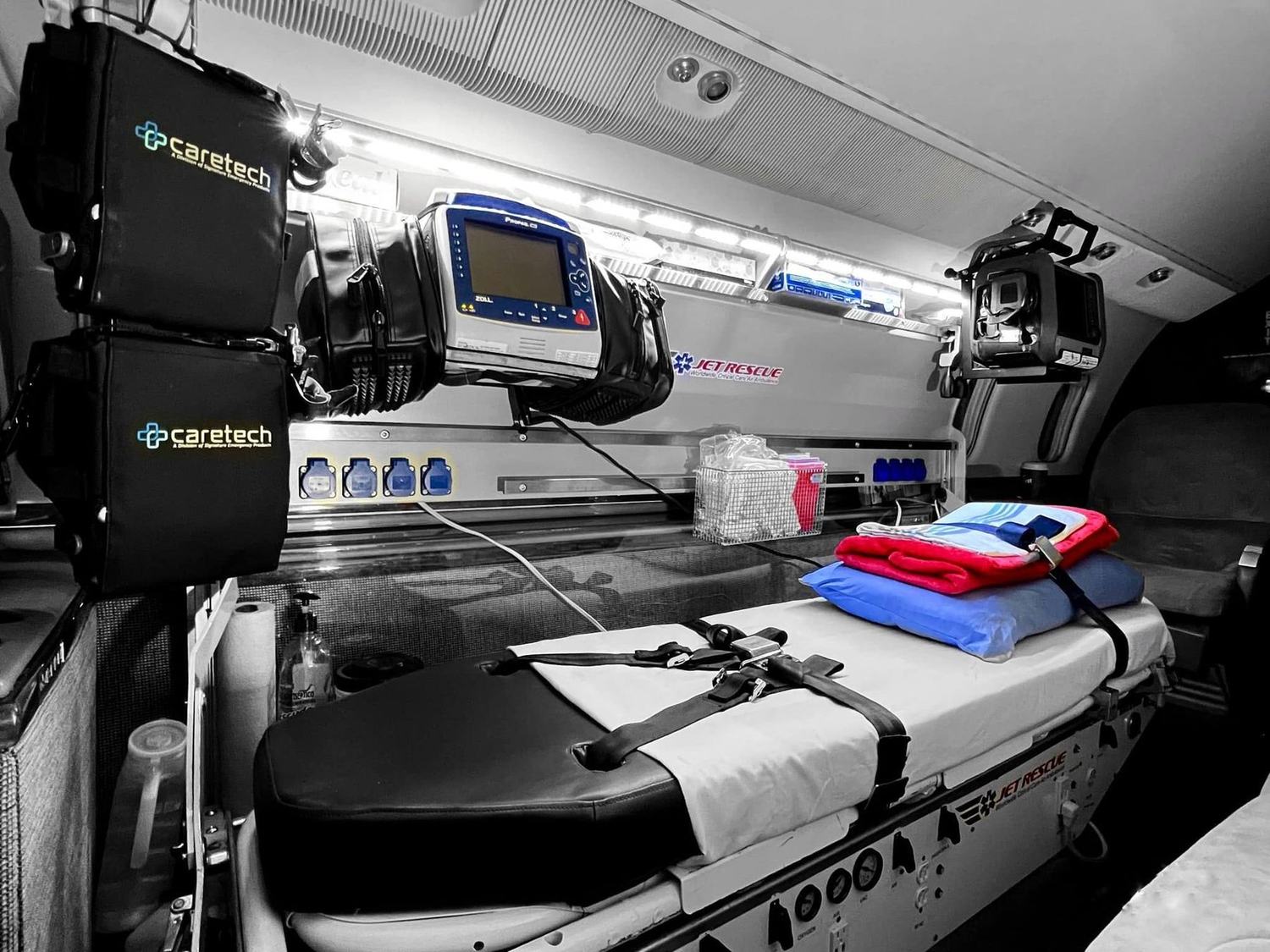
Not every aircraft carries every advanced device on every mission. The correct aircraft and medical team are selected after a clinical review. This distinction protects patients from both under-resourcing and unnecessary complexity.
Neonatal and Pediatric Transport
Infants and children require age-specific equipment and clinicians trained to use it. A neonatal transport incubator can provide a controlled environment for premature or critically ill newborns while integrating monitoring, oxygen delivery, ventilation capability, and temperature management. Pediatric patients may require appropriately sized airway equipment, blood pressure cuffs, medication dosing systems, and restraint solutions.
Weight, developmental stage, and diagnosis change nearly every part of the care plan. A child is not simply a smaller adult patient, particularly during respiratory emergencies, congenital cardiac cases, or neonatal intensive care transfers.
High-Risk Obstetric Transport
Maternal transport may require fetal monitoring capability, obstetric emergency supplies, medications, and a team prepared to manage complications involving the mother, fetus, or both. The timing of transfer matters significantly. When possible, transport is coordinated before a patient becomes too unstable to travel, while ensuring the receiving center can provide the required maternal-fetal or neonatal services.
ECMO and Other Complex Life Support
ECMO transport requires a highly specialized configuration. The circuit, console, oxygen supply, backup power, monitoring, emergency supplies, and trained ECMO team must work together in a confined aviation environment. These missions require detailed coordination among the sending hospital, transport provider, receiving center, and aviation operator.
The same principle applies to other complex cases, including patients with invasive hemodynamic monitoring, ventricular assist devices, dialysis needs, or severe trauma. Capability should be verified for the individual patient rather than assumed from a broad description of an air ambulance service.
Power, Securing Systems, and Infection Control
A medical device is only useful if it remains operational throughout the mission. Aircraft-based care requires reliable power planning, including aircraft power compatibility, charged internal batteries, spare batteries where appropriate, and checks before launch. Flight teams also assess cable routing and equipment placement to avoid obstructing patient access or creating hazards during turbulence.
All equipment must be mounted or restrained according to aviation and safety procedures. An unsecured monitor, pump, or oxygen cylinder can become dangerous during an abrupt movement. Clinical access also matters: the team must be able to reach the airway, chest, intravenous lines, medication pumps, and monitor controls without delay.
Infection-control practices remain active during transport. Cleanable surfaces, appropriate personal protective equipment, isolation planning when needed, and post-mission decontamination protect the patient, crew, and subsequent patients. The approach varies based on the suspected or confirmed infectious risk and the type of aircraft used.
Questions to Ask Before Choosing an Air Ambulance
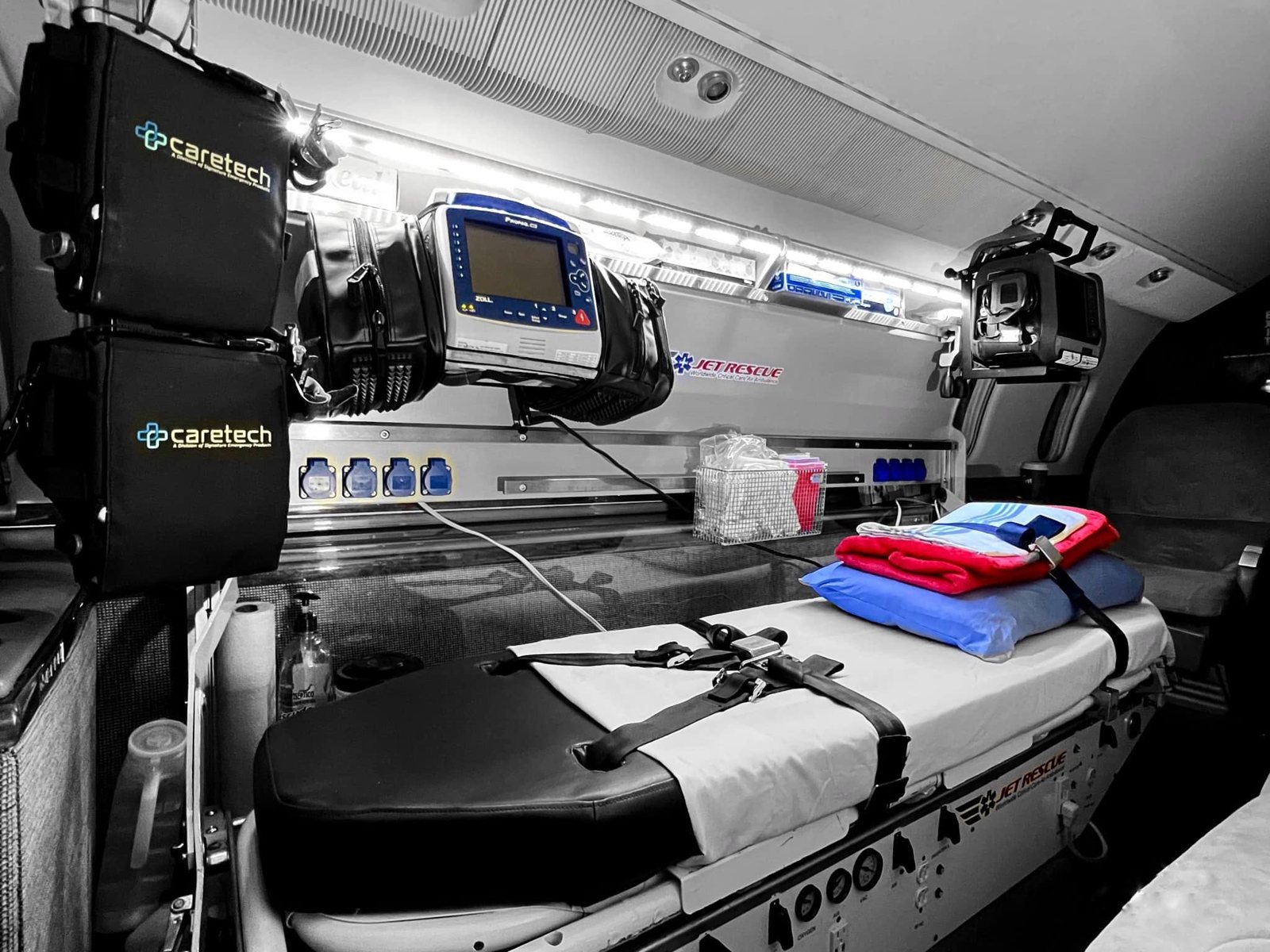
When arranging a transfer, ask what medical equipment and staffing will be assigned specifically to the patient, not just what may be available in a fleet. Confirm whether the team can manage the current respiratory support, medication infusions, monitoring needs, and likely complications.
It is also reasonable to ask how oxygen, battery life, backup equipment, and airport-to-hospital ground transport will be managed. For cross-border or long-distance missions, confirm who coordinates medical records, receiving acceptance, travel documentation, and communication between facilities.
Jet Rescue Air evaluates missions around the patient’s clinical needs and transport logistics, including critical care, neonatal, pediatric, high-risk obstetric, and ECMO-level requirements. The objective is a transport plan that remains clinically appropriate from bedside pickup to receiving-facility handoff.
The best time to verify equipment capability is before a patient needs an urgent departure. A clear clinical briefing, complete records, and direct communication between treating teams can turn a difficult transfer into a controlled continuation of care.
Tell us about the patient
A mission coordinator answers 24 hours a day. The benefits review is free and carries no obligation.