

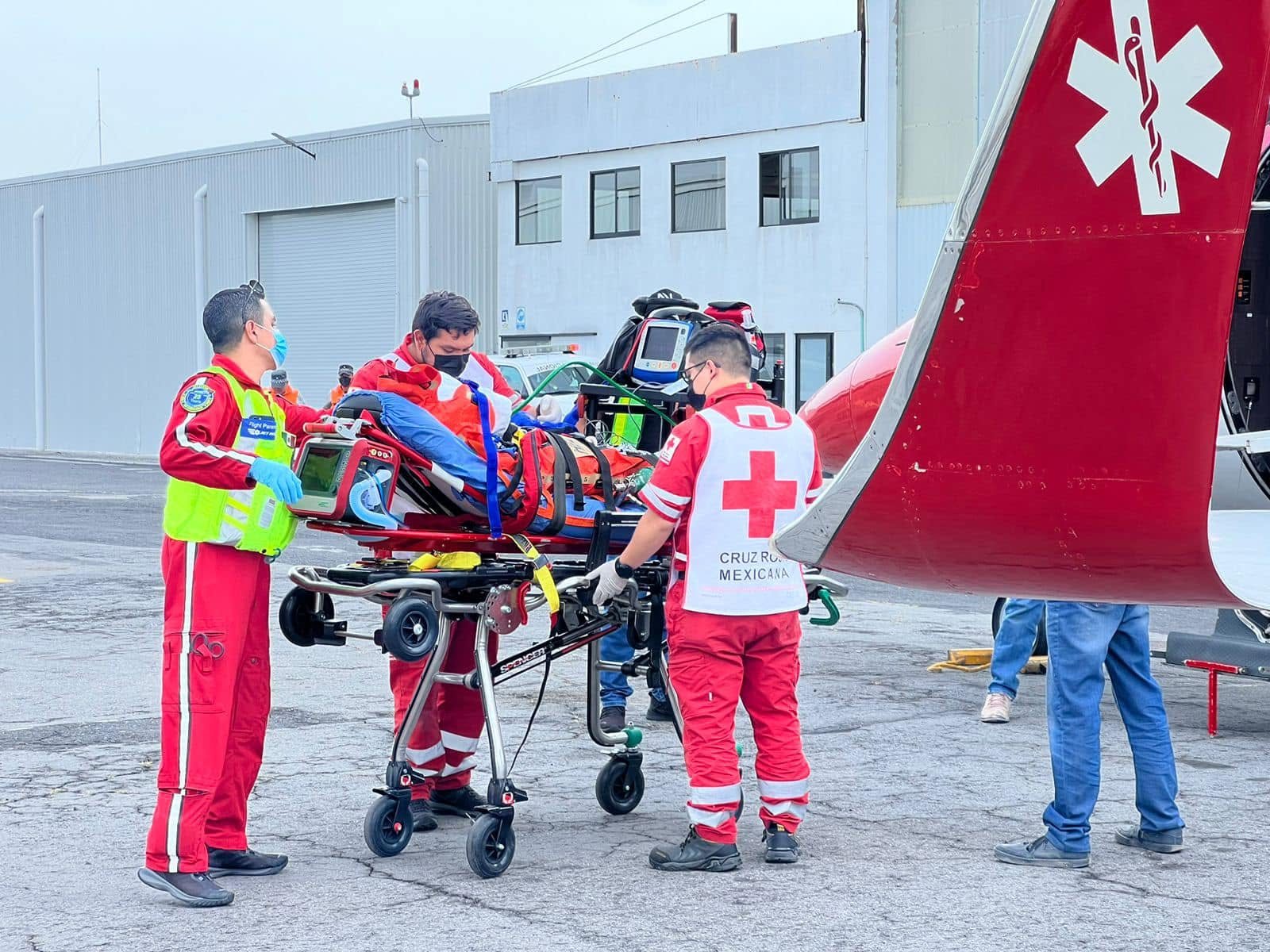
A Trauma Airlift Example From Scene to ICU
A trauma airlift example shows how aircraft, critical care teams, and hospital coordination can protect time, stability, and continuity of care in transit.
A trauma airlift example is easiest to understand when every minute has a clinical purpose. A patient does not simply move from one location to another. The transport team must stabilize immediate threats, match the aircraft to the mission, maintain critical care in flight, and deliver the patient to a hospital prepared to continue treatment without delay.
Consider a representative scenario: a 42-year-old traveler is seriously injured in a highway collision in a remote area. The local emergency department identifies multiple injuries, including chest trauma, suspected internal bleeding, and a complex pelvic fracture. The patient needs a higher-level trauma center with surgical, interventional radiology, and intensive care resources that are not available locally.
The transfer is urgent, but urgency alone does not determine whether an airlift is appropriate. The sending physician, accepting trauma center, and medical transport coordinator must establish that the patient can be moved safely and that air transport provides a meaningful clinical advantage over ground transport.
The Trauma Airlift Example Begins With Triage
Before an aircraft is dispatched, the case is reviewed for medical urgency, distance, weather, airport access, and the patient's current stability. In this example, the local hospital has controlled the most immediate bleeding concerns, placed a chest tube, started blood products, and secured the airway with mechanical ventilation. The patient remains critical but stable enough for a carefully managed transfer.
That distinction matters. Air ambulance transport is not a substitute for emergency treatment at the scene or in the first hospital. It is a continuation of treatment when the next level of care is elsewhere. If a patient is too unstable to move, the priority is additional stabilization. If the receiving facility can offer life-saving capabilities sooner than a ground transfer can, air transport may be the right option.
The transport coordination process also confirms practical details that can change the plan. Is there a suitable runway close to the sending hospital? Can the receiving trauma center accept the patient immediately? Does the patient need a medical jet for a longer regional or cross-border route, or is a medical helicopter the faster option for a shorter point-to-point mission? These decisions are operational, but they directly affect patient care.
Choosing the Aircraft and Medical Team
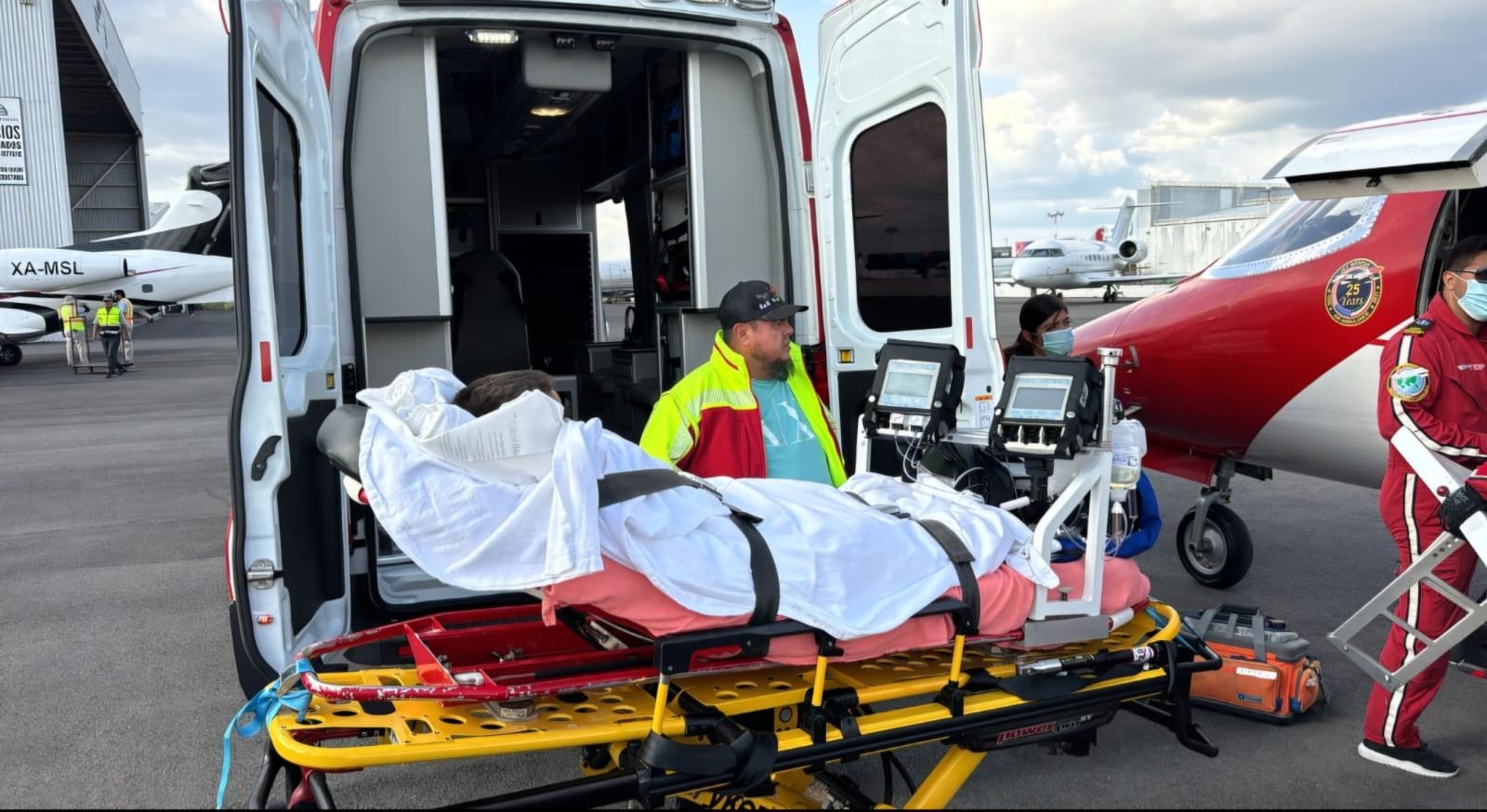
In this trauma airlift example, the patient is traveling several hundred miles to a Level I trauma center. A fixed-wing medical jet is selected because it offers the range, cabin space, and equipment capacity required for a ventilated trauma patient. Ground ambulances are arranged at both ends so the clinical handoff continues from hospital bed to aircraft stretcher and from aircraft to trauma bay.
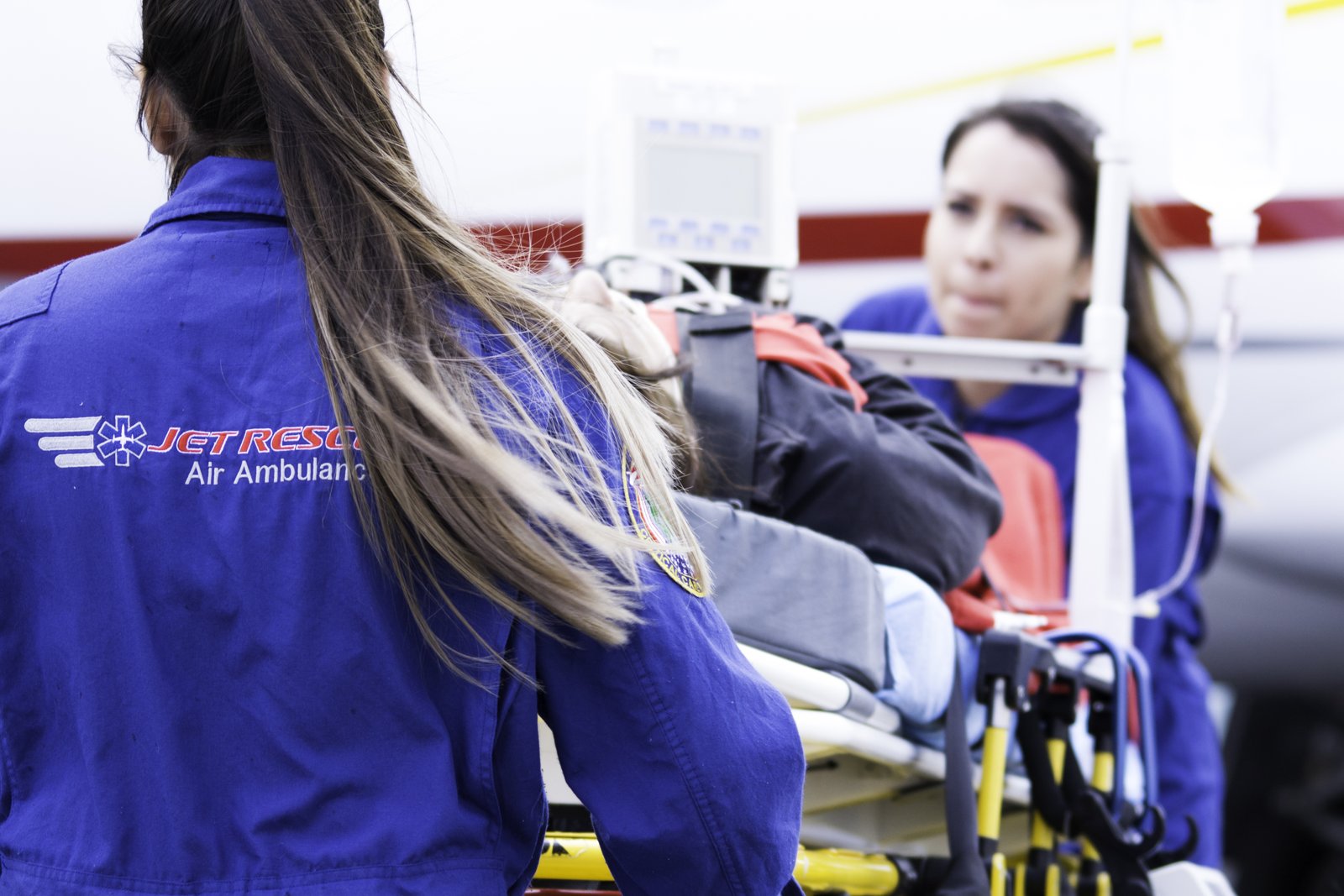
The medical crew is matched to the patient's acuity, not merely to the distance of the flight. For a patient with traumatic injuries and respiratory support needs, that may include a critical care paramedic, paramedic, respiratory specialist, or other clinicians with advanced transport experience. The specific staffing model depends on the patient's condition, scope of practice, and the interventions likely to be required during the mission.
Equipment is equally central. The team may need a transport ventilator, cardiac monitor, infusion pumps, suction, oxygen reserves, emergency medications, blood-product capability when clinically indicated, and supplies for airway or chest-tube management. Redundancy is not a luxury in critical transport. Flight teams plan for the possibility that a device fails, a medication infusion needs adjustment, or the patient deteriorates while the aircraft is airborne.
Clinical Preparation Before Departure
The most controlled part of an emergency airlift is often the time before takeoff. The crew reviews imaging, laboratory results, medications, allergies, mechanism of injury, vital-sign trends, procedures already completed, and the treatment plan from the sending physicians. They also speak directly with the receiving team when necessary to clarify priorities on arrival.
For this patient, preparation may include confirming the chest tube is functioning, securing all lines and drains, checking ventilator settings, reassessing blood pressure, and ensuring pain control and sedation are appropriate for transport. The crew also calculates oxygen consumption and verifies that all battery-powered equipment has adequate capacity for the flight, ground transfers, and reserve time.
This is where a high-acuity airlift differs from a basic patient transfer. Every tube, monitor lead, medication line, and clinical decision must remain reliable in a moving aircraft. Turbulence, noise, limited cabin access, and altitude-related considerations all require planning. The objective is not simply to get airborne quickly. It is to depart with a patient whose care can be sustained safely from door to door.
What Happens During the Flight
Once airborne, the transport team continuously monitors the patient and responds to changes in real time. In this scenario, the team tracks oxygen saturation, end-tidal carbon dioxide, blood pressure, heart rhythm, urine output when applicable, neurological status, and the function of the chest tube and ventilator.
The patient's condition may remain stable throughout the mission. It may also change. A blood-pressure drop could prompt reassessment of bleeding, fluid or blood-product administration under the transport protocol, medication adjustments, and immediate communication with the receiving trauma center. A rise in airway pressures could require evaluation of the breathing circuit, chest injury, or ventilator settings.
Clear communication protects the transition of care. The receiving hospital receives updates while the aircraft is en route, particularly if the patient's status changes or a surgical team must be ready at arrival. This allows the trauma center to prepare an operating room, interventional radiology suite, or ICU bed before the patient reaches the hospital.
Arrival Is a Clinical Handoff, Not the End of the Mission
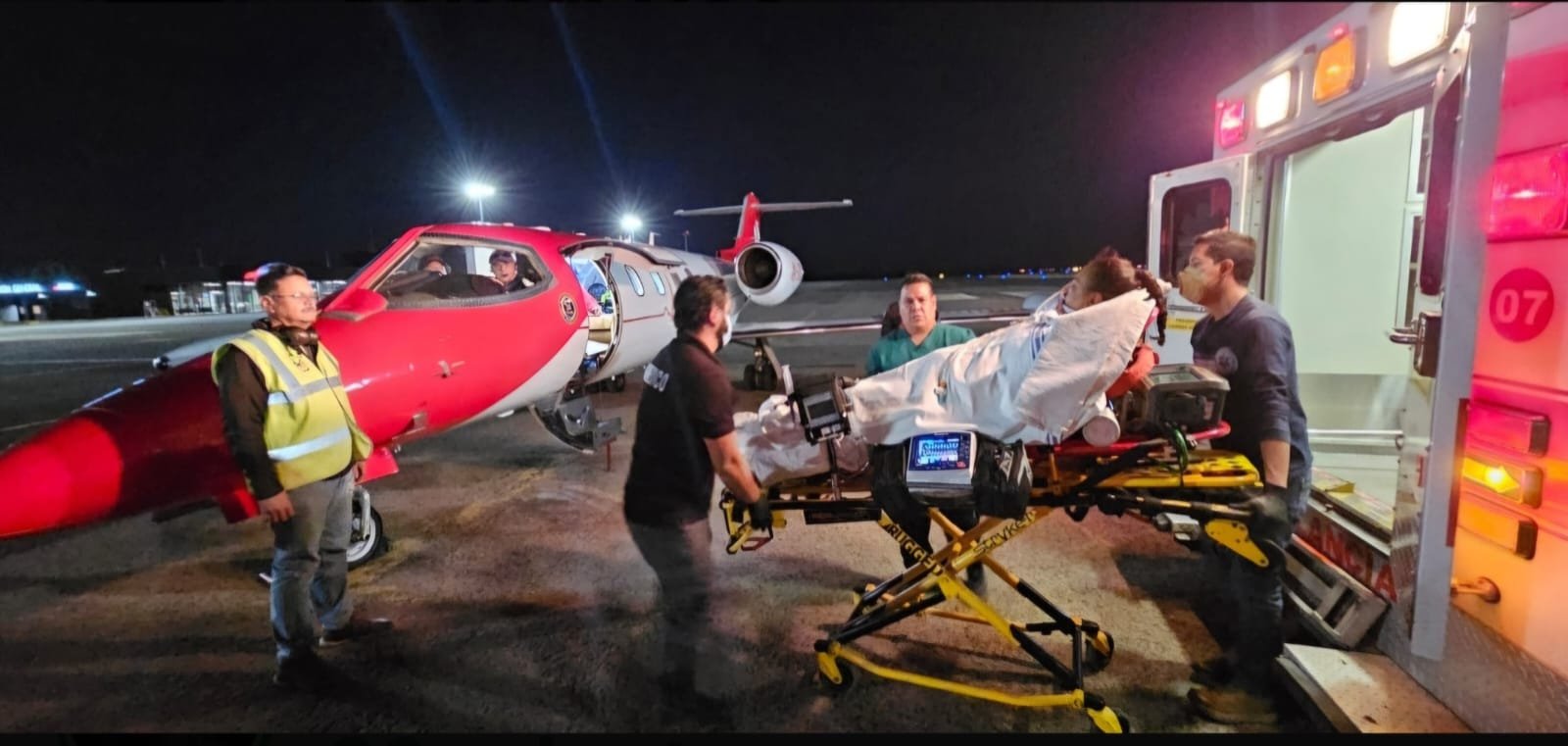
At the destination airport, a coordinated ground ambulance crew is positioned to receive the patient. The transport clinicians provide a concise but detailed report: injuries identified, interventions completed, medications running, blood products administered, vital-sign trends, airway status, and concerns for the next phase of treatment.
The patient is then transported directly to the trauma center. In a well-coordinated case, the accepting team has already reviewed the core clinical facts and is waiting to continue care. The air medical crew remains responsible for a disciplined handoff, because missing information can create avoidable risk at the point when care changes hands.
For the family, this stage can feel abrupt. Their loved one may move quickly from a local hospital to an aircraft and then into surgery or intensive care at a distant facility. A capable transport coordinator helps provide practical communication about timing, receiving hospital details, travel considerations, and documentation, while clinical decisions remain with the treating medical teams.
Why This Trauma Airlift Example Matters
The value of trauma air transport is not measured by aircraft speed alone. It is measured by whether the patient reaches the right resources with the right level of monitoring and intervention during the journey. In some cases, a helicopter is fastest. In others, a medical jet is more appropriate because of distance, weather routing, international borders, or the need for a larger critical care setup. In still other cases, ground transport is safer or more efficient.
That is why airlift decisions require medical judgment and operational discipline. A patient with a simple injury may not need a specialized aircraft. A patient requiring ventilation, continuous vasoactive medications, neonatal support, ECMO-level planning, or multiple trauma interventions may need a far more advanced configuration and team.
Jet Rescue Air coordinates high-acuity domestic and international medical transport with aircraft options and clinical teams matched to the demands of the mission. For families, case managers, and hospital teams, the practical question is not whether air transport sounds faster. It is whether a clinically equipped, properly coordinated transfer can safely close the gap between the patient's current location and the care they need next.
When trauma creates that gap, early coordination gives the medical team more time to assess options, prepare the patient, and organize a transfer built around safety rather than haste.
Tell us about the patient
A mission coordinator answers 24 hours a day. The benefits review is free and carries no obligation.