

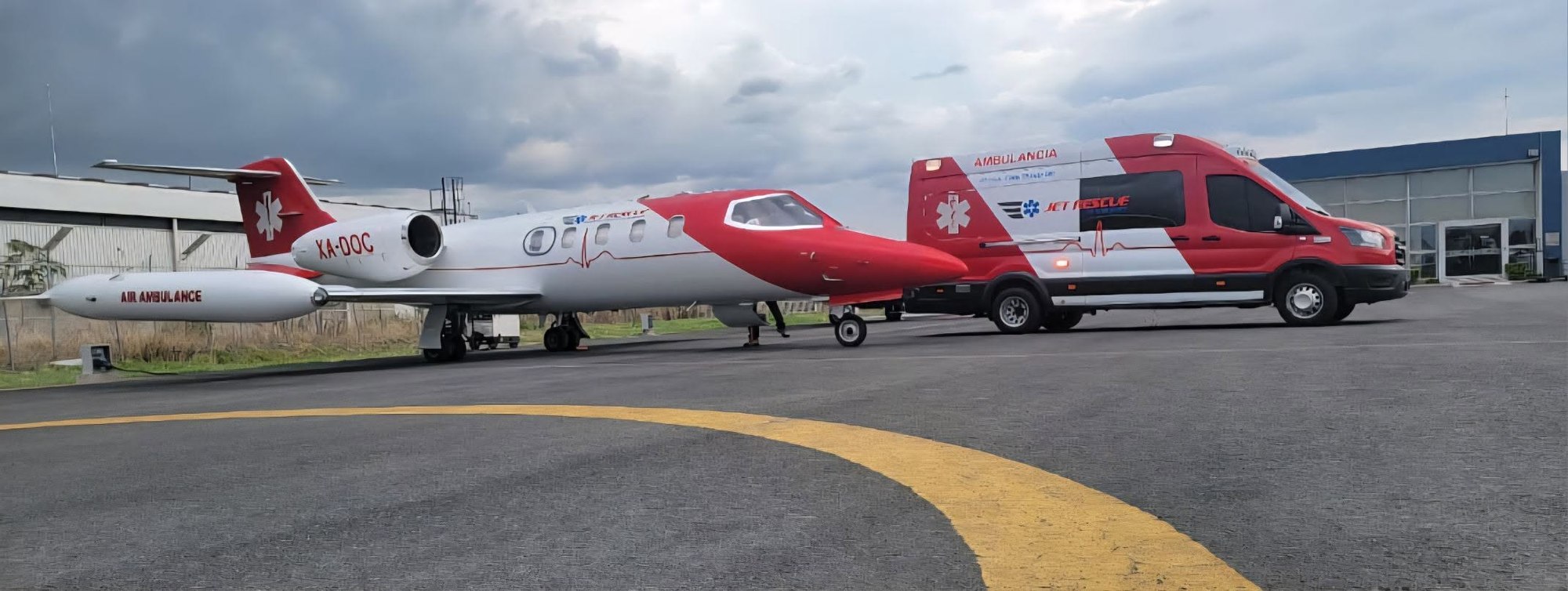
Mazatlán air ambulance
Air ambulance from Mazatlán to the United States and Canada — for snowbirds, cruise passengers and residents who need to get home.
Mazatlán has one of the largest long-stay Canadian and American populations in Mexico, and a cruise port on top of it.
A winter city with a summer hospital system
Mazatlán's population swells every winter with Canadians and Americans who stay for months rather than days, and with cruise passengers who arrive for a single afternoon. Both groups change what the local hospitals are asked to do. A wintering population in its sixties and seventies produces strokes, heart attacks, hip fractures and the slow surgical complications that follow them — not the broken ankles of a two-week holiday.
The private hospitals in Mazatlán stabilise well and they are used to foreign patients and foreign insurers. But Sinaloa's tertiary capability sits in Culiacán, a couple of hours up the highway, and the care a snowbird's own insurer will ultimately want them to have is usually at home. That is the transfer we are called for.
The airport takes a jet in any condition
General Rafael Buelna International (MZT / MMMZ) has one asphalt runway, 08/26, 2,700 metres — about 8,900 feet — at 39 feet of elevation, essentially at sea level. It handled over 1.7 million passengers in 2025 and has customs and immigration in the arrivals area, which matters on a cross-border medical flight: the paperwork happens where the aircraft is, not somewhere else. Sea-level elevation and a long runway mean no performance compromise on a hot afternoon with a full fuel load.
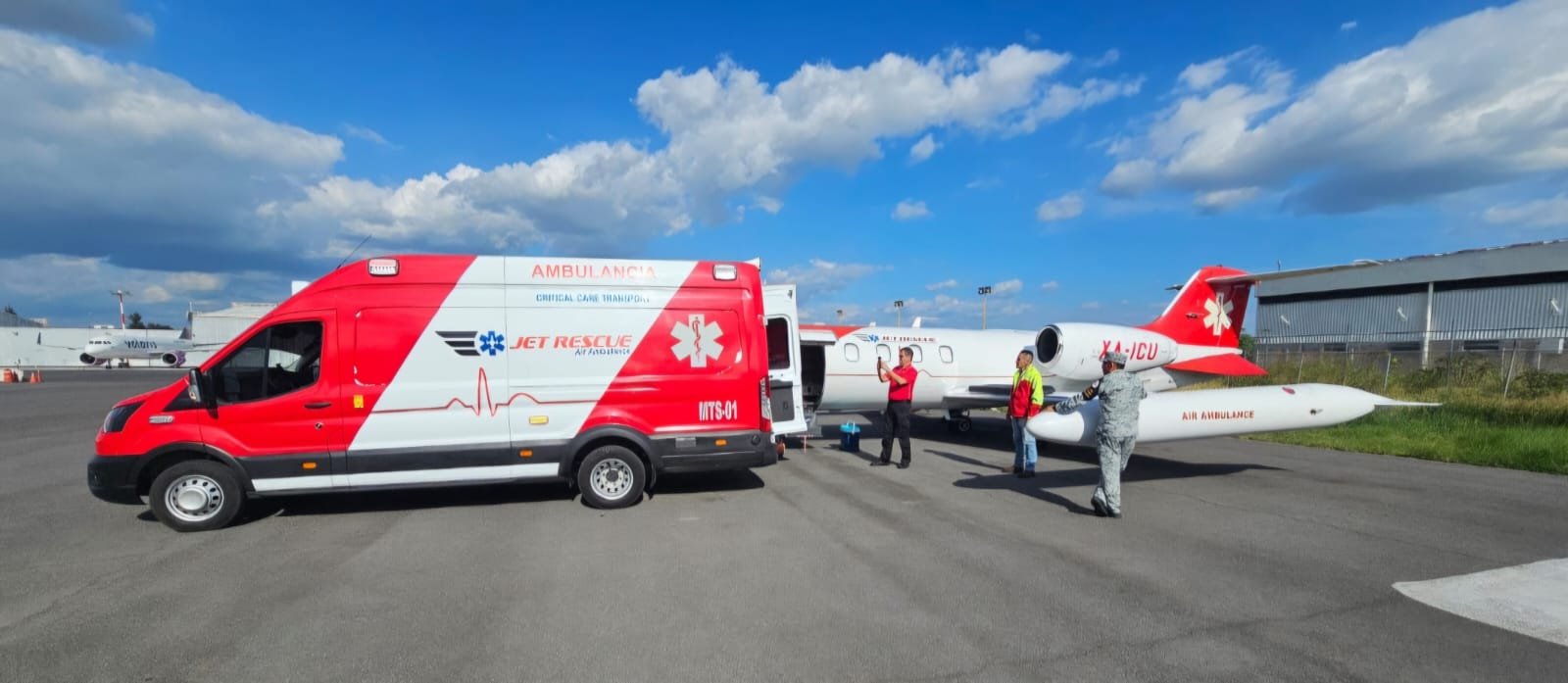
What a Mazatlan case looks like
A stroke in a condo in the Golden Zone, where the question is whether the patient is inside the window and where the nearest centre that can act on it actually is. A cardiac event that is stented locally and then needs follow-up at home. A hip fracture that is fixed here and then needs a rehabilitation bed in Alberta or Arizona that nobody can arrange from a hotel room. Road trauma, including the scooters and pulmonías that tourists ride along the malécon. And cruise passengers who are left behind by their ship, which is its own kind of emergency because the patient has no accommodation, no luggage and often no local contact.
Snowbirds, and the coverage trap
This is the single most useful thing on this page for a Canadian reader. A provincial health plan pays very little outside Canada, and what it does pay is a fraction of a Mexican private hospital bill. The private travel policy is the one that decides whether a repatriation happens, and those policies have teeth: pre-existing condition clauses, stability periods, and a requirement that the insurer approve the transport in advance. Calling them after the fact is how claims get refused.
We talk to insurers and assistance companies every day and we will deal with yours directly. If you are wintering here, the alternative is to stop depending on them: a membership pays the transport home outright, and members of CARP and the Canadian Snowbird Association get a discount on it.
Where we fly from Mazatlan
- Arizona, California and Nevada — Phoenix, Tucson, San Diego, Los Angeles and Las Vegas are all short legs from here.
- Texas and the midwest — Houston, Dallas, Denver, Chicago. See Mexico to Houston and Mexico to Chicago.
- Western Canada — Calgary, Edmonton, Vancouver, Saskatoon, Winnipeg, and on to Toronto and Montreal.
- Guadalajara, Monterrey or Mexico City, when the specialist care the patient needs is closer than home.
For the paisano community
Sinaloa sends a great many people to Los Angeles, Phoenix and Chicago, and they come home to Mazatlán and the towns around it every year. When someone is hospitalised here and their life, their doctor and their insurance are in the United States, the transport back is the whole problem. We run that corridor constantly — see Mexico to Los Angeles and the Programa Paisano.
Common questions
How fast can you get an aircraft to Mazatlan?
Our aircraft are based in Mexico, so the positioning leg is short and most cases launch the same day. What actually sets the departure time is the receiving hospital's written acceptance, which we chase first.
Will my provincial health plan pay for this?
Almost certainly not in full, and often not at all. The private travel policy is the one that matters. Send it to us and we will read it before you commit to anything.
My ship sailed without me. What now?
Tell us at the first call that it is a cruise case. The line's own medical department is usually involved and sometimes pays; the documents, the luggage and the accommodation all have to be handled alongside the flight, and we are used to doing that.
Can you fly a patient who is still on a ventilator?
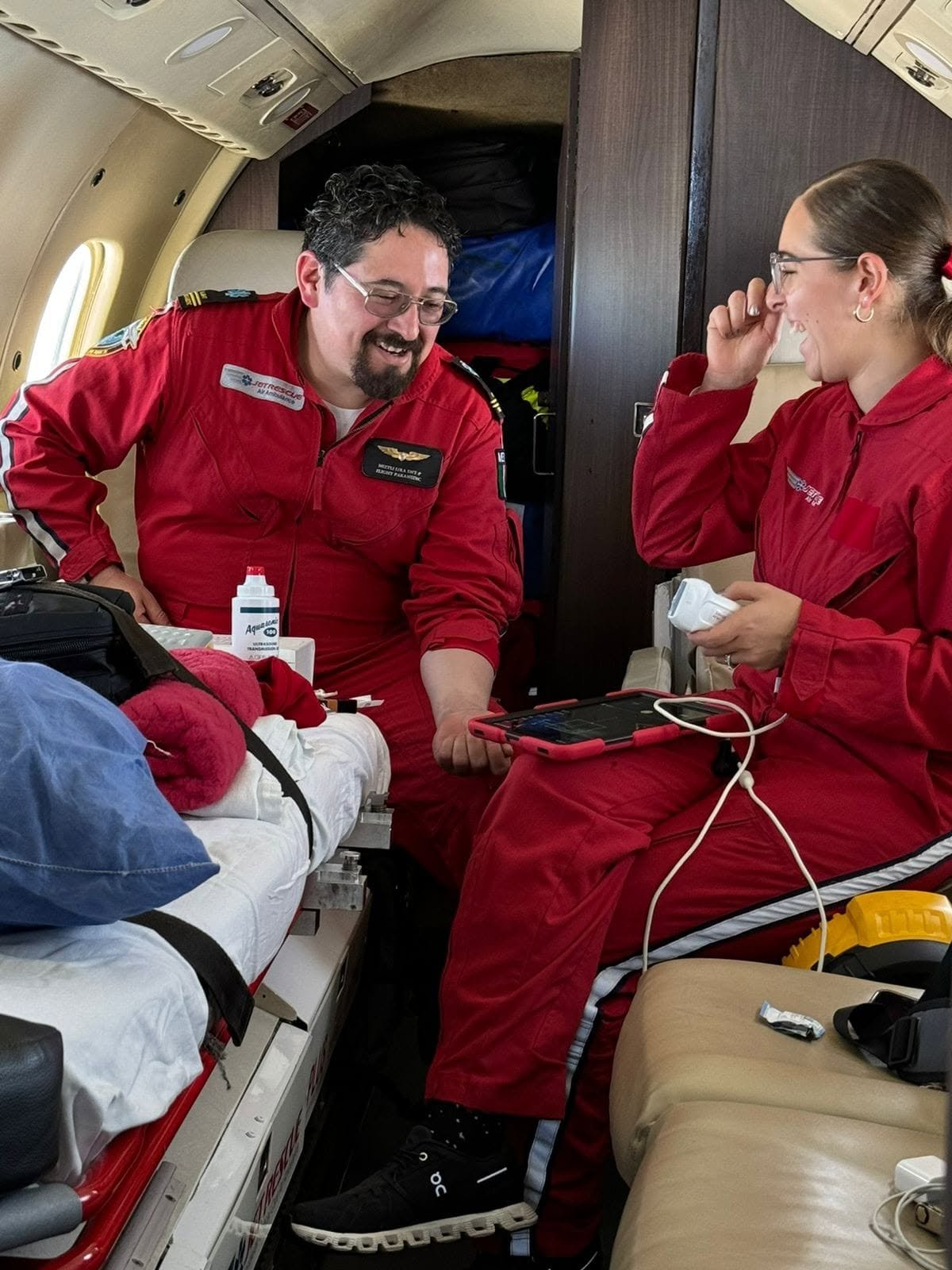
Yes. A transport ventilator and a crew that manages ventilated patients routinely are part of the standard configuration.
Is a medical escort an option instead?
Often, yes, and it costs a fraction of a dedicated aircraft. If the patient can tolerate a commercial cabin with a flight paramedic alongside them, we will say so — see medical escort.
Call +1.786.619.1268 and ask for a mission coordinator, or send the case details. The clinical review is free and there is no obligation to fly with us.
Tell us about the patient
A mission coordinator answers 24 hours a day. The benefits review is free and carries no obligation.