


Loreto air ambulance
Air ambulance from Loreto, Baja California Sur — medical evacuation to La Paz, the United States or Canada from a town a long way from tertiary care.
Loreto is a small town on the Sea of Cortez with a small hospital and a long road in every direction.
The most isolated town on this list
Loreto is a small town on the Sea of Cortés with a hospital system sized for a small town. That is not a criticism; it is the arithmetic of 20,000 people. What it means in practice is that anything beyond stabilisation and straightforward surgery has to travel. La Paz, the state capital and the nearest city with real hospital depth, is about 350 kilometres south down Highway 1 — a long, slow road with little between the two. Tijuana and the United States border are far further.
Most towns on this coast have a hospital problem. Loreto has a distance problem on top of it, and distance is the thing an aircraft actually solves.
Loreto International, and why it is enough
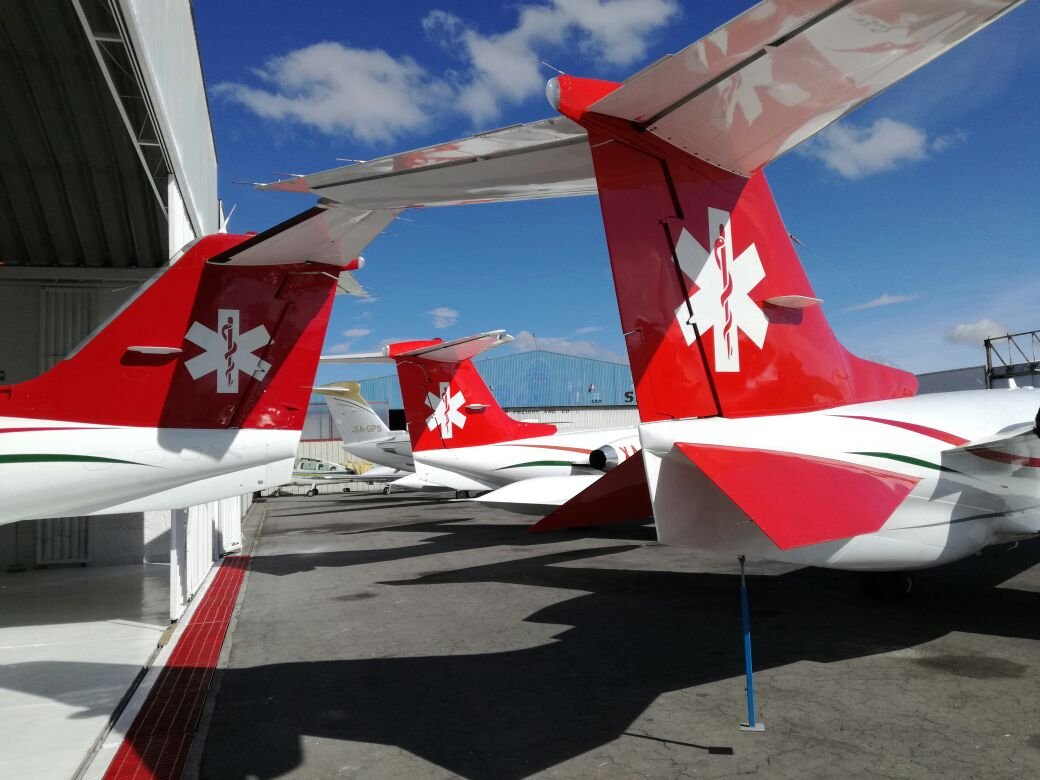
Loreto International (LTO / MMLT) has one asphalt runway, 16/34, 2,200 metres — about 7,200 feet — at 33 feet of elevation, and it carries scheduled international service to Los Angeles. It is small, moving around 183,000 passengers in 2025, but it is a proper international airport with the handling a medical flight needs. The runway and the sea-level elevation take our Learjets without a performance penalty, which is the only question that matters when the decision is between an aircraft and six hours of highway.
What goes wrong in Loreto
The town's draw is the water and the desert, and the case list follows. Boating and fishing accidents in the Sea of Cortés, sometimes hours from the marina. Kayaking and diving in Loreto Bay National Park. Heat illness, which in a Baja summer is a real diagnosis and not a figure of speech. Road trauma on Highway 1, which is narrow, unlit for long stretches and carries heavy trucks. And a wintering population of American and Canadian retirees in Loreto and Nopoló whose cardiac and neurological events happen here rather than at home.
The common thread is that help starts a long way away. A patient who has a heart attack in Loreto at four in the afternoon and a patient who has one in San Diego are not in the same situation, however similar the ECG looks.
Where we fly patients from Loreto
- La Paz — a short hop south when the patient needs the state's better hospitals and is not fit for a longer leg. See La Paz air ambulance.
- Los Cabos, for the same reason, when the specialist happens to be there. See Cabo San Lucas.
- San Diego, Los Angeles, Phoenix and Tucson — short legs across the Gulf and the border, and the usual destination for American visitors.
- Western Canada — Calgary, Edmonton and Vancouver, back inside the provincial system.
- Guadalajara, Monterrey and Mexico City for mainland specialist care.
Planning around a place with no second chances
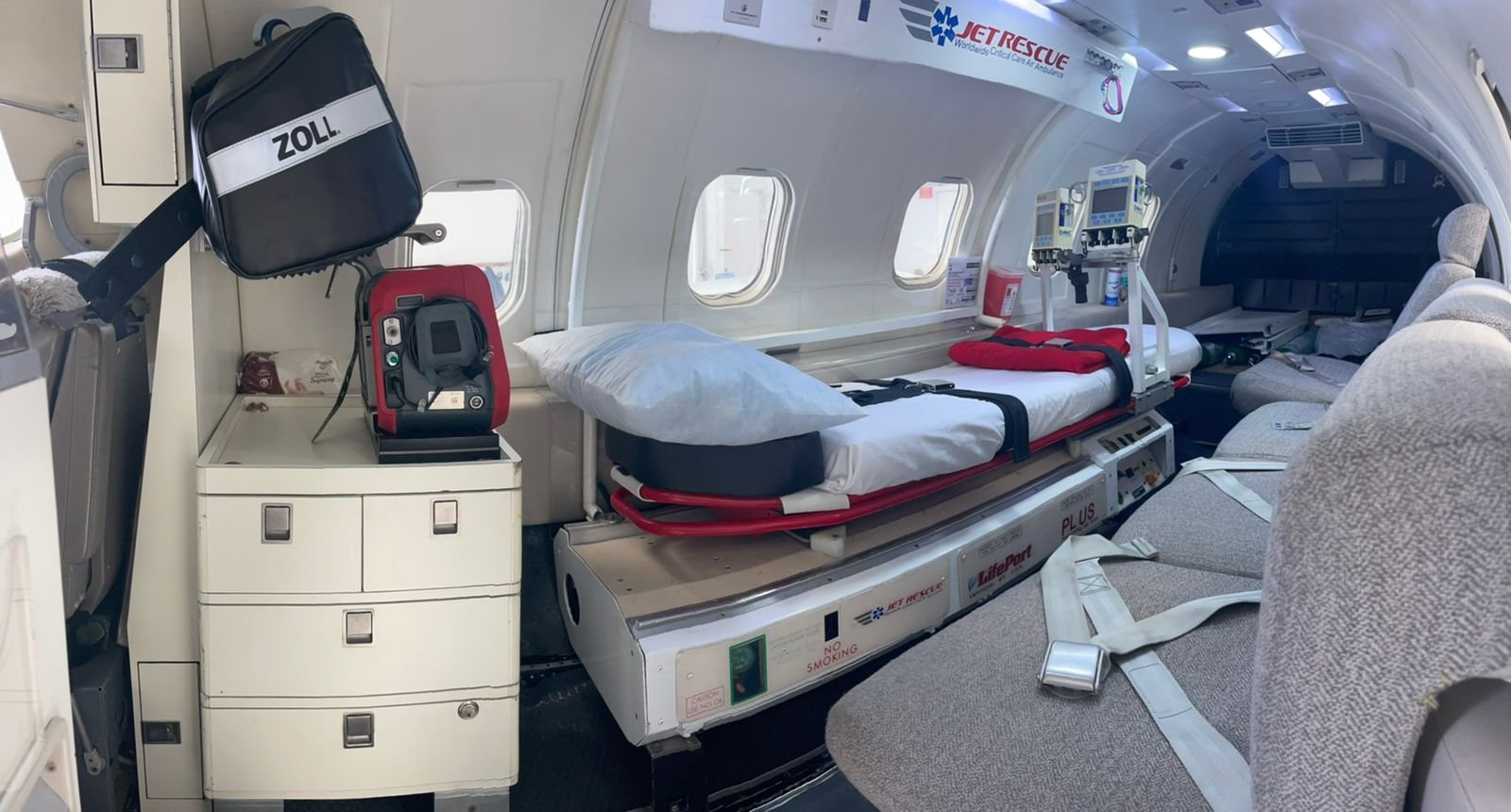
Two things change how we plan a Loreto mission. The first is that there is no realistic ground alternative: if the aircraft does not go, the patient spends six hours in a road ambulance. So the clinical bar for flying is set carefully, with the treating doctor, rather than deferred. The second is oxygen. On a leg out of Baja we carry the full duration with reserve and we do not plan on a resupply that may not exist at the other end of a short notice routing.
If the patient is marginal on oxygen at sea level, we will say that a non-stop is the wrong plan and build in a stop. That conversation happens before departure, not at altitude.
Who pays
US Medicare does not pay outside the United States. Canadian provincial plans pay very little. The private travel policy is usually the deciding document, and it has to approve the transport in advance to be worth anything. We read it, we deal with the insurer directly, and we tell you honestly what we think they will do. See does insurance cover an air ambulance.
If you own or rent in Loreto for part of the year, the better answer is not to depend on that conversation at all: a membership pays the transport outright.
Common questions
How long does it take to get an aircraft to Loreto?
Our aircraft are based in Mexico, so the positioning leg is short compared with an operator flying down from Florida or Arizona. Most cases launch the same day once the receiving bed is confirmed.
Can you operate at Loreto at night?
Yes. We plan the departure around the patient and the receiving hospital's readiness.
What if the patient is on a boat or on an island?
They have to reach the hospital or the clinic in town first, by whatever marine or ground rescue is available locally. We take the case from the hospital or the ramp. We do not operate rescue helicopters and we will not pretend otherwise to win a booking.
Is La Paz far enough, or should we go straight to the United States?
It depends entirely on what the patient needs and on whether they are stable enough for the longer leg. The flight physician will tell you which, and will say if the honest answer is two moves rather than one.
Can a relative come?
Usually one, where weight, fuel and the patient's condition allow. Ask at the first call.
Call +1.786.619.1268 and ask for a mission coordinator, or send the case details. The clinical review is free and there is no obligation to fly with us.
Tell us about the patient
A mission coordinator answers 24 hours a day. The benefits review is free and carries no obligation.