


La Paz air ambulance
Air ambulance from La Paz, Baja California Sur — diving injuries, trauma and medical repatriation to the United States and Canada.
La Paz is the capital of Baja California Sur and the regional hospital hub for the peninsula — which means patients arrive here as well as leave.
La Paz is where patients arrive as well as where they leave
As the capital of Baja California Sur, La Paz has the deepest hospital capability on the peninsula outside Los Cabos, which gives it a double role in our work. We fly patients out of La Paz to the United States, Canada and mainland Mexico; we also fly patients into La Paz from Loreto, from the smaller towns down the peninsula and from boats that have come in off the Sea of Cortés, because for them La Paz is the step up in care.
What La Paz does not have is everything. Complex neurosurgery, advanced cardiac intervention, burns, transplant work and specialist paediatrics still mean the mainland or the United States, and that is the transfer families call us about.
Manuel Marquez de Leon International
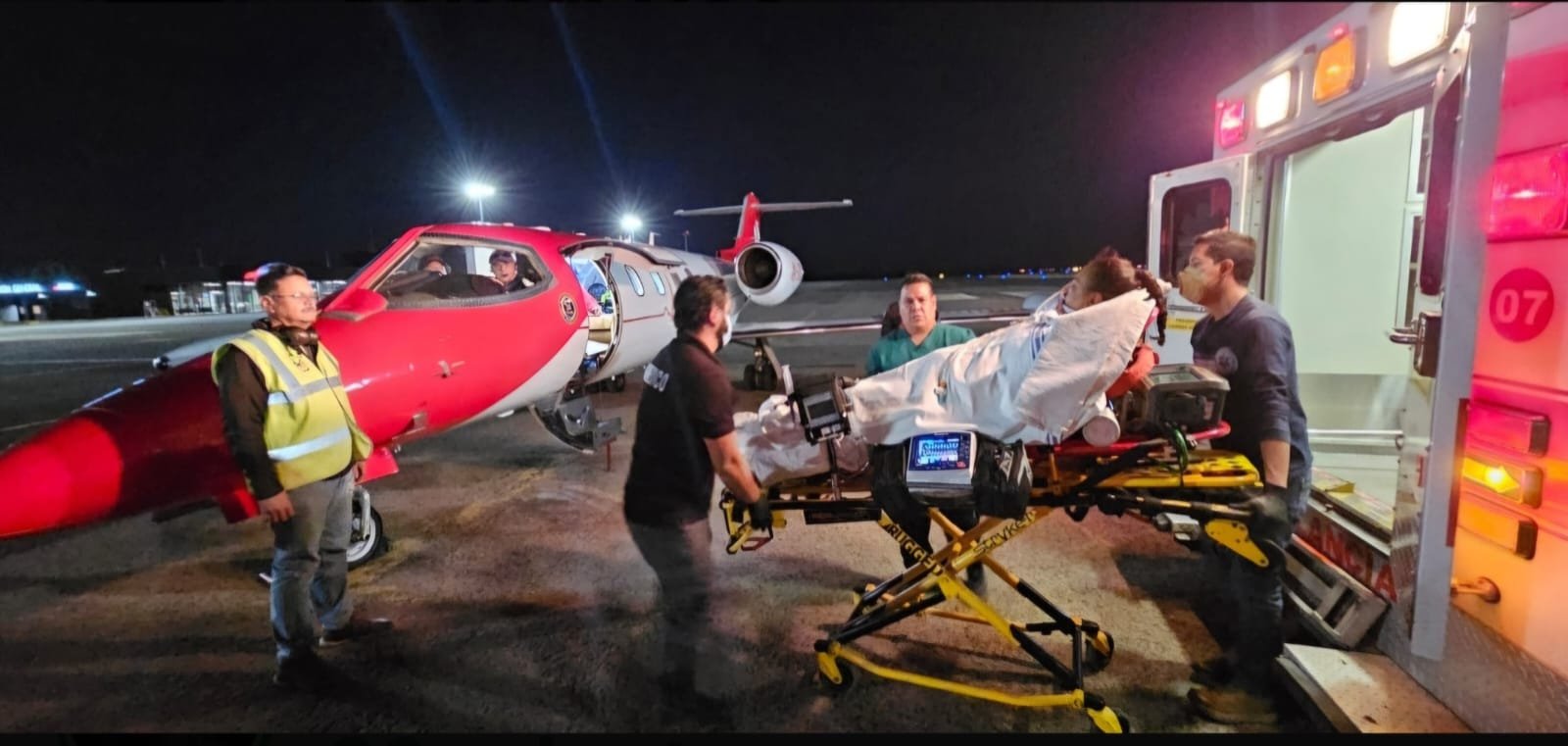
La Paz International (LAP / MMLP) has one concrete runway, 18/36, 2,500 metres — 8,202 feet — at 69 feet of elevation, and it moved about 1.34 million passengers in 2025. Concrete holds up better than asphalt in Baja heat, and at this elevation and length there is no performance compromise for a Learjet at maximum fuel. Practically, that means we can plan a non-stop to most of the western United States with the patient aboard.
Diving, and the one thing that is specific to this coast
Cabo Pulmo, Los Islotes, the whale shark season in the bay and the wrecks off the coast make La Paz one of the serious diving destinations in Mexico, and serious diving destinations produce decompression illness. This is the case type where air ambulance planning is genuinely different, and where a general-purpose charter operator gets it wrong.
A diver who has been treated in a recompression chamber cannot simply be loaded onto an aircraft afterwards. The interval since the last treatment and the cabin altitude flown both have to be agreed with the treating hyperbaric physician, because an ordinary cabin altitude can undo a chamber ride. We fly these patients at the cabin altitude the hyperbaric physician specifies, which sometimes means a lower cruise altitude, a longer flight and more fuel. We plan it that way and we say so in the quote rather than discovering it in the air.
What else fills a La Paz transfer list
Marine accidents and boat trauma. Road trauma on the peninsula highway. Cardiac events in visitors a long way from their own cardiologist. Strokes in the resident foreign community. Complications after surgery done in a place the patient does not live. And the ferry traffic from Mazatlán and Topolobampo, which brings mainland patients and mainland problems across the Gulf.
Where we fly from La Paz
- San Diego, Los Angeles, Phoenix, Tucson and Las Vegas — short legs, and the usual route home for American visitors.
- Houston, Dallas and Denver, and on to the patient's own hospital.
- Vancouver, Calgary, Edmonton and eastern Canada, back inside the provincial system — see Canada air ambulance.
- Guadalajara, Monterrey and Mexico City, when the specialist centre the patient needs is in Mexico rather than at home.
- Into La Paz from Loreto and the smaller towns, when the step up in care is here.
What flies with the patient
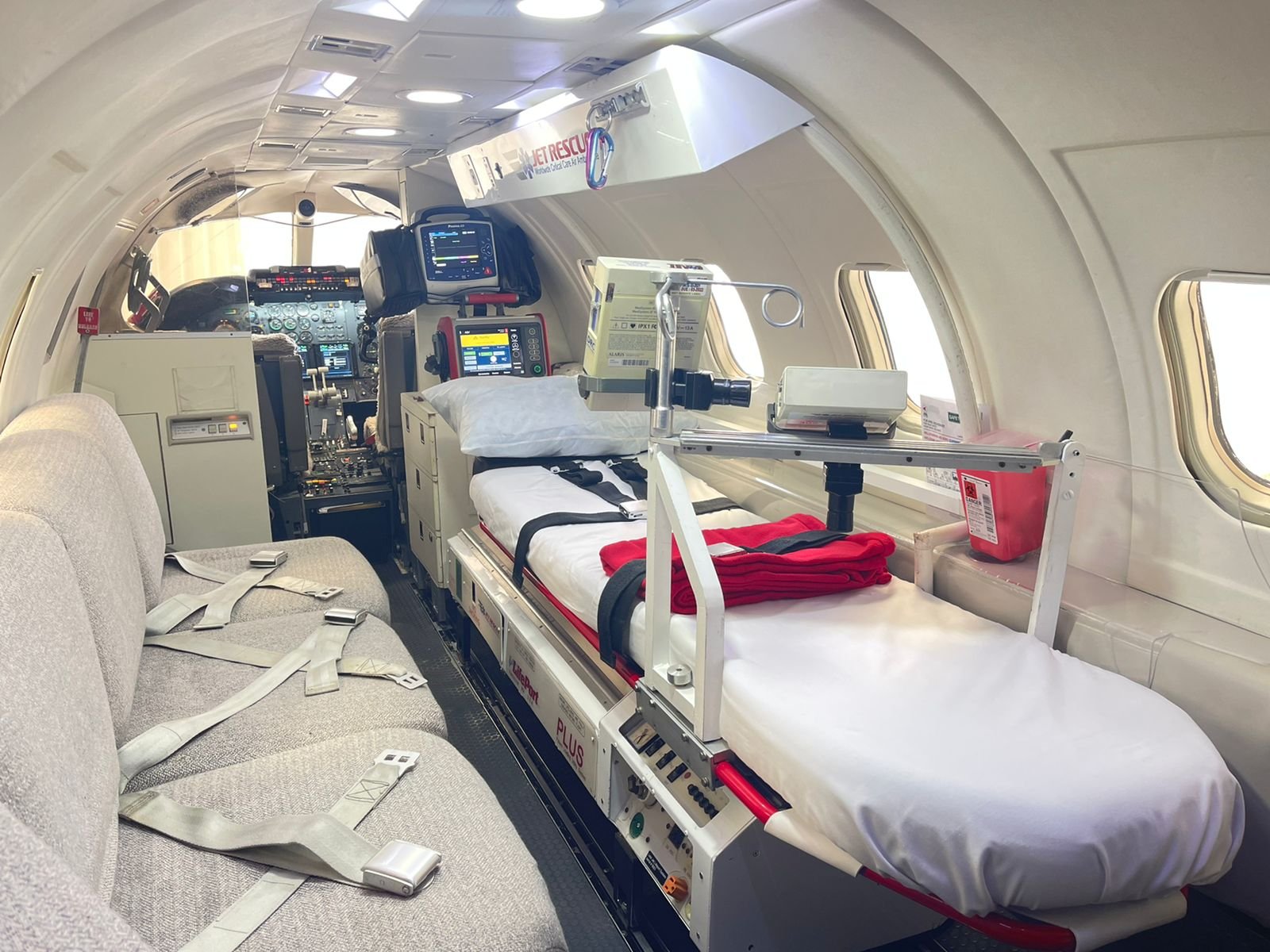
The cabin is configured as an intensive care unit: a transport ventilator, a monitor, infusion pumps and, on a Baja leg, the oxygen for the whole crossing with reserve. A flight physician and a critical care paramedic travel with the patient, our own ground ambulance meets the aircraft where we have one, and one mission coordinator stays with the case from the first call to the signed handover. If the patient does not need a dedicated aircraft, we will say so and arrange a medical escort instead.
Common questions
How long after a chamber treatment can a diver fly?
That is a decision for the treating hyperbaric physician, not for us, and it varies with the severity of the hit and the response to treatment. What we do is fly the interval and the cabin altitude they specify. Tell us at the first call that it is a dive case so we plan the routing for it from the start.
Can you fly a patient who is still in intensive care?
Yes, that is the normal case for us. The flight physician reviews the clinical picture with the treating team and the cabin is configured as an intensive care unit, not as a seat removed from a charter jet.
Do you fly between towns inside Baja?
Yes. Loreto, Los Cabos and the smaller airstrips on the peninsula to La Paz, and La Paz onward, are routine.
Will my travel insurance cover the flight?
Often, if it is approved in advance and the clinical case is documented properly. We talk to the insurer directly and we write the documentation they need. If it is refused, see insurance denied.
What does it cost?
It depends on the distance, the aircraft and what the patient needs on board. We give one fixed price in writing before you commit, with no fuel surcharges added later — see air ambulance cost.
Call +1.786.619.1268 and ask for a mission coordinator, or send the case details. The clinical review is free and there is no obligation to fly with us.
Tell us about the patient
A mission coordinator answers 24 hours a day. The benefits review is free and carries no obligation.