

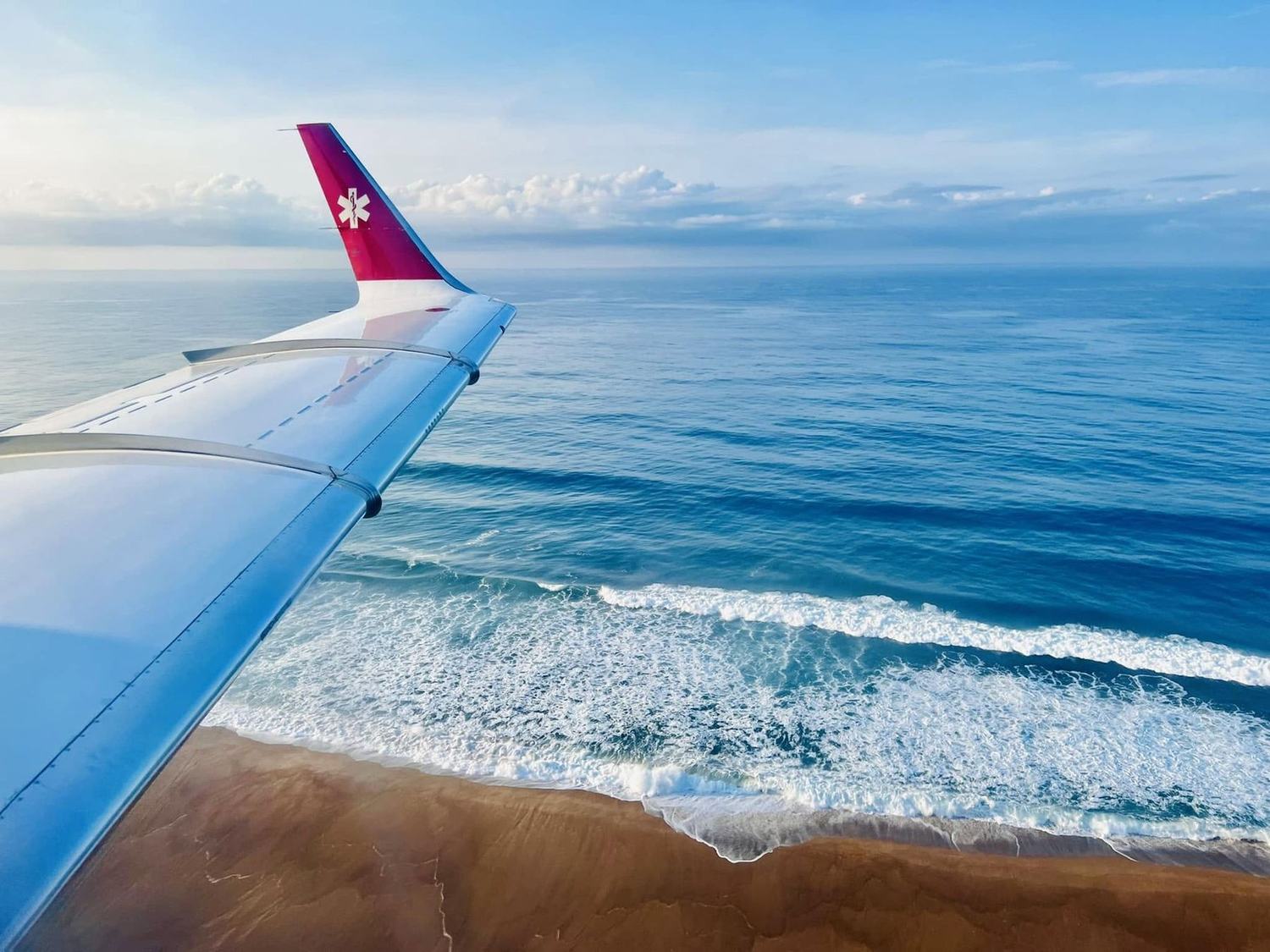
Huatulco air ambulance
Air ambulance and medical evacuation from Huatulco and the Oaxaca coast to the United States, Canada or Mexico City.
Huatulco sits on the Oaxaca coast, a long way from a tertiary hospital in any direction. That distance is the whole reason this page exists.
Huatulco is a long way from a hospital that can do everything
The nine bays are the attraction and the isolation is the problem. Huatulco has clinics that handle what a resort town needs handled — Centro Médico Oromed, Clínica Dr. Bardo and the Cruz Roja are the names families give us when they call. They stabilise, they image, they operate on straightforward things. What they are not is a tertiary centre, and a tertiary centre is what a serious head injury, a major trauma, a heart attack needing catheterisation or a stroke inside the treatment window actually requires.
From Huatulco those centres are in Oaxaca City or Mexico City. Oaxaca City has the state hospitals and the larger private ones — Medica 2002, Hospital del Carmen, Hospital Reforma and the public Hospital General Dr. Aurelio Valdivieso. Mexico City has everything else. Both involve either a long drive over the sierra or forty to seventy minutes in an aircraft. For a patient whose problem is time-dependent, that is the entire decision.
The airport works in our favour
Bahías de Huatulco International (HUX / MMBT) has a single asphalt runway, 07/25, three thousand metres long — 9,843 feet — at 463 feet of elevation. That is a long runway for a town of this size, and it means no weight or fuel penalty for a Learjet in the heat of the afternoon. We can arrive full, load the patient and leave for Houston or Miami without a tankering stop. It handled a little over 800,000 passengers in 2025, so it is a real international airport with real handling, not a strip.
What a Huatulco case usually is
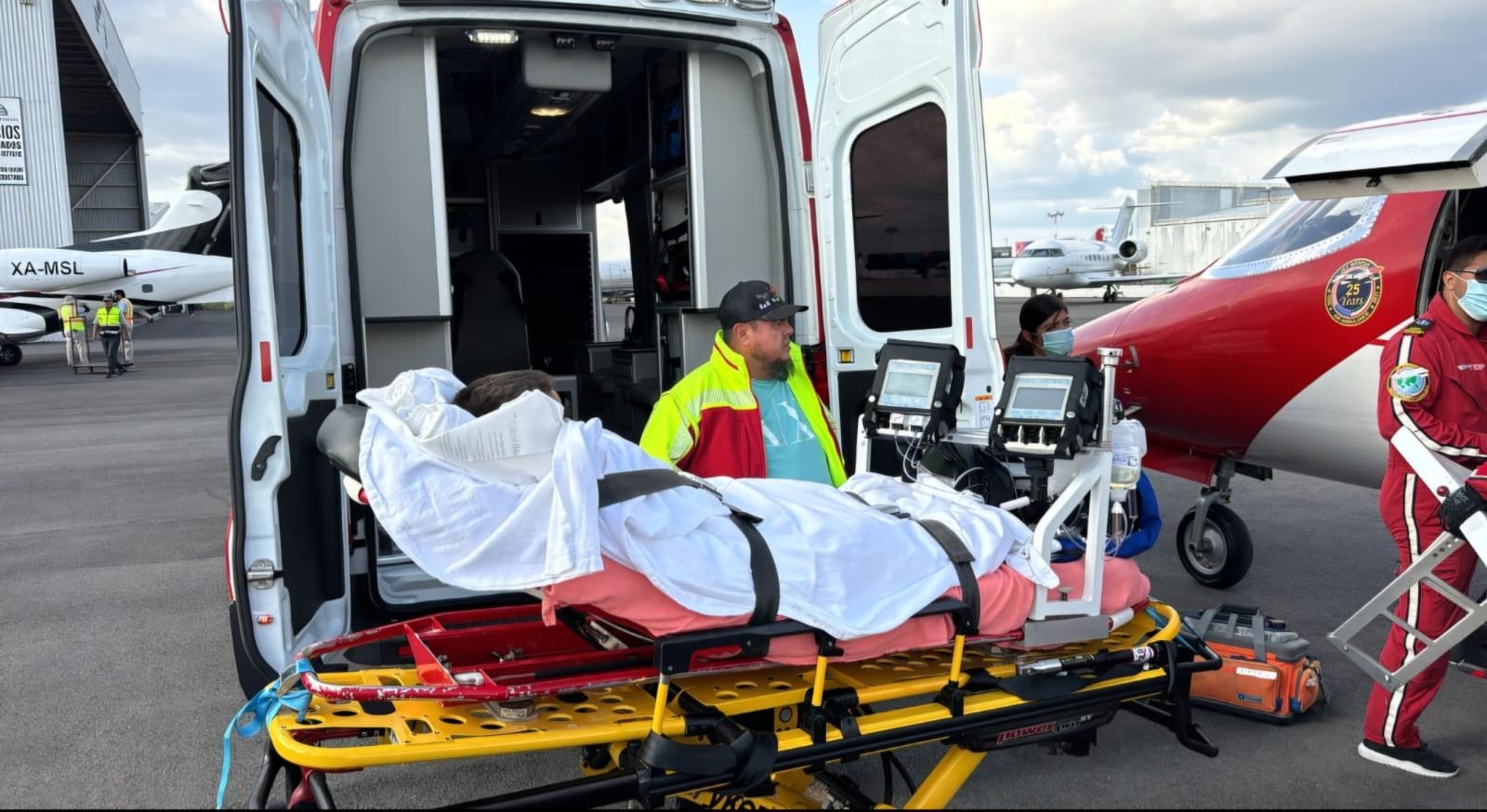
The pattern on this coast repeats. A visitor in their sixties or seventies with a cardiac event a long way from their own cardiologist. A boating or snorkelling accident. A fall. Road trauma on the coastal highway, which carries a mix of fast cars and slow trucks. Dengue and other febrile illness that turns out to be worse than a holiday bug. And surgical complications in somebody who had an emergency operation in a town they do not live in, where the follow-up care they need is two thousand miles away.
None of those are exotic. What makes them air ambulance cases is geography.
Where patients go from Huatulco
- Mexico City, when the patient needs a specialist centre now and is not yet fit to cross a border. About an hour in the air.
- Houston, Dallas, Phoenix or Miami, the usual United States gateways for this coast, and onward to the patient's own hospital.
- Los Angeles and the west coast, longer but routine.
- Toronto, Montreal, Calgary and Vancouver, for Canadian visitors going back inside the provincial system. See air ambulance to Canada.
Our aircraft and crews are based in Mexico, not in Florida, so the positioning leg into HUX is short and the quote says so honestly. See how that affects the number on what an air ambulance costs.
Who pays, and what usually goes wrong
Three things catch families out on this coast. US Medicare does not pay for care or transport outside the United States, so a retired American visitor is relying on a travel policy or on their own funds. A Canadian provincial plan covers very little abroad and the private travel insurer is the one that matters. And the hospital bill in Mexico is a separate negotiation from the transport — often the larger of the two.
We read the policy before you commit to anything, speak to the insurer or assistance company ourselves, and tell you plainly whether we think they will pay. If they decline, that is not automatically the end of it — see what to do when an insurer refuses and when insurance does cover an air ambulance.
What flies with the patient
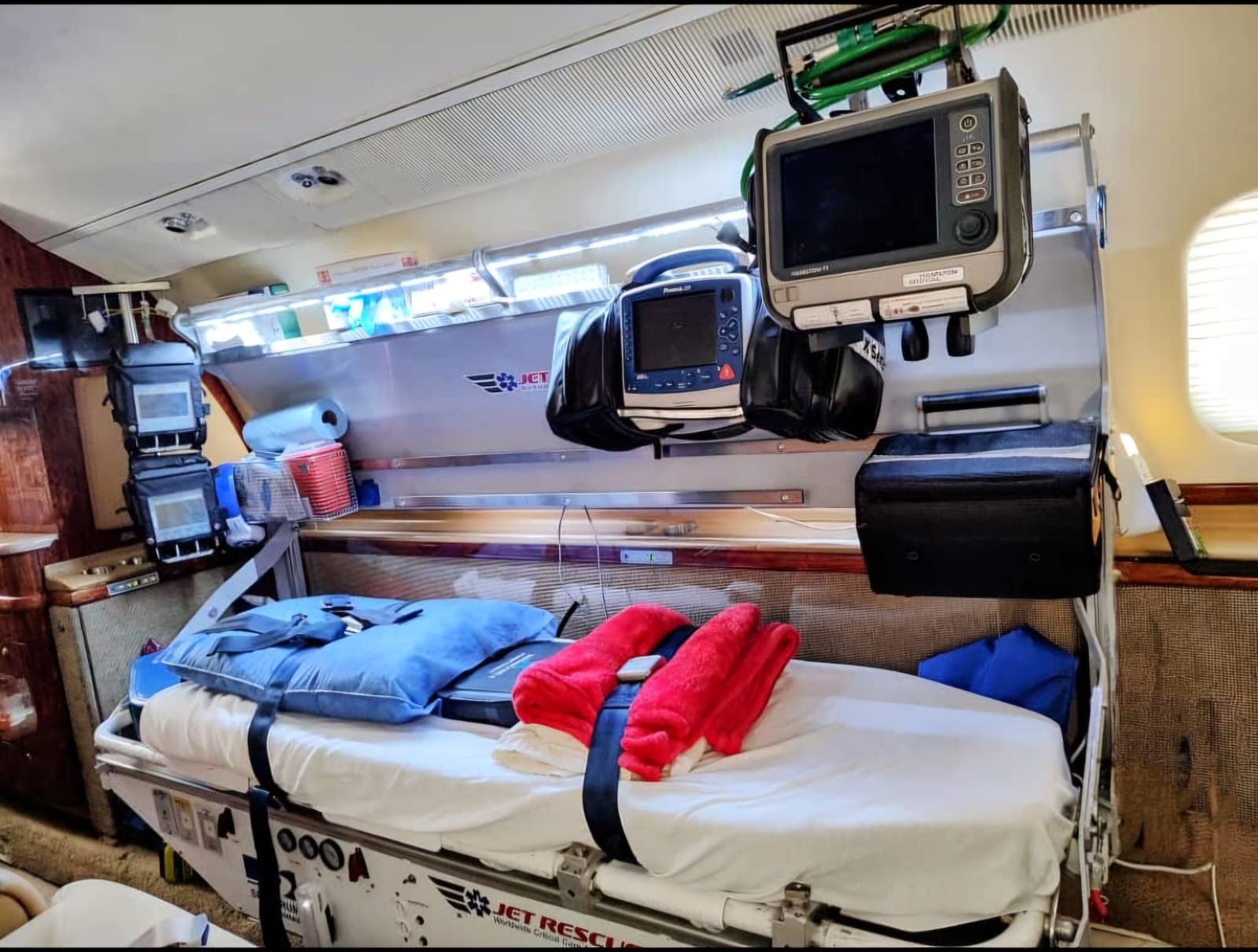
An ICU-configured Learjet, a flight physician and a critical care paramedic, transport ventilator, monitor, infusion pumps and the oxygen for the whole leg with reserve. Ground ambulances at both ends. One mission coordinator who owns the case from the first call to the signed handover at the receiving bed, so you are not repeating the story to four people.
Where a dedicated air ambulance is more than the patient needs, we say so and arrange a commercial medical escort instead. That answer is cheaper for you and it is the right one more often than most families expect.
Common questions
How quickly can you get to Huatulco?
From our Mexican bases the positioning flight is short, and most Huatulco missions launch the same day once we have the treating physician's report and the receiving bed confirmed. The thing that sets the clock is almost never the aircraft — it is the acceptance at the other end, which is why we start there.
Can you fly out of Huatulco at night?
Yes. The runway is lit and the airport handles night operations. We plan the departure around the patient's condition and the receiving hospital's readiness, not around daylight.
My relative is in a clinic, not a hospital. Can you still take them?
Yes, provided a physician there can give us a clinical handover and the patient is fit for the leg. We collect from clinics on this coast regularly. If the patient should not fly yet, we will tell you that rather than take the booking.
Can a family member travel with the patient?
Usually one relative, where weight, fuel and the patient's condition allow. Ask when you call, because on a long leg it is sometimes the difference between one fuel stop and none.
Does a membership help if we are already in hospital?
No. Membership covers what happens after it starts, so if the event has already happened we quote the flight instead. If nothing has happened yet and you are on this coast for a season, it is worth ten minutes: see the membership plans.
Call +1.786.619.1268 and ask for a mission coordinator, or send the case details. The clinical review is free and there is no obligation to fly with us.
Tell us about the patient
A mission coordinator answers 24 hours a day. The benefits review is free and carries no obligation.