

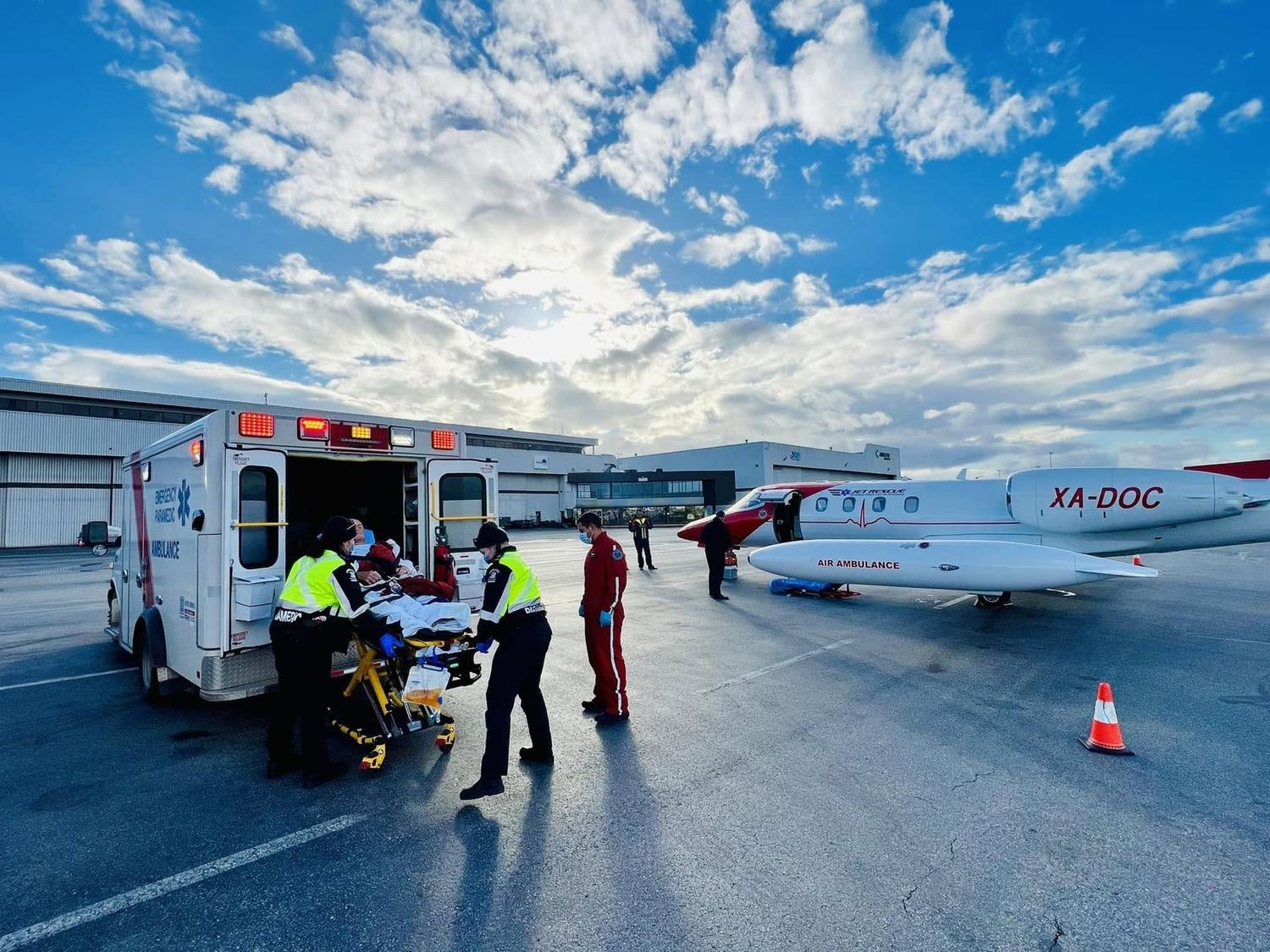
Canada air ambulance
Air ambulance to and from Canada: repatriation home from the US, Mexico and the Caribbean, transfers into US specialist centres, and the provincial paperwork that decides whether a flight happens.
Most Canadian cases are about getting home
Canadians travel. They winter in Florida, Arizona and Mexico, they cruise the Caribbean, and they work abroad. When one of them is admitted to a hospital outside Canada, the family's first question is almost never clinical — it is how to get them back inside the Canadian system, where the care is covered and the family is.
That is the work. We fly Canadians home from the United States, Mexico, the Caribbean, Latin America and Europe, and we fly Canadian patients the other way when the specialist centre they need is in the United States.
Getting the Canadian bed is the hard part
The flight is the part we control. The part that holds cases up is the receiving end: a Canadian hospital has to accept the patient, and provincial bed availability is not something a family can negotiate from a hotel room in Cancun. We work the receiving side first — the accepting physician, the service, the bed — and build the transport around that confirmation, rather than launching an aircraft and hoping.
Provincial health plans and private travel insurers each have their own rules on repatriation, and they are not the same rules. We read the policy and talk to the plan before you commit to anything.
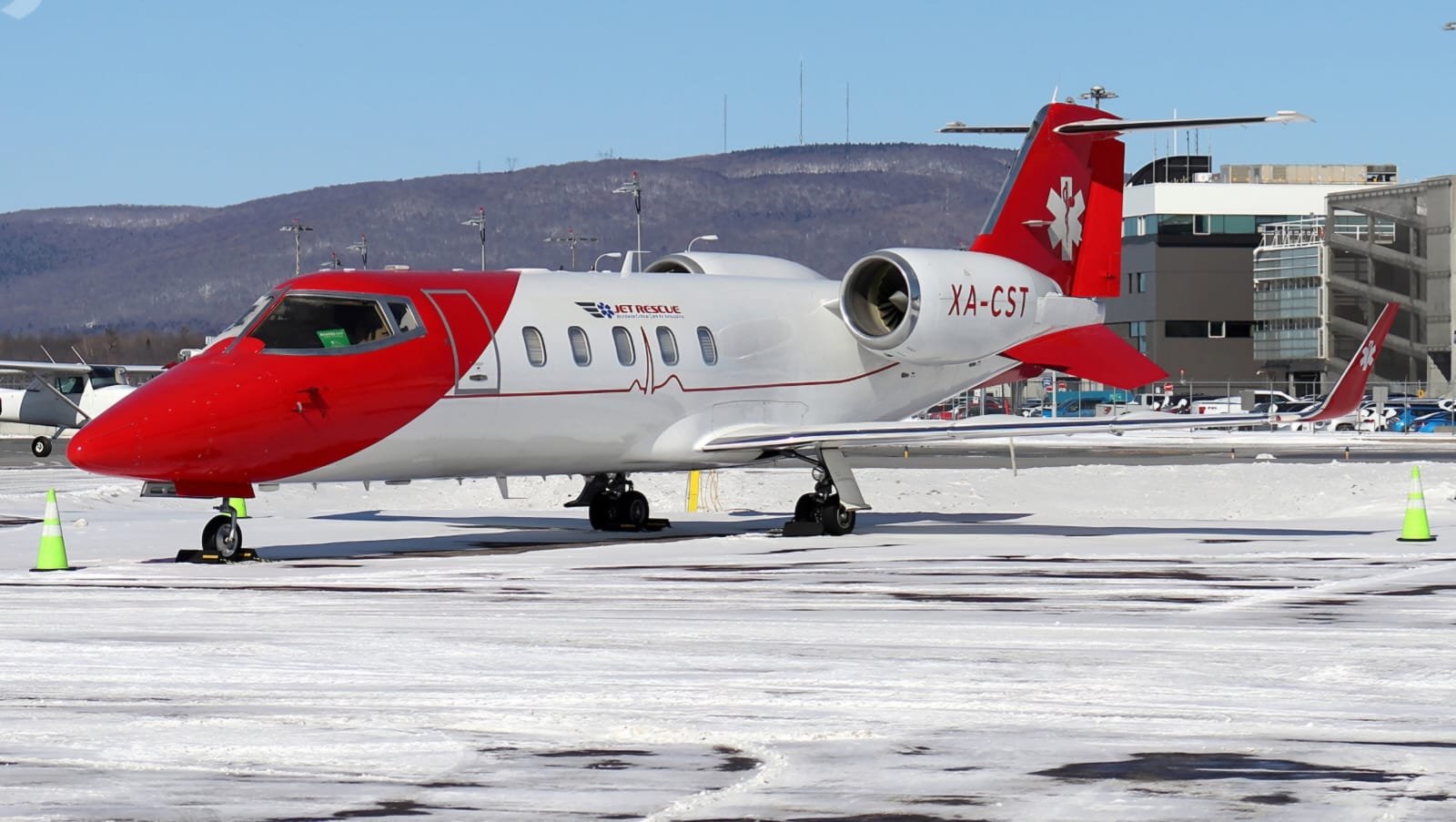
Winter is an operational problem, not just weather
A large share of Canadian missions land in the cold. De-icing, contaminated runways, short daylight and ramps where a ground ambulance cannot park close to the aircraft all change the plan. Our crews fly these conditions regularly and brief for them; a patient is not held on a cold ramp while somebody works out who is bringing the de-icing truck.
Where we fly in Canada
Toronto, Montreal, Vancouver, Calgary, Edmonton, Ottawa, Winnipeg, Quebec City, Halifax and the regional airports that serve them. Our longer-range Learjet 36-ARX aircraft reach most of Canada from our Mexican bases without a fuel stop, and the whole country with one.
Customs, immigration and documentation
A patient crossing a border needs more than a bed at the other end. Passports, consular documents where the patient's own are lost or expired, customs clearance at an airport that can handle it at the hour the aircraft arrives, and a ground ambulance that is actually expecting the flight. We arrange all of it, and we tell you early when a document is going to be the thing that delays the mission.
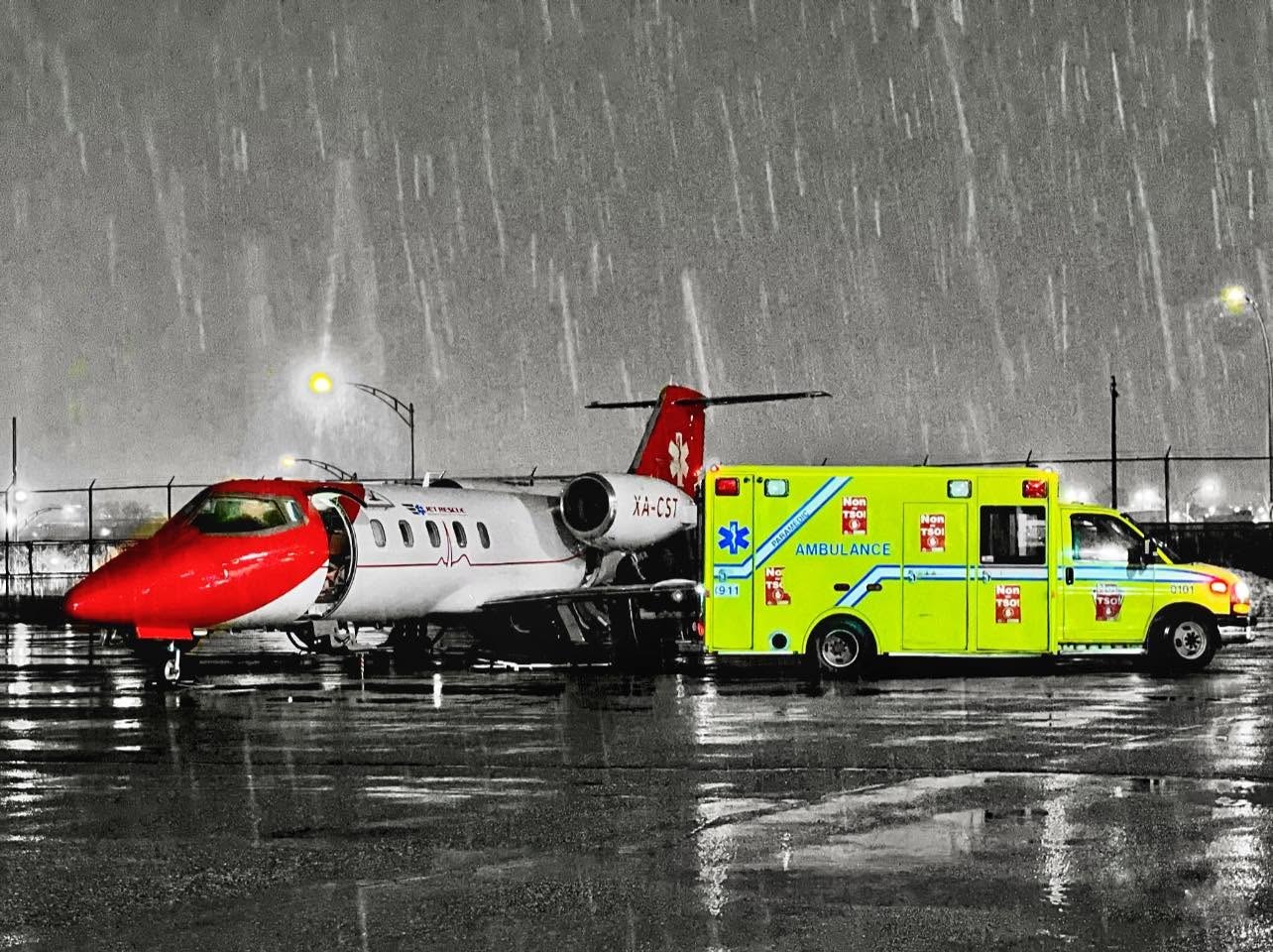
What the transport looks like
An ICU-configured Learjet with a flight physician and a critical care paramedic, ground ambulances at both ends, and one mission coordinator who stays with the case from the first call to the signed handover at the Canadian bed. Where a dedicated air ambulance is more than the patient needs, we say so and arrange a commercial medical escort instead.
Related: air ambulance between Canada and the United States, and medical transport out of Mexico.
Tell us about the patient
A mission coordinator answers 24 hours a day. The benefits review is free and carries no obligation.